How to Streamline Property Workflows in 2026
Discover how to streamline property workflows in 2026 with automation tips that boost profits, cut costs, and enhance operational control.

How to Streamline Property Workflows in 2026
Streamlining property workflows means replacing manual, disconnected processes with automated, integrated systems that reduce labor and increase operational control across your vacation rental portfolio. Property managers who automate at least 40% of back-office tasks see 22% higher profit margins and cut administrative overhead by 35–45% within the first year. That is the financial case for learning how to streamline property workflows. This guide walks you through the audit, the automation, and the integration steps that actually move the needle for vacation rental operators.
How to streamline property workflows: start with an audit
Before you touch any software, map every manual process you run today. Write down what triggers each task, who handles it, and how long it takes. This audit reveals where your time actually goes, and the results are usually surprising.
The four software categories every property manager needs are a property management system (PMS), an accounting platform, a guest communication tool, and a CRM. Tools like Rentec Direct and AppFolio cover PMS and accounting in one place. Dedicated communication platforms handle automated messaging. Without all four categories connected, you will create data silos that cause errors and slow decisions.

The table below compares the core functions you need covered before automation makes sense:
| Software Category | Primary Function | Example Tools |
|---|---|---|
| Property Management System | Reservations, leases, unit tracking | Rentec Direct, AppFolio |
| Accounting Platform | Invoicing, owner statements, reconciliation | QuickBooks, AppFolio |
| Guest Communication | Automated messaging, review requests | Hospitable, Smartbnb |
| CRM | Owner and guest relationship tracking | HubSpot, Salesforce |
Data integration is the connective tissue. A unified ecosystem linking leasing, maintenance, and financial data creates a single source of truth that supports faster, more accurate decisions. Without it, your team wastes time reconciling conflicting records across platforms.
Key areas to audit before you automate:
- Rent and payment collection: How many manual steps does it take to confirm a payment?
- Maintenance requests: How does a guest request reach a vendor today?
- Guest communications: Which messages get sent late or inconsistently?
- Reporting: How long does it take to produce an owner report?
Pro Tip: Start your automation with rent collection and maintenance routing. These two workflows deliver measurable ROI within 60 days and build team confidence before you tackle more complex processes.
How do you automate core vacation rental workflows?
Property managers lose an average of 12 hours per week to manual tasks. That is 48 hours a month that could go toward growing your portfolio or improving guest experience. Automation reclaims that time by replacing human triggers with system triggers.
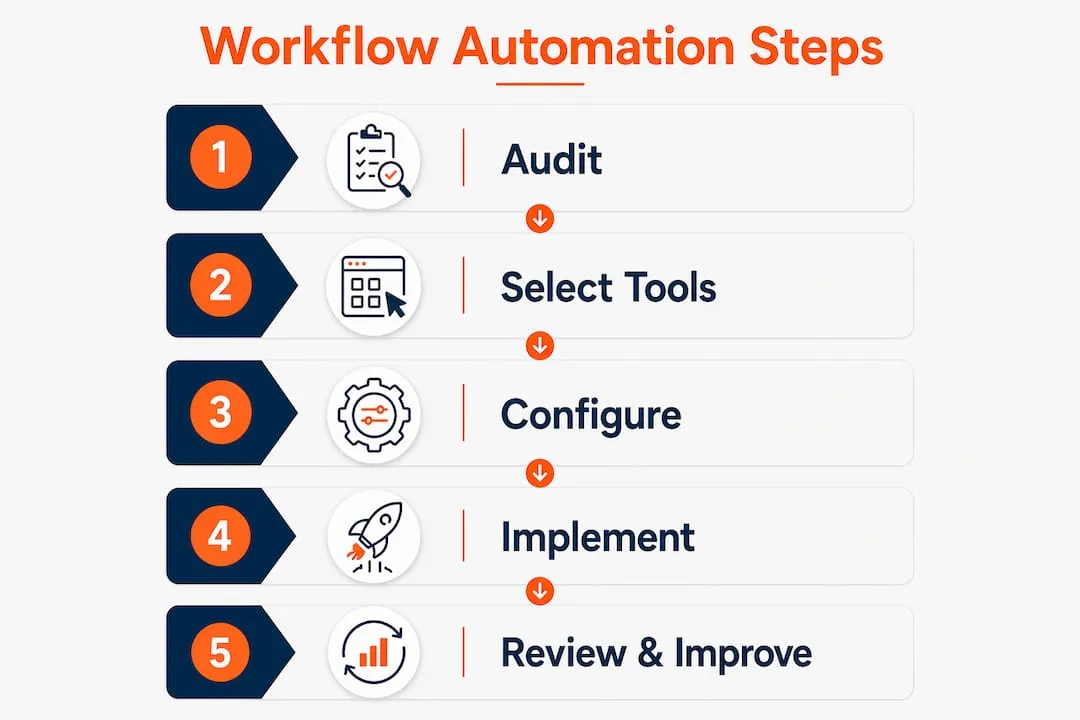
The shift from checklist to event-driven workflow design is the most important conceptual change you will make. Instead of a staff member checking a list each morning, a system event like a confirmed booking or a submitted maintenance request fires an automatic sequence. That sequence runs the same way every time, at any scale.
Here is how to implement the three highest-impact automation workflows:
-
Automate rent and payment collection. Set up automatic payment reminders three days before the due date, on the due date, and one day after. Configure your PMS to flag overdue accounts and route them to your collections workflow without manual intervention.
-
Automate maintenance routing. When a guest submits a maintenance request, the system should categorize it by type and urgency, assign it to the correct vendor, and send a confirmation message to the guest. No staff member should need to read and forward that request manually.
-
Automate guest communications. Build a message sequence triggered by booking confirmation: a welcome message at booking, check-in instructions 24 hours before arrival, a mid-stay check-in on day two, and a review request one hour after checkout. Each message goes out automatically without anyone pressing send.
The payoff is significant. Automating maintenance routing alone eliminates 80% of back-and-forth emails that cause tenant dissatisfaction. Fewer emails mean faster resolution and higher guest ratings.
When configuring each workflow, set escalation rules. If a maintenance request is not acknowledged by a vendor within two hours, the system should notify a backup vendor and alert a manager. Escalation rules prevent exceptions from falling through the cracks without requiring constant human monitoring.
Pro Tip: Prioritize automation by the ratio of time saved to setup complexity. Rent collection and guest messaging score high on both. Custom reporting automations are valuable but take longer to configure correctly.
Why does software integration determine workflow efficiency?
Disconnected tools are the most common reason automation projects fail. Most automation failures come from data inconsistencies and disconnected systems, not from faulty software. When your PMS does not talk to your accounting platform, staff manually re-enter data, which introduces errors and delays.
A unified software ecosystem links every operational layer. Leasing data flows into your accounting system automatically. Maintenance records connect to vendor invoices. Guest communication history sits alongside reservation data. When all of this connects, your reporting becomes accurate in real time rather than accurate after someone spends two hours reconciling spreadsheets.
The operational difference between a siloed setup and an integrated one shows up most clearly in reporting. With siloed tools, producing a monthly owner statement requires pulling data from three or four platforms. With an integrated system, that report generates in minutes. For managers running multi-property portfolios, the time savings compound with every property added.
| Setup Type | Reporting Time | Error Rate | Scalability |
|---|---|---|---|
| Siloed tools | 2–4 hours per report | High (manual re-entry) | Low |
| Partially integrated | 45–90 minutes per report | Moderate | Moderate |
| Fully integrated ecosystem | Under 15 minutes per report | Low (automated sync) | High |
Fully integrated automation delivers a 312% ROI over three years with a payback period of 4–7 months for portfolios above 50 units. That number reflects the compounding effect of eliminating manual reconciliation, reducing errors, and freeing staff for higher-value work. For a deeper look at how connected data systems support scaling rental operations, the architecture decisions you make now will determine how easily you grow later.
The technology layer that makes integration possible is an API or middleware connection between your tools. Platforms like Zapier, Make (formerly Integromat), or native integrations built into your PMS handle this. The goal is one data record per guest, per property, and per transaction, accessible from any tool in your stack.
What are the most common workflow mistakes?
The most expensive mistake property managers make is trying to automate everything at once. The automation trap of simultaneous full-scale rollout creates confusion, breaks existing processes, and demoralizes teams. Start with two or three workflows, prove the results, then expand.
Common mistakes that derail workflow projects:
- No defined decision rights. When it is unclear whether a site manager or a central team handles a specific exception, tasks stall. Clear decision rights between site teams and central management prevent operational gray zones and speed up resolution.
- No human checkpoints. Automation handles routine cases well. Complex disputes, emergency maintenance, and unhappy guests require human judgment. Build review steps into workflows for anything above a defined threshold.
- No performance monitoring. If you are not tracking automation rate, average response time, and guest satisfaction scores, you cannot tell whether your workflows are working.
- Ignoring feedback loops. Staff who use the workflows daily will spot problems faster than any dashboard. Build a simple process for collecting and acting on their input.
The goal of automation is not to remove people from operations. It is to remove people from tasks that do not require human judgment, so they can focus on the work that does.
Adjust workflows iteratively. After 30 days of running a new automation, review the exception rate. If more than 10–15% of cases require manual override, the workflow logic needs refinement. Treat every workflow as a living process, not a one-time setup.
Key takeaways
Effective property workflow automation requires a structured audit, targeted implementation starting with high-impact processes, and a fully integrated software ecosystem to deliver measurable ROI.
| Point | Details |
|---|---|
| Audit before automating | Map every manual process and identify triggers before selecting or configuring any software. |
| Start with high-impact workflows | Rent collection and maintenance routing deliver ROI within 60 days and build team confidence. |
| Integrate your software stack | A unified ecosystem eliminates data silos and cuts reporting time from hours to minutes. |
| Set escalation and decision rules | Define who handles exceptions at every level to prevent tasks from stalling in gray zones. |
| Monitor and adjust continuously | Track automation rate and response time monthly, then refine workflow logic based on real results. |
What i have learned after years of watching managers automate wrong
Most property managers I have worked with approach workflow automation the same way. They buy a platform, try to configure everything in the first month, and then blame the software when the results disappoint. The software is rarely the problem.
The managers who get real results do something different. They pick one broken workflow, fix it completely, and measure the outcome. When rent collection goes from a manual chase to a fully automated sequence, the team sees it. That visible win creates the internal momentum to tackle the next workflow. Without that first concrete success, automation stays a project on the roadmap rather than a change in how the business runs.
The other thing I have seen consistently: automation without empathy fails. Automated guest messages that sound robotic damage your reviews faster than slow responses do. The best operators I know write their automated messages the same way they would write a personal one. The message goes out automatically. The tone stays human.
Measurement is where most managers stop too early. They set up a workflow, confirm it runs, and move on. The managers who compound their gains check the data every 30 days. They ask: how many exceptions did this workflow generate? How long did resolution take? What did guests say? That discipline separates operators who save 12 hours a week from those who save two.
If you are managing more than 10 vacation rental units and still running manual processes for guest communication or maintenance routing, the cost is real. The role of automation in scaling rentals is not theoretical at this point. The data is clear, and the tools are accessible.
— Jose
See how Realtevoos handles this for vacation rental operators
Property managers who want a single platform to handle all of this do not need to stitch together five tools with middleware.
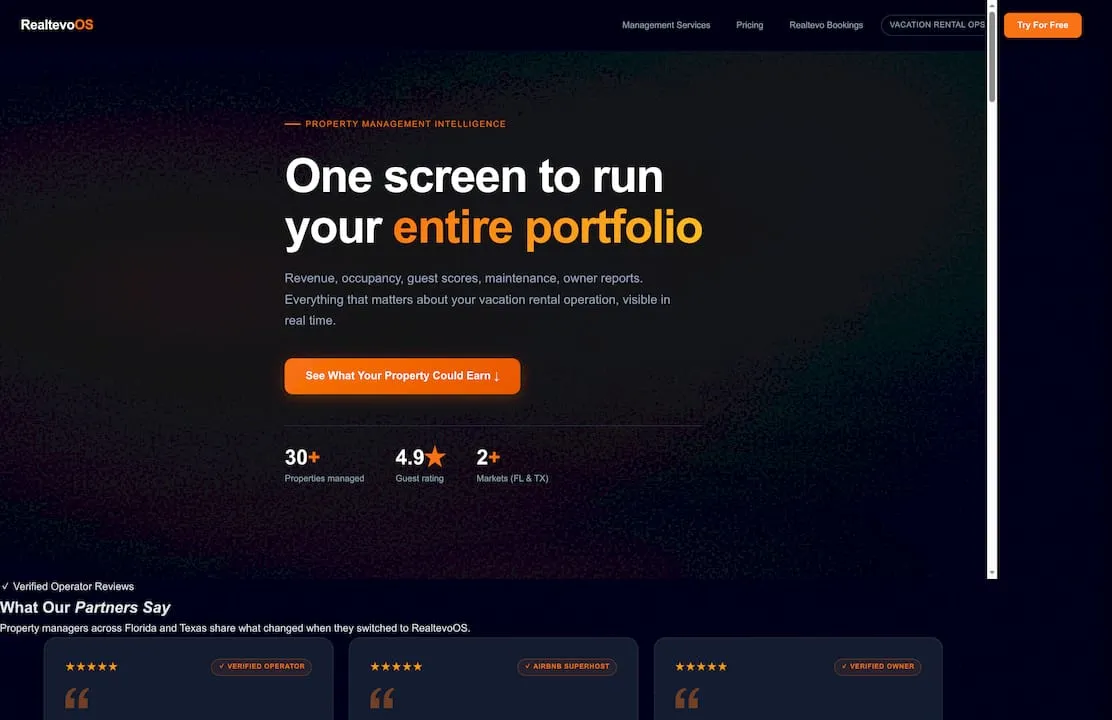
Realtevoos is built specifically for vacation rental operators who manage multiple properties across Airbnb, Vrbo, and direct booking channels. The platform consolidates reservations, guest communications, maintenance routing, and owner reporting into one command center for vacation rentals. Property managers using Realtevoos report saving several hours each week on tasks that previously required manual attention. If you are ready to move from manual processes to a fully connected operation, Realtevoos is the place to start.
FAQ
What does streamlining property workflows actually mean?
Streamlining property workflows means replacing manual, repetitive tasks with automated, trigger-based processes that run consistently without staff intervention. The goal is faster operations, fewer errors, and more time for high-value work.
How long does it take to see ROI from workflow automation?
High-impact workflows like rent collection and maintenance routing deliver ROI within 60 days. Fully integrated automation at scale produces a 312% ROI over three years with a payback period of 4–7 months for portfolios above 50 units.
Why do most property workflow automation projects fail?
Most automation failures stem from data inconsistencies and disconnected systems rather than faulty software. Trying to automate all workflows at once without a clear integration strategy is the most common cause of poor results.
What is the difference between checklist-based and event-driven workflows?
Checklist-based workflows depend on a person reviewing and acting on a list each day. Event-driven workflows fire automatically when a specific operational event occurs, such as a booking confirmation or a maintenance request, making them far more reliable and scalable.
Which workflows should vacation rental managers automate first?
Start with rent collection, maintenance routing, and guest communication sequences. These three areas account for the majority of manual labor and deliver the fastest, most measurable results when automated.