Real-Time Property Monitoring: A Guide for Managers
Discover what is real-time property monitoring and how it boosts guest satisfaction, reduces costs, and ensures compliance for property managers.

Real-Time Property Monitoring: A Guide for Managers
Real-time property monitoring is defined as the continuous tracking of rental property conditions using IoT sensors and cloud-connected software to deliver instant alerts and data-driven insights. This approach replaces calendar-based inspections with intelligence-led operations that flag problems before they become expensive. Property managers who adopt these systems report measurable gains in guest satisfaction, lower maintenance costs, and stronger compliance documentation. The technology covers everything from noise levels and water leaks to air quality and occupancy counts, giving you a complete picture of each property at any moment.
What is real-time property monitoring and how does it work?
Real-time property monitoring works by placing IoT sensors throughout a property to measure environmental and physical conditions continuously. Each sensor captures data points such as temperature, humidity, noise decibels, occupancy, air quality, and water leak signals. That data travels over a wireless network to a cloud platform, where rules and thresholds convert raw readings into alerts.
Continuous IoT sensor networks replace traditional calendar-based inspections with real-time visibility and anomaly flagging. This transition supports condition-driven predictive maintenance rather than reactive or scheduled repairs. The practical difference is significant: instead of discovering a water leak during a quarterly walkthrough, you receive a push notification within minutes of the sensor detecting moisture.
The core components of a working property monitoring system include:
- Environmental sensors: Measure temperature, humidity, air quality, and carbon monoxide levels.
- Noise sensors: Detect decibel spikes that signal unauthorized parties or disturbances.
- Occupancy sensors: Count people entering or leaving without recording identities or video.
- Water and leak detectors: Placed under sinks, near water heaters, and around HVAC units.
- Smoke and CO detectors: Provide life-safety alerts with timestamped logs for compliance.
Alerts are delivered by SMS, email, or push notification based on thresholds you set. A noise sensor might trigger at 75 decibels after 10 PM. A temperature sensor might alert you when a unit drops below 50°F, signaling a heating failure. The system distinguishes between a brief spike and a sustained problem, reducing false alarms.
Pro Tip: Set your alert thresholds during an occupied test period, not an empty one. An empty property reads differently than one with guests, and thresholds calibrated to real occupancy produce far fewer false positives.
What are the key benefits of implementing real-time property monitoring?
The benefits of real-time monitoring fall into four clear categories: cost savings, risk reduction, guest experience, and compliance. Each one compounds the others when the system is set up correctly.
Cost savings through predictive maintenance
IoT-enabled building systems can reduce maintenance costs by 10–40% by shifting to predictive, intelligence-led operations. That range is wide because the savings depend on property age, climate, and how aggressively you act on alerts. A property manager running 20 units who catches two HVAC failures early in a season can easily recover the annual cost of the monitoring system in a single avoided repair bill.
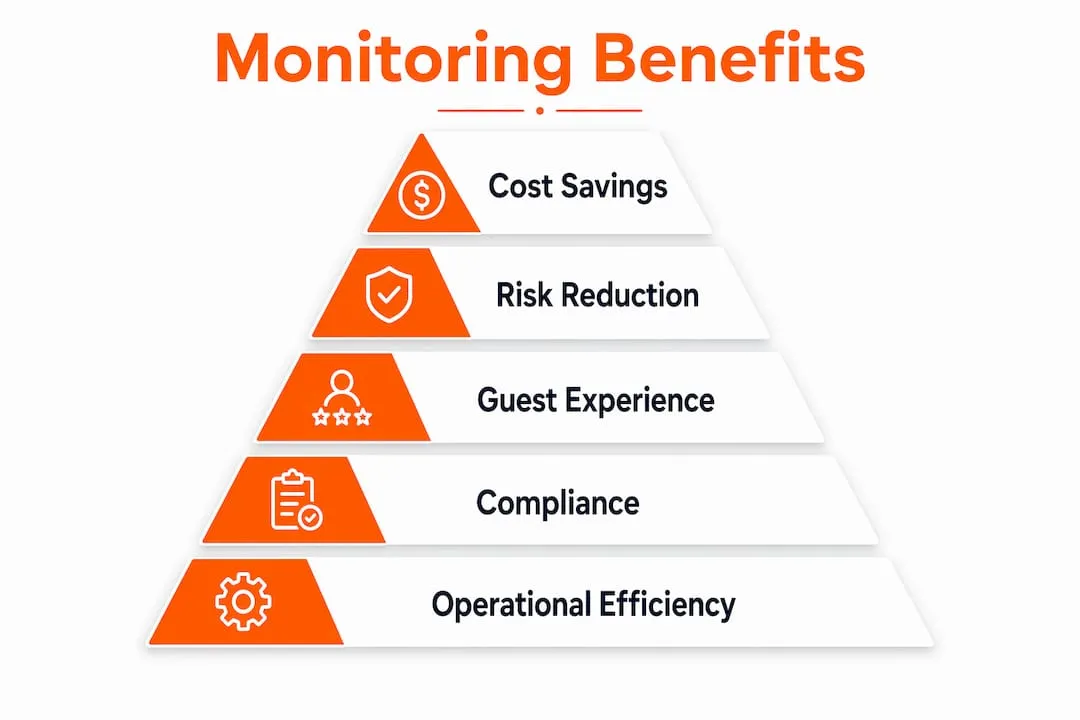
Predictive maintenance prevents equipment failures and extends asset lifecycles. A water heater that gets flagged for unusual temperature cycling can be serviced before it floods a unit. That single intervention can prevent thousands of dollars in water damage, lost revenue from displaced guests, and negative reviews.
Risk reduction and guest safety
- Early anomaly detection stops minor issues from becoming major claims. A humidity spike caught within hours prevents mold growth that would otherwise require remediation weeks later.
- Smoke and CO monitoring provides life-safety coverage and documents that your property met safety standards at the time of any incident.
- Noise threshold alerts let you contact guests before a disturbance escalates to a neighbor complaint or a platform strike on your listing.
- Timestamped incident logs serve as defensive documentation for insurance claims and regulatory compliance, removing the need for constant human oversight.
Guest experience and operational consistency
Smart building technology enhances energy management and operational consistency through connected thermostats, leak detection, and lighting sensors. Real-time energy monitoring reveals inefficiencies and standardizes performance across portfolio properties. Guests notice when a property is consistently comfortable. They also notice when it is not, and they write reviews accordingly.
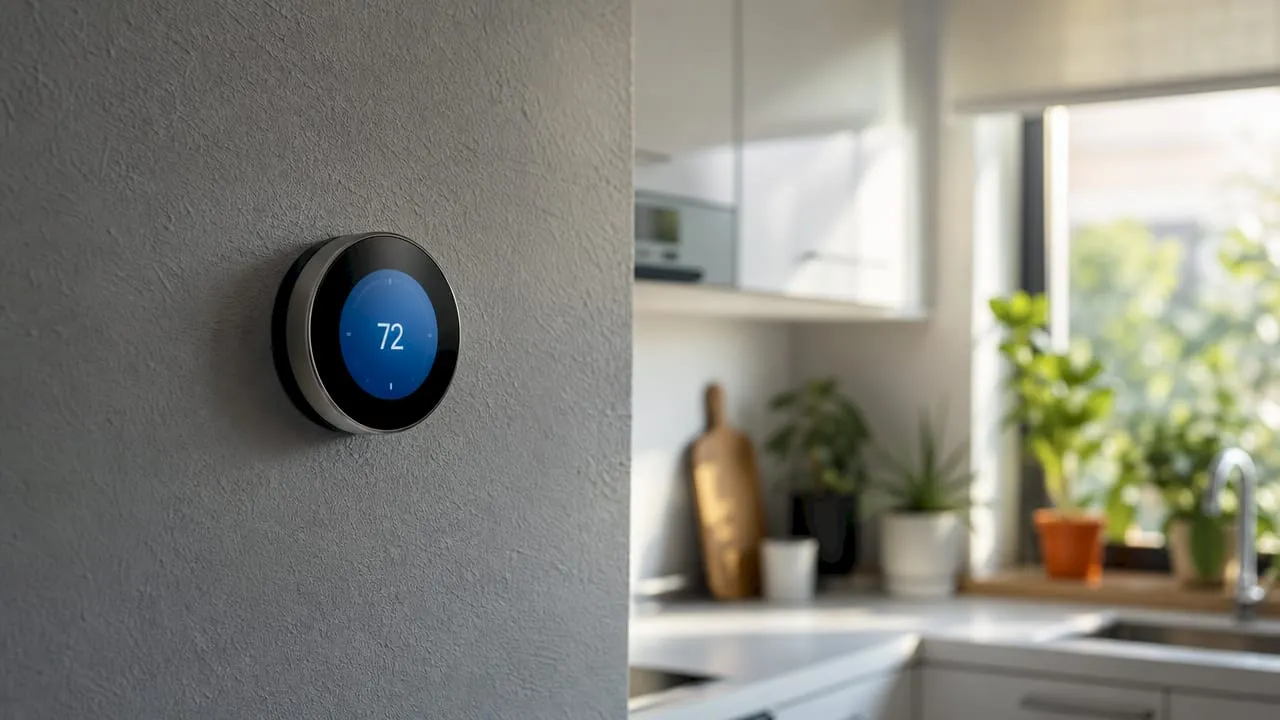
Maintaining optimal conditions throughout a stay, not just at check-in, is the operational standard that separates high-rated properties from average ones. Real-time monitoring makes that standard achievable at scale without adding staff.
Compliance and documentation
Local regulations for short-term rentals increasingly require noise management plans and safety device documentation. Monitoring systems generate automatic logs that satisfy these requirements without manual record-keeping. That audit trail also matters when disputing a guest damage claim or responding to a neighbor complaint.
What types of property monitoring systems and sensors are available?
Property monitoring systems range from single-sensor noise monitors to full environmental packages covering every room. The right choice depends on your property type, guest profile, and local regulations.
| Sensor type | What it measures | Best use case |
|---|---|---|
| Noise monitor | Decibel levels, frequency patterns | Urban properties, party-risk units |
| Environmental sensor | Temperature, humidity, air quality | All climates, mold-risk properties |
| Occupancy sensor | People count, entry/exit events | High-turnover rentals, capacity compliance |
| Water/leak detector | Moisture presence, pipe pressure | Older buildings, basement units |
| Smoke and CO detector | Combustion particles, carbon monoxide | Required by most local codes |
Connectivity options affect installation complexity and reliability. WiFi sensors are the easiest to deploy but depend on your property’s internet connection. Zigbee and Z-Wave create a local mesh network that keeps working if the internet goes down. LoRaWAN covers large properties or rural locations where WiFi signal is weak. Wired systems offer the highest reliability but require professional installation.
Privacy-first sensors focus on environmental signals instead of recording audio or video, reducing legal and reputational risks. Signal detection sensors monitor noise decibels, air quality, and occupancy counts without intrusive surveillance. This distinction matters legally in most U.S. states, where recording guests without consent carries significant liability. Always disclose monitoring devices in your listing and rental agreement.
Pricing for monitoring packages varies by coverage level. Full-service packages that include hardware, cloud monitoring, automated alerts, and PMS integration typically run in the range of $80–$150 per unit per month. Entry-level single-sensor setups cost considerably less but provide narrower coverage.
Pro Tip: Start with noise and water leak sensors if budget is limited. Noise violations are the most common cause of platform strikes, and water damage is the most expensive single event in rental property management.
How can property managers use monitoring data to improve operations?
Raw sensor data has limited value on its own. Dashboards showing raw sensor data have limited value; advanced analytics and alert systems turn signals into insights by applying context and rules to avoid noise overload. The goal is not to watch numbers all day. The goal is to receive the right alert at the right time and know exactly what to do.
Effective use of monitoring data follows a clear workflow:
- Triage by severity. A temperature reading 2°F outside normal range is informational. A reading 15°F outside normal range during a winter stay is urgent. Your alert rules should reflect that difference.
- Resolve remotely when possible. Many noise violations resolve after a single automated guest message. Alert systems distinguish issues requiring physical intervention from those solvable remotely. Reserve on-site visits for situations that genuinely require them.
- Correlate data with business outcomes. A property that consistently runs high humidity in summer may need a dehumidifier, not repeated maintenance calls. Pattern recognition over weeks and months reveals the root cause.
- Integrate alerts into your PMS. Integrating monitoring data into existing Property Management Systems is key to avoiding alert fatigue and improving responsiveness. Standalone dashboards get ignored. Alerts that appear inside the tool you already use get acted on.
- Document everything automatically. Every alert, response, and resolution should log to a record tied to the property and the stay. That record protects you and informs future decisions.
The shift from enforcement to prevention is the most important operational change monitoring enables. Real-time monitoring shifts property management from enforcement to prevention using threshold-based anomaly alerts. Managers address issues like noise or temperature spikes early, avoiding costly damages and guest disputes. You stop reacting to problems after they happen and start intercepting them before guests even notice.
Connecting your rental data across properties creates a second layer of value. Portfolio-level patterns show which properties need capital investment, which guests generate the most incidents, and which seasons require proactive preparation.
Key Takeaways
Real-time property monitoring is the most direct path from reactive rental management to proactive, data-driven operations that protect assets and improve guest outcomes.
| Point | Details |
|---|---|
| Core definition | Continuous IoT sensor tracking delivers instant alerts on property conditions, replacing manual inspections. |
| Cost impact | Predictive maintenance enabled by monitoring can reduce maintenance costs by 10–40%. |
| Privacy compliance | Use signal-based sensors that measure decibels and air quality without recording audio or video. |
| PMS integration | Connect monitoring alerts to your property management system to prevent alert fatigue and improve response. |
| Start small | Noise and water leak sensors deliver the highest return for managers with limited initial budgets. |
Why proactive monitoring is the real competitive edge
The property managers I see pulling ahead in 2026 are not the ones with the most listings. They are the ones who know what is happening inside their properties at any given moment. That sounds obvious, but most operators are still flying blind between check-in and checkout.
The privacy angle is where I think the industry gets it wrong most often. Managers hear “monitoring” and immediately think about cameras or audio recording. That instinct creates legal exposure and destroys guest trust. The better approach is environmental monitoring: you know the noise level, the temperature, the humidity, and whether there is smoke. You do not know what guests are saying or doing. That distinction is not just a legal protection. It is a genuine respect for your guests that shows up in reviews.
The other mistake I see is treating monitoring as a standalone tool. A noise alert that lives in a separate app you check twice a day is nearly useless. The same alert surfaced inside your PMS, tied to the current reservation and the guest’s contact information, is something you can act on in 90 seconds. The technology is only as good as the workflow it sits inside.
My honest advice: start with two sensor types, build the workflow around them, and expand from there. Managers who try to instrument every room on day one end up overwhelmed and abandon the system within three months. The ones who start focused and build habits around the data are the ones still using it a year later, and making better decisions because of it.
— Jose
How Realtevoos supports real-time monitoring for rental managers
Property managers who want to act on monitoring data need more than alerts. They need a central place where those alerts connect to reservations, guest communications, and maintenance workflows.

Realtevoos serves as the command center for vacation rental operators, pulling together data streams from Airbnb, Vrbo, and property monitoring systems into a single dashboard. When a noise alert fires, you see it alongside the active reservation, the guest’s contact details, and your automated messaging tools. Property managers using Realtevoos report saving several hours each week by replacing manual report-building with AI-driven automation. If you manage multiple properties and want monitoring data to actually change how you operate, explore Realtevoos to see how integrated operations work in practice.
FAQ
What is real-time property monitoring?
Real-time property monitoring is the continuous tracking of rental property conditions using IoT sensors and cloud software to deliver instant alerts on noise, temperature, humidity, water leaks, and occupancy. It replaces scheduled manual inspections with condition-driven alerts that let managers act before problems escalate.
How does property monitoring protect guest privacy?
Privacy-first monitoring systems use signal detection sensors that measure environmental data like decibel levels and air quality without recording audio or video. This approach complies with U.S. privacy laws and should always be disclosed in your rental listing and agreement.
What sensors do property managers need most?
Noise monitors and water leak detectors deliver the highest return for most rental managers. Noise violations are the leading cause of platform strikes, and water damage is the most expensive single event in rental property management.
How much do property monitoring systems cost?
Full-service monitoring packages that include hardware, cloud alerts, and PMS integration typically cost between $80 and $150 per unit per month. Entry-level single-sensor setups cost less but cover fewer risk categories.
How does monitoring data connect to predictive maintenance?
IoT sensors flag early signs of equipment stress, such as unusual temperature cycling or humidity spikes, before failures occur. Acting on those signals shifts maintenance from reactive repairs to predictive maintenance that extends asset lifecycles and reduces emergency costs.