The ultimate property management checklist for efficiency
Streamline your rentals with our ultimate property management checklist. Ensure smooth operations and boost guest satisfaction today!
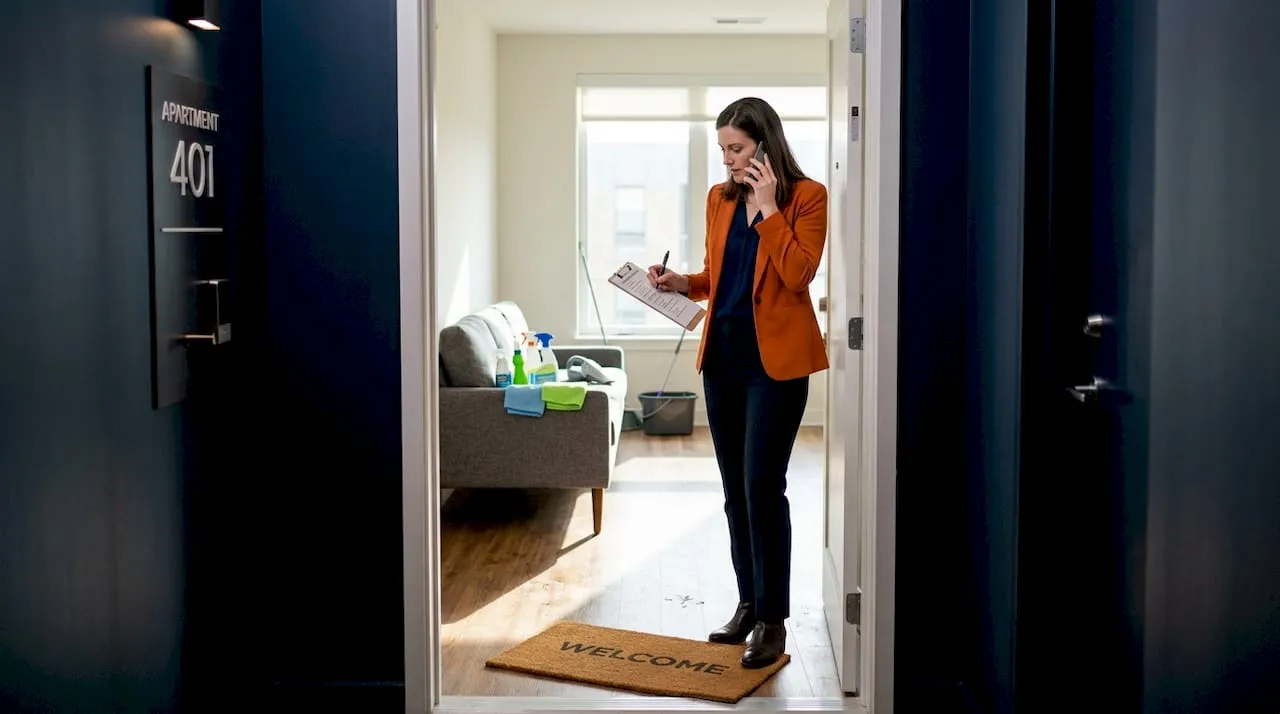
The ultimate property management checklist for efficiency
Running vacation rentals across multiple properties is a constant juggling act. One missed restock, a skipped safety check, or a bathroom that didn’t get a second pass can turn a five-star stay into a one-star review overnight. The gap between a smooth operation and a chaotic one rarely comes down to effort — it comes down to systems. A well-structured property management checklist is the backbone of consistent, scalable operations, and this guide gives you a complete, actionable framework to implement across every property you manage.
Table of Contents
- What makes a great property management checklist?
- The master property management checklist: Step by step
- Handling edge cases: Same-day turnovers and high-scrutiny areas
- Deep-cleaning intervals: Going beyond the turnover
- Summary comparison: Turnover vs. deep-cleaning tasks
- Our perspective: Checklists are infrastructure, not admin
- Take your checklists from paper to platform
- Frequently asked questions
Key Takeaways
| Point | Details |
|---|---|
| Standardize room-by-room | Checklists organized by room ensure nothing gets overlooked during turnovers. |
| Don’t skip deep cleans | Schedule deep cleans every 4–6 weeks or 10–15 stays to prevent build-up and preserve property value. |
| Prioritize high-risk areas | Start turnovers with bathrooms and kitchens as these drive most guest feedback. |
| Restock and safety checks | Including supply and safety checks reduces emergencies and enhances guest satisfaction. |
What makes a great property management checklist?
Now that you know why details matter, let’s clarify what makes a property management checklist truly effective.
Not all checklists are created equal. A generic list of tasks scribbled on a notepad won’t cut it when you’re managing 20 or 50 properties across multiple markets. What separates a checklist that actually works from one that collects dust is structure, specificity, and repeatability.
The most effective checklists share a few core qualities. They are organized room by room, which means your cleaning and inspection team moves through a property in a logical sequence without doubling back or missing spaces. They include a dedicated restocking section so consumables like toiletries, paper goods, and coffee supplies are never left to chance. They incorporate safety checks — smoke detectors, carbon monoxide alarms, door locks, and entry codes — as non-negotiable line items. And they close with a final walkthrough that simulates the guest’s arrival experience.
According to turnover cleaning checklist standards, turnover checklists are most effective when they are room-by-room, standardized, include a restocking section, and end with a final walkthrough or guest-style check. This structure isn’t just a best practice — it’s the difference between catching a problem before check-in and receiving a complaint message at 10 PM.
Here’s what every strong property management checklist must include:
- Room-by-room task breakdown covering every area of the property
- Standardized cleaning sequences to prevent skipped steps regardless of who is cleaning
- Restocking checklist for toiletries, kitchen consumables, and cleaning supplies
- Safety and systems check including smoke detectors, CO alarms, smart locks, and WiFi
- Final walkthrough protocol with a guest-perspective inspection before marking ready
- Photo documentation prompts for accountability and dispute resolution
- Maintenance flag section to log issues for follow-up without delaying turnover
“A checklist is only as good as the team using it. Build it so that any trained cleaner or inspector can follow it without needing to ask questions — that’s the real test of a great system.”
Checklists also reduce the mental load on your staff. When every step is written down and sequenced, your team spends less time deciding what to do next and more time executing. That efficiency compounds fast across a large portfolio.
The master property management checklist: Step by step
With the right criteria in mind, here’s a step-by-step checklist you can adapt immediately.
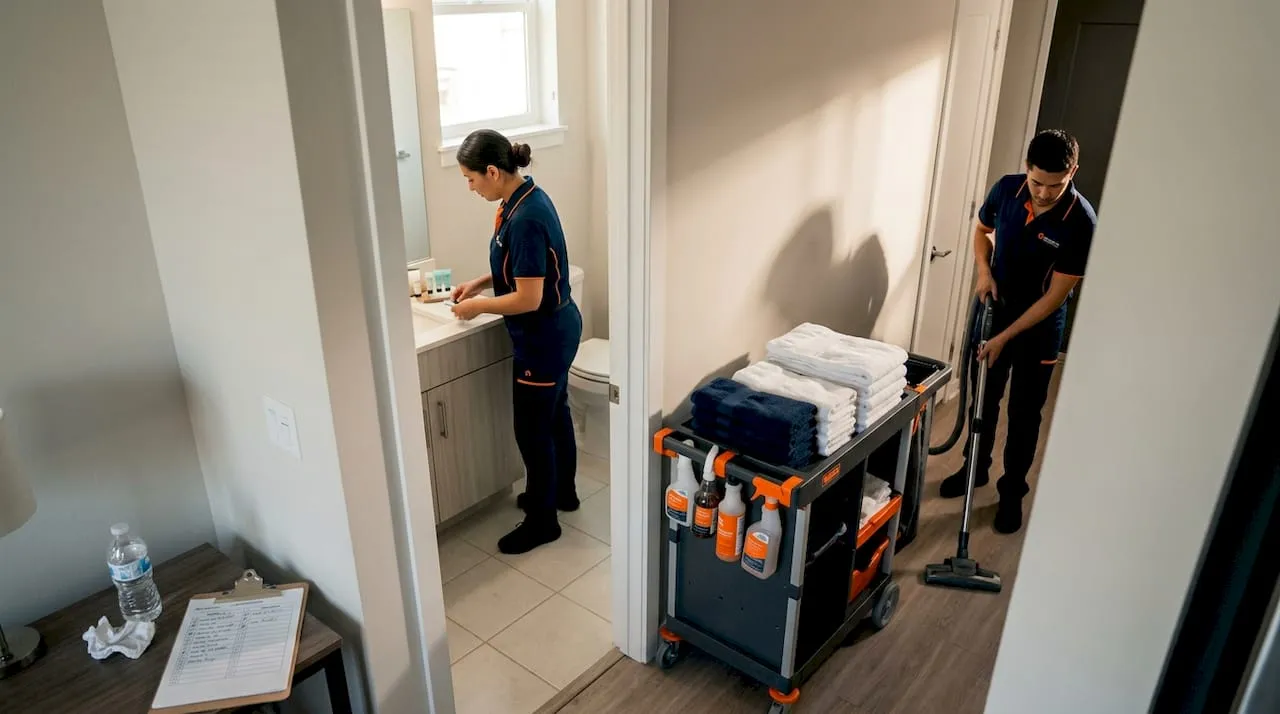
The following breakdown covers the full turnover sequence for a standard vacation rental. Adapt it to your property size and configuration, but keep the structure intact.
Bathrooms (start here — highest guest scrutiny):
- Remove all used towels and linens
- Scrub and disinfect toilet, inside and out
- Clean sink, faucet, and mirror
- Scrub shower or tub, including grout lines
- Mop floor and wipe baseboards
- Replace all towels with freshly laundered sets
- Restock toiletries: soap, shampoo, conditioner, toilet paper
- Check and replace any expired or near-empty items
Kitchen:
- Empty and wipe down the refrigerator interior
- Clean stovetop, oven exterior, and microwave inside and out
- Run or empty the dishwasher and wipe down the exterior
- Wipe all countertops and cabinet fronts
- Check dishes, glasses, and cookware for cleanliness and chips
- Restock coffee, sugar, salt, pepper, and any welcome supplies
- Empty trash and replace liner
- Check under the sink for leaks or pests
Bedrooms:
- Strip all beds and replace with fresh, laundered linens
- Dust all surfaces including nightstands, lamps, and headboards
- Vacuum mattresses and check for stains
- Clean mirrors and windows
- Check closets for left-behind guest items
- Inspect and replace any worn or stained pillowcases or duvet covers
Living areas:
- Dust all surfaces, shelves, and electronics
- Vacuum upholstered furniture and check cushions
- Clean windows and glass doors
- Wipe remote controls and light switches with disinfectant
- Check and straighten all decor items
Safety and systems check:
- Test smoke detectors and CO alarms
- Verify smart lock codes are updated and functioning
- Confirm WiFi is working and password is displayed correctly
- Check all exterior doors and windows lock securely
- Inspect fire extinguisher charge level
Restocking section:
- Toiletries (soap, shampoo, conditioner, body wash)
- Paper goods (toilet paper, paper towels, tissues)
- Kitchen consumables (coffee pods, sugar, condiments)
- Cleaning supplies for guest use (dish soap, sponge, trash bags)
- Welcome items if applicable (snacks, local guides)
The Enhanced Clean guidelines referenced by Airbnb emphasize using approved disinfectants and a multi-step, room-by-room process between every stay — a standard that protects both guests and your ratings.
Pro Tip: For same-day turnovers, stage fresh linens and all restocking supplies in a dedicated cart or bag before the previous guests check out. This cuts transition time significantly and reduces the chance of running back to a supply closet mid-turnover.
For teams managing large portfolios, checklist automation tools can assign tasks, track completion in real time, and flag incomplete steps before a property is marked ready — removing the guesswork entirely.
Handling edge cases: Same-day turnovers and high-scrutiny areas
A one-size-fits-all checklist isn’t enough — certain scenarios demand extra precision.
Same-day turnovers are where most property management operations feel the pressure. You have a hard checkout at 10 AM and a hard check-in at 3 PM. That’s five hours to turn a property that might have hosted a family of six for a week. Order matters enormously here.
Start with bathrooms and kitchens every single time. These two areas generate the majority of guest complaints. A hair on the bathroom floor or a sticky stovetop burner can tank an otherwise perfect review. By tackling them first, you ensure the highest-scrutiny spaces get maximum attention while your team is fresh and focused.
Here’s the prioritized order for same-day turnovers:
- Bathrooms first: Scrub, disinfect, restock, and stage towels
- Kitchen second: Deep wipe, restock, and check appliances
- Bedrooms third: Strip, replace linens, dust, and vacuum
- Living areas last: Dust, vacuum, and reset decor
- Final walkthrough: Guest-style inspection of all rooms
Supply staging is a game-changer. Before the previous guests even check out, have your turnover kit ready: fresh linens in a labeled bag, restocking supplies pre-counted, and cleaning products organized by room. This eliminates the time wasted hunting for supplies mid-clean.
Automating turnovers through a centralized platform means your team gets real-time task assignments, knows exactly what’s needed at each property, and can flag issues without calling a manager.
Pro Tip: Build a “high scrutiny” sub-checklist specifically for bathrooms and kitchens. This is a short, focused list — maybe 8 to 10 items — that a supervisor or second team member uses to spot-check those rooms before the final walkthrough. It adds a layer of quality control without adding significant time.
According to checklist design best practices, explicitly covering high-scrutiny guest areas like bathrooms and kitchens, combined with a prioritized cleaning order and pre-staged supplies, is the most reliable way to handle same-day turnovers without quality slipping.
Deep-cleaning intervals: Going beyond the turnover
Routine turnovers keep properties guest-ready but don’t catch everything — let’s explore deep cleaning practices.
A standard turnover checklist is built for speed and consistency. It gets a property from “used” to “guest-ready” efficiently. But it isn’t designed to address the gradual buildup that happens over weeks and months of continuous bookings. That’s where periodic deep cleaning becomes essential.
Deep cleans address the things that regular turnovers miss: grout discoloration, the inside of the oven, dust behind large appliances, buildup under furniture, and mineral deposits on faucets. Left unaddressed, these issues don’t just look bad — they accelerate wear and tear on the property, leading to higher repair and replacement costs over time.
The standard interval most operators use is every 4 to 6 weeks or every 10 to 15 bookings, whichever comes first. This cadence keeps properties in peak condition without over-investing in cleaning labor. As noted in deep clean scheduling guidance, operators who skip a separate deep-clean cadence risk missing gradual buildup in grout, baseboards, and inside appliances — the kind of deterioration that shows up in guest photos and review comments.
Deep-clean task list (beyond standard turnover):
- Scrub grout lines in bathrooms and kitchen backsplash
- Clean inside the oven, including racks and door glass
- Wipe down the inside of the refrigerator, including drawers and seals
- Pull out and clean behind the refrigerator and stove
- Wash all windows inside and out
- Dust ceiling fans, light fixtures, and vents
- Clean baseboards and door frames throughout
- Launder all decorative pillows, throws, and mattress protectors
- Descale faucets, showerheads, and coffee makers
- Inspect and clean HVAC filters
“Deep cleaning isn’t just about hygiene — it’s about protecting your asset. A property that receives regular deep cleans will hold its value longer and generate fewer maintenance emergencies.”
Scheduling deep cleans in advance, tied to your booking calendar, ensures they happen consistently rather than reactively. Many operators build the cost into their management fee structure or pass it through as a periodic property maintenance expense.
Summary comparison: Turnover vs. deep-cleaning tasks
To make implementation simple, here’s a comparison you can use as a quick reference.
Understanding the operational difference between a standard turnover and a deep clean helps you communicate expectations clearly to your cleaning teams and property owners. Here’s a side-by-side breakdown:
| Task area | Standard turnover | Deep clean |
|---|---|---|
| Bathrooms | Scrub, disinfect, restock | Grout scrubbing, descaling fixtures |
| Kitchen | Wipe surfaces, check appliances | Inside oven, behind appliances |
| Bedrooms | Fresh linens, dust, vacuum | Mattress protectors, under furniture |
| Living areas | Dust, vacuum, reset decor | Ceiling fans, vents, window washing |
| Safety check | Smoke/CO detectors, locks | HVAC filters, fire extinguisher |
| Restocking | Full restock every turnover | Audit and bulk reorder as needed |
| Frequency | Every guest checkout | Every 4 to 6 weeks or 10 to 15 bookings |
According to vacation rental cleaning guidance, deep clean intervals are typically every 4 to 6 weeks or every 10 to 15 bookings, whichever comes first, specifically to address items that regular turnarounds miss.
Key takeaways for implementation:
- Use the turnover checklist for every single checkout, no exceptions
- Schedule deep cleans proactively on your booking calendar
- Assign deep cleans to your most experienced team or a specialized vendor
- Document deep clean completion with photos for owner reporting
- Track deep clean history per property to identify patterns and recurring issues
The combination of a rigorous turnover checklist and a scheduled deep-clean cadence is what separates properties that consistently earn top ratings from those that gradually decline in guest satisfaction scores.
Our perspective: Checklists are infrastructure, not admin
Most property managers treat checklists as a cleaner’s tool. We think that’s a costly mistake. A checklist is operational infrastructure — the same way a software system or a financial process is infrastructure. When it breaks down or gets skipped, the consequences ripple through your entire operation: bad reviews, owner complaints, emergency maintenance calls, and staff confusion.
The operators who scale successfully don’t just have good checklists. They have checklists that are enforced, tracked, and continuously improved. They treat a missed step as a system failure, not a human error. That mindset shift changes how you build your processes. Instead of asking “why didn’t the cleaner do this?” you ask “why didn’t our system catch this?”
There’s also a revenue argument that rarely gets made explicitly. Properties with consistent, documented turnover processes command higher rates. Owners trust managers who can show them a paper trail. Guests leave better reviews when every stay feels identical in quality. That consistency is built on checklists — not talent alone.
The uncomfortable truth is that most operational problems in vacation rental management aren’t caused by lazy staff or bad vendors. They’re caused by ambiguous processes. When a checklist is clear, sequenced, and non-negotiable, the vast majority of those problems disappear.
Take your checklists from paper to platform
Managing checklists manually across dozens of properties is where consistency starts to break down. A task completed on paper in one market doesn’t automatically update your oversight dashboard. A missed step in a remote property doesn’t trigger a flag until a guest complains.

That’s exactly the operational gap that Realtevoos is built to close. The platform centralizes your turnover workflows, automates task assignments to cleaning teams and vendors, and gives you real-time visibility into completion status across every property in your portfolio. When a step is missed or a safety check is skipped, the system flags it before the guest arrives — not after. If you’re managing multiple listings and want to bring the same rigor to your operations that the best-in-class operators use, Realtevoos gives you the infrastructure to do it at scale.
Frequently asked questions
How often should I perform deep cleaning in vacation rentals?
Deep cleaning is commonly scheduled every 4 to 6 weeks or every 10 to 15 bookings, whichever comes first, to maintain property standards and catch buildup that regular turnovers miss.
What tasks should a turnover checklist include for vacation rentals?
A turnover checklist should cover room-by-room cleaning, restocking consumables, safety system checks, and a final guest-style walkthrough to confirm the property is fully ready before check-in.
Why are bathrooms and kitchens prioritized in turnovers?
Bathrooms and kitchens face the most guest scrutiny during a stay, meaning any missed cleaning in these rooms is most likely to generate complaints, negative reviews, or refund requests.
Is it necessary to restock supplies during every turnover?
Yes — restocking consumables and verifying safety essentials at every turnover keeps the guest experience consistent and prevents the kind of last-minute disruptions that generate emergency calls and poor reviews.