Unified Dashboard for Rentals: What Managers Need to Know
Discover what a unified dashboard for rentals is and how it centralizes data, streamlines operations, and boosts efficiency for property managers.

Unified Dashboard for Rentals: What Managers Need to Know
A unified dashboard for rentals is a centralized, real-time platform that consolidates all property data — from bookings and maintenance to financials and guest communications — into a single operational view. In the vacation rental industry, this concept is also called a property management command center or integrated rental platform. Property managers running multiple listings on Airbnb, Vrbo, or direct booking sites know the cost of fragmented data: missed maintenance requests, conflicting revenue figures, and hours lost switching between tools. A unified rental dashboard solves that by pulling every data stream into one place, giving you one version of the truth across your entire portfolio.
What is a unified dashboard for rentals, exactly?
A unified rental dashboard integrates multiple property management systems into one centralized, interactive view for real-time portfolio insights. That definition matters because it separates genuine unified platforms from simple reporting overlays that just display numbers without connecting the underlying systems.
The critical distinction is where data originates. A true single source of truth is an operating platform that captures transactions once, in real time, at the point of action. A dashboard that pulls from disconnected spreadsheets or exports is not unified. It is a visual summary built on fragmented inputs, which means it carries latency errors and duplication risks from the start.

For vacation rental property managers, this distinction is practical, not theoretical. If your occupancy rate in your booking tool does not match the figure in your accounting software, you do not have a unified platform. You have two systems that disagree, and every decision you make sits on shaky ground.
How does a unified dashboard work in vacation rental management?
The engine behind a unified rental dashboard is data integration through APIs and automated pipelines. Integrated data pipelines automate collection and validation of rental data, reducing errors and speeding up reporting. Each connected system, whether it handles bookings, maintenance tickets, or owner payouts, sends data through a standardized pipeline into a central data layer.
That central layer relies on a consistent data model. Consistent data modeling with unique IDs for units, leases, and tenants eliminates conflicting data across systems. In practice, this means every property, every reservation, and every guest record carries a unique identifier that links financial data, maintenance history, and occupancy records together. Without that structure, even a beautiful dashboard interface produces conflicting reports.
The data flow in a working unified platform looks like this:
- Booking systems (Airbnb, Vrbo, direct booking engines) push reservation data in real time
- Accounting modules capture revenue, owner payouts, and expense records at the transaction level
- Maintenance systems log work orders, completion status, and costs tied to specific property IDs
- Guest communication tools record response times and satisfaction signals
- Compliance and tax modules track jurisdiction-specific requirements across your portfolio
Pro Tip: Before evaluating any dashboard platform, ask the vendor one question: does the system capture transactions at the source, or does it import exports from other tools? The answer tells you immediately whether you are looking at a true unified platform or a reporting layer.
What are the key features of unified rental dashboards?
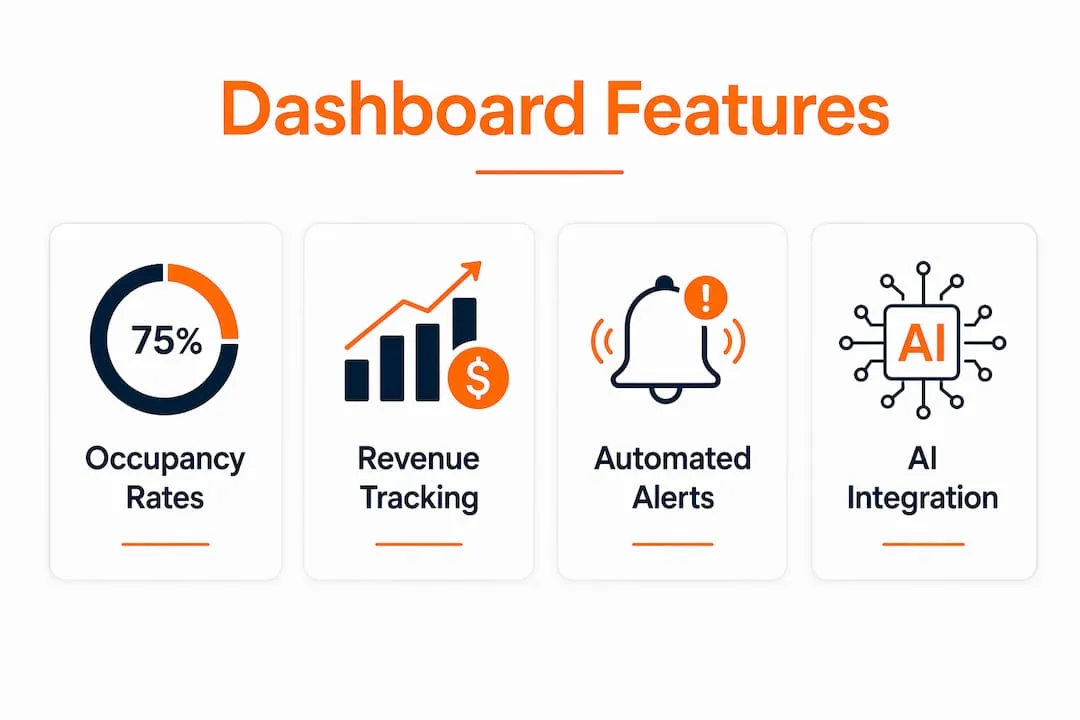
A well-built unified rental dashboard delivers far more than charts. The features that matter most to property managers fall into four functional categories.
Portfolio-wide KPI visualization
The dashboard displays occupancy rates, revenue per available night, maintenance status, and payment tracking across every property simultaneously. You see the full picture without running separate reports. Drill-down capability lets you click from a portfolio summary into a single property, then into a specific reservation or work order.
Comparative benchmarking
Side-by-side property views let you identify which listings outperform others and why. A property with 90% occupancy but low revenue per night signals a pricing problem. A property with high revenue but rising maintenance costs signals an asset condition issue. Comparative views surface these patterns fast.
Automated alerts and task prioritization
The dashboard flags issues without you having to look for them. Overdue maintenance requests, payment delinquencies, and low review scores trigger alerts so your team responds before guests notice problems.
AI-ready data foundation
A unified platform creates the clean, structured data that AI models require. Unified data platforms enable real-time asset profiles critical for smart automation and personalized rental experiences. Without this foundation, AI tools produce unreliable outputs because the underlying data is inconsistent.
| Feature | What it does for property managers |
|---|---|
| Real-time KPI display | Shows occupancy, revenue, and maintenance status across all properties at once |
| Drill-down reporting | Moves from portfolio summary to individual transaction in seconds |
| Automated alerts | Flags overdue tasks, payment issues, and low scores before they escalate |
| Comparative property views | Benchmarks performance across listings to identify outliers |
| AI integration layer | Feeds clean, structured data to predictive pricing and maintenance models |
What are the benefits of a unified dashboard for vacation rental management?
The benefits of rental dashboards go beyond convenience. They change how property managers make decisions and how fast they can act.
-
Eliminates data silos. When booking data, financials, and maintenance records live in separate tools, teams waste time reconciling conflicting numbers. A unified platform removes that friction entirely. Every team member sees the same figures.
-
Saves hours of manual work each week. Realtevoos reports that property managers save several hours each week after switching to a unified platform. Those hours come from eliminating manual report generation, copy-pasting between tools, and chasing down data from different systems.
-
Speeds up issue identification. A maintenance delay that sits unnoticed for three days in a disconnected system shows up immediately on a unified dashboard. Faster identification means faster resolution and fewer negative guest reviews.
-
Supports portfolio growth without adding complexity. Adding a new property to a unified platform means one integration, not five. Managers who centralize rental data across their portfolio scale their operations without proportionally scaling their administrative workload.
-
Improves team communication. When everyone works from the same data, conversations shift from “which number is right?” to “what do we do about it?” That shift alone improves team alignment and reduces errors caused by miscommunication.
Pro Tip: Start tracking one KPI consistently across all properties before you add more metrics to your dashboard. Occupancy rate is the best starting point because it connects directly to revenue, maintenance scheduling, and guest satisfaction.
What challenges exist when implementing unified dashboards for rentals?
Implementation is where most property managers run into trouble. The most common mistake is treating a dashboard as a visualization project rather than a data infrastructure project. A better interface does not fix broken data. It just makes broken data look cleaner.
Dashboards that do not capture transactions at source risk latency and duplication, eroding trust and making real-time reporting impossible. That erosion happens gradually. Teams stop trusting the numbers, revert to manual checks, and the dashboard becomes a decorative screen nobody uses.
The second major challenge is attempting a full system migration at once. Successful dashboard adoption is iterative, focusing on one high-impact data stream at a time to avoid operational disruptions. For most vacation rental managers, the right starting point is booking and revenue data, since that stream has the most direct financial impact and the clearest success metrics.
“A well-designed data model is invisible to users but foundational for eliminating discrepancies and enabling all teams to speak the same language in reports.”
Additional best practices for a successful rollout include:
- Audit your current data sources before connecting them. Garbage data fed into a unified platform produces garbage outputs at scale.
- Assign data ownership for each stream. Someone on your team needs to be responsible for the accuracy of booking data, another for maintenance records.
- Train your team on the dashboard before going live. Adoption fails when people do not understand what they are looking at or why it matters.
- Review your data model quarterly. As your portfolio grows, your unique identifiers and data schema need to keep pace.
How do unified dashboards enable smarter management through AI?
Unified data is the prerequisite for AI in rental management. Without unified data, AI models produce inconsistent insights. With a coherent platform, predictive maintenance, demand forecasting, and customer-facing tools all become possible. The industry is actively moving toward this single-platform model, and property managers who build the data foundation now will have a significant operational advantage.
Specific AI applications that depend on unified rental data include:
- Predictive maintenance scheduling based on property usage patterns and historical repair records
- Dynamic pricing models that adjust nightly rates using real-time occupancy, local demand signals, and competitor rate data
- Guest communication automation that personalizes messages based on booking history and stay preferences
- Compliance monitoring that flags jurisdiction-specific regulatory requirements across multi-state portfolios
- Owner reporting portals that give property owners live access to their asset performance without requiring manual report generation
The AI trends shaping property management in 2026 all share one dependency: clean, connected, real-time data. A unified dashboard is not just a management tool. It is the infrastructure that makes the next generation of rental management possible.
Key Takeaways
A unified dashboard for rentals is only as reliable as the data infrastructure beneath it. Platforms that capture transactions at the source, enforce consistent data models, and integrate all operational systems deliver real operational value. Platforms that simply visualize exported data do not.
| Point | Details |
|---|---|
| Definition matters | A unified dashboard captures transactions at source, not just displays exported data from disconnected tools. |
| Data modeling is foundational | Unique IDs for units, leases, and tenants are required for accurate, conflict-free reporting across your portfolio. |
| Iterative adoption works best | Start with one high-impact data stream, such as booking revenue, before expanding to other systems. |
| AI requires unified data | Predictive pricing, maintenance forecasting, and automation tools only work reliably on clean, connected data. |
| Time savings are real | Property managers report saving several hours each week after moving to a genuinely unified platform. |
What I have learned from watching managers adopt unified dashboards
The biggest misconception I see is that a unified dashboard is a software purchase. Property managers buy a platform, connect a few integrations, and expect the confusion to disappear. It rarely works that way. The platform is only as good as the data discipline behind it.
The managers who get the most value from unified dashboards are the ones who treat the rollout as a data project first and a technology project second. They audit their existing data before connecting it. They assign ownership for each data stream. They start with one integration, prove it works, and then expand. That approach is slower at the start, but it produces a dashboard people actually trust and use.
The other thing I have noticed is that unified dashboards change team culture in ways that matter. When everyone works from the same numbers, the conversations change. Teams stop arguing about whose spreadsheet is right and start talking about what to do. That shift is underrated. It is not just an efficiency gain. It is a clarity gain that affects every decision your team makes.
The vacation rental industry is moving fast toward AI-driven management. The managers who will benefit most are the ones building clean data foundations right now. A unified dashboard is not a luxury for large portfolios. It is the starting point for any operation that wants to grow without losing control.
— Jose
Realtevoos: a command center built for vacation rental operators
Property managers who want a unified rental dashboard without building the infrastructure from scratch have a direct path forward with Realtevoos.
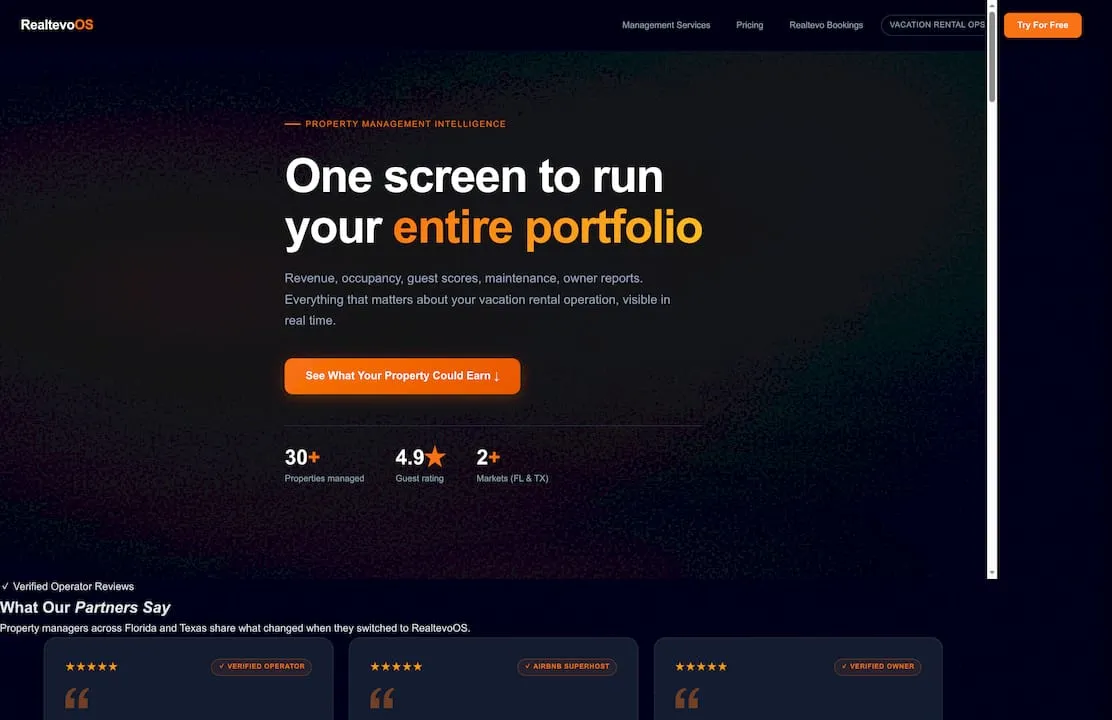
Realtevoos is a SaaS platform built specifically for vacation rental operators. It consolidates booking data from Airbnb and Vrbo, automates guest communications, and delivers a portfolio management dashboard that gives you real-time visibility across every property you manage. The platform handles the data integration, the AI automation, and the reporting, so your team focuses on guests and growth instead of manual reconciliation. Property managers using Realtevoos report saving several hours each week and seeing measurable improvements in guest satisfaction. If you manage multiple properties and want one reliable view of your entire operation, Realtevoos is built for exactly that.
FAQ
What is a unified rental dashboard?
A unified rental dashboard is a centralized platform that pulls data from booking, financial, maintenance, and operational systems into one real-time view. It gives property managers a single source of truth across their entire portfolio.
How is a unified dashboard different from a regular reporting tool?
A unified dashboard captures transactions at the source and links all data through a consistent model. A standard reporting tool displays exported data from disconnected systems, which creates latency errors and conflicting figures.
What data sources does a unified rental dashboard integrate?
Most unified rental dashboards integrate booking platforms, accounting systems, maintenance management tools, guest communication software, and compliance or tax modules through API connections.
How do unified dashboards support AI in rental management?
AI tools require clean, connected, real-time data to produce reliable outputs. A unified dashboard provides that foundation, enabling predictive maintenance, dynamic pricing, and automated guest communications.
How long does it take to implement a unified rental dashboard?
Implementation time varies by portfolio size and existing system complexity. The most effective approach is iterative, starting with one high-impact data stream and expanding gradually to avoid operational disruptions.