Vacation Rental Maintenance Checklist for Property Managers
Ensure your vacation rental shines this season with our comprehensive vacation rental maintenance checklist. Prevent costly repairs and negative reviews!
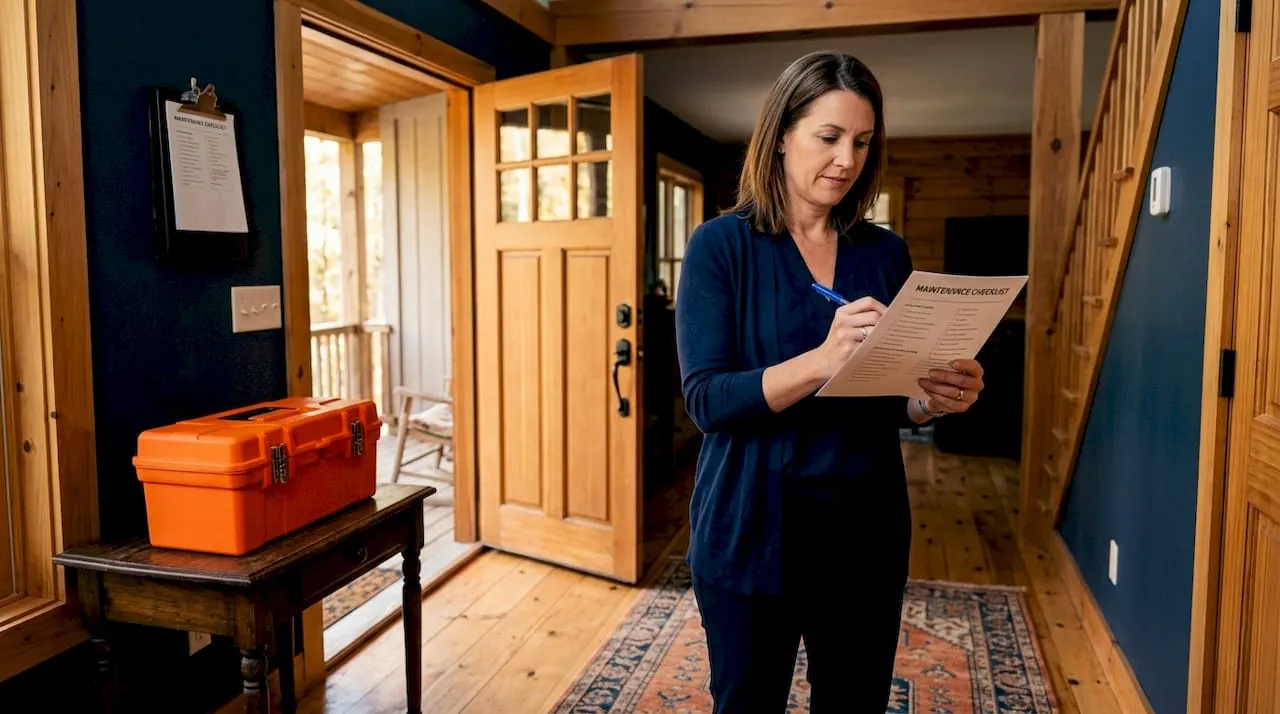
Vacation Rental Maintenance Checklist for Property Managers
A missed inspection before peak season can turn a five-star property into a liability. Your vacation rental maintenance checklist is the single most powerful tool you have for preventing negative reviews, avoiding costly repairs, and keeping guests safe. Yet most property managers treat maintenance as reactive work, fixing problems only after they surface. This guide gives you a checklist built on real-world inspection criteria, covering everything from exterior hazards to HVAC servicing to safety compliance, plus the automation tools that make managing it all at scale far less painful.
Table of Contents
- Key takeaways
- 1. What every vacation rental maintenance checklist must cover
- 2. Exterior inspection checklist for safety and curb appeal
- 3. Interior maintenance checklist for a guest-ready property
- 4. How often to run each maintenance task
- 5. Using automation tools to manage your maintenance workflow
- My honest take on maintenance: stop treating it like a chore
- How Realtevoos supports your maintenance operations
- FAQ
Key takeaways
| Point | Details |
|---|---|
| Separate cleaning from maintenance | Turnover cleaning and periodic deep maintenance serve different purposes and need separate schedules. |
| Prioritize high-liability areas | Decks, hot tubs, and safety equipment carry the highest risk and need documented inspections every season. |
| Safety compliance is non-negotiable | Local licensing requirements for electrical, plumbing, and detectors must be met to stay insured and legal. |
| Seasonal timing matters | Exterior and HVAC inspections before peak booking periods prevent the most expensive surprises. |
| Automation reduces oversights | Digital checklists and property management platforms catch what spreadsheets and memory miss. |
1. What every vacation rental maintenance checklist must cover
Not every task belongs on the same list. The most common mistake property managers make is lumping turnover cleaning together with periodic maintenance. These are fundamentally different activities. Turnover cleaning happens after every guest and focuses on surface-level readiness: fresh linens, sanitized bathrooms, and a spotless kitchen. Periodic maintenance is about the building itself, the systems inside it, and the structural components guests never notice unless something goes wrong.
A solid checklist for vacation rental managers should be organized into at least three tiers:
- Turnover tasks: Done after every checkout. Surface cleaning, restocking supplies, checking for damage, and resetting the property for the next guest.
- Deep maintenance: Scheduled every four to eight weeks. Appliance interiors, grout, baseboards, behind furniture, and any area turnover cleaners skip.
- Seasonal or semi-annual inspections: Full-property walkthroughs covering structural integrity, safety systems, HVAC, exterior surfaces, and compliance documentation.
Documentation matters as much as the tasks themselves. Some jurisdictions require vacation rentals to maintain proper electrical, plumbing, and heating systems as part of licensing inspections. Keeping dated records of every inspection protects you if a guest is injured or if a regulator shows up asking questions.
Pro Tip: Create a master checklist organized by tier, then build separate task cards for each area of the property. This lets you assign work to specific team members without handing them a 40-item document that covers everything at once.
2. Exterior inspection checklist for safety and curb appeal
First impressions matter, but exterior maintenance is really about risk management. A cracked walkway or rotting deck rail is a liability claim waiting to happen. Inspect roofing, siding, foundation, decks, and HVAC before spring bookings to minimize risk and prevent the kind of damage that accumulates quietly over winter.
Here is what your exterior checklist should include each season:
- Roof and gutters: Look for missing shingles, damaged flashing, and clogged gutters. Ice dams in colder climates can force water under roofing materials and cause interior ceiling damage.
- Siding and foundation: Check for cracks, peeling paint, water staining, or signs of shifting. Foundation issues are slow-moving but expensive to ignore.
- Walkways and driveways: Uneven pavement, cracked steps, and loose railings are the top causes of guest injuries on rental properties.
- Decks and patios: Higher-liability amenities like decks require verifying structural stability, checking support rails and fences, and reviewing electrical components. This is not a cosmetic check.
- Hot tubs and pools: Test water chemistry, inspect covers for damage, verify electrical connections, and keep a maintenance log with dates and chemical readings.
- Landscaping: Trim overhanging branches that could fall on the structure or block egress. Remove debris from around the foundation.
| Exterior area | Check frequency | Key risk if skipped |
|---|---|---|
| Roof and gutters | Semi-annual | Leaks and water damage |
| Decks and railings | Before each peak season | Structural failure, guest injury |
| Walkways and steps | Monthly | Trip and fall liability |
| Hot tub / pool | Weekly during season | Chemical hazard, equipment failure |
| Landscaping / trees | Monthly | Storm damage, blocked access |
3. Interior maintenance checklist for a guest-ready property
The interior checklist splits naturally into two tracks: what needs to happen every turnover and what only gets done on a deep-clean schedule. Getting this separation right is what keeps your costs manageable while maintaining high guest satisfaction.
Turnover essentials (every checkout):
- Strip and replace all linens and towels
- Sanitize all bathroom surfaces, fixtures, and handles
- Clean kitchen surfaces, stovetop, and sink; check inside the microwave
- Wipe down all high-touch surfaces including remotes, light switches, and door handles
- Restock consumables: toilet paper, soap, coffee, and trash bags
- Check for damage and missing items, photograph anything unusual
Deep cleaning schedule (every four to eight weeks):
Turnover cleaning maintains surface cleanliness, but deep cleans address accumulated grime in appliances, grout, and baseboards. This is not optional for properties with high booking volume. Include oven interiors, refrigerator coils, dishwasher filters, shower grout, window tracks, and behind large appliances.
Safety system checks (semi-annual at minimum):
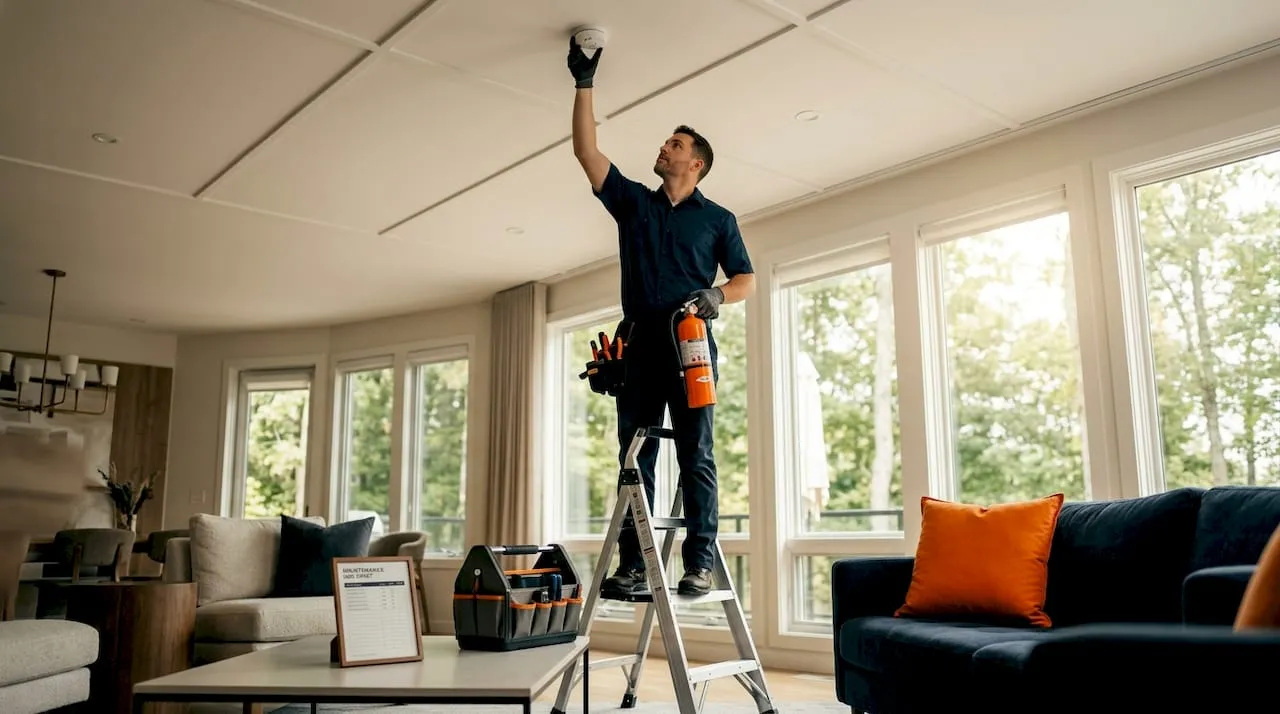
Safety equipment including smoke and carbon monoxide detectors and fire extinguishers must be tested regularly with batteries replaced and clear fire exits maintained. A smoke detector with a dead battery is worse than no detector at all: it creates a false sense of security for both you and your guests.
HVAC servicing:
Service filters, ductwork, compressors, and check thermostats before peak seasons. A mid-summer AC failure in a vacation rental generates one-star reviews and emergency service bills that could have been avoided with a $40 filter replacement.
Pro Tip: Install smart thermostats with remote monitoring. You will catch HVAC problems between guests before they become guest-facing failures, and you can track energy usage across properties in one place.
4. How often to run each maintenance task
One of the trickiest parts of managing a vacation rental maintenance checklist is answering the “how often” question. There is no universal schedule that fits every property, but there is a logic to building one that works for yours.
Start with the non-negotiables:
- After every guest: Full turnover clean, damage check, restocking
- Every four to eight weeks: Deep clean of appliances, grout, hidden surfaces
- Monthly: Walkway and exterior visual inspection, test all smoke and CO detectors
- Quarterly: HVAC filter replacement, water heater flush, check all door and window locks
- Semi-annually (before peak seasons): Full roof and structural inspection, deck and hot tub safety audit, HVAC full service, review and update maintenance logs
High-liability items like decks and hot tubs need more attention than standard intervals suggest. Inspections for decks and hot tubs should include structural stability checks, electrical safety verifications, and thorough documentation of maintenance logs to reduce liability. If you have a deck that sees heavy use in summer, inspect it before opening season and mid-season. Do not wait for something to creak.
The seasonal timing of your inspection calendar matters more than most managers realize. Regular exterior inspections before peak seasons help prevent costly property damage and guest injuries. A pre-spring walkthrough in March catches winter damage before your summer guests arrive. A pre-fall check in September catches AC and roof issues before the holiday rush.
5. Using automation tools to manage your maintenance workflow
A checklist only works if someone actually completes it on time. That sounds obvious, but in practice, maintenance tasks fall through the cracks when properties scale. When you manage one rental, a spreadsheet works. When you manage ten or twenty, manual tracking becomes the bottleneck.
Digital checklists and automation software help track maintenance tasks consistently, schedule work at the right intervals, and integrate with your booking calendar so inspections happen between stays without doubling up on labor.
Here is what to look for in any maintenance automation tool:
- Task scheduling tied to booking data: When a checkout is confirmed, a turnover task should auto-generate without someone manually creating it.
- Photo documentation built into workflows: Technicians should be able to upload photos directly to each task, creating a dated record tied to the property.
- Escalation alerts: If a task is not completed before a guest checks in, the system should flag it immediately rather than letting it slide.
- Centralized reporting: You should be able to see the maintenance status of every property in one dashboard, not by texting each cleaner individually.
- Integration with booking channels: The best rental operations automation software connects directly with Airbnb, Vrbo, and other platforms so your operations calendar and booking calendar are always in sync.
This is exactly the kind of vacation rental workflow guide that digital tools make practical. Without automation, even the best-designed checklist depends entirely on someone remembering to look at it.
My honest take on maintenance: stop treating it like a chore
I’ve worked with enough vacation rental operators to see the same pattern repeat itself. A property manager builds a solid checklist, runs it faithfully for three months, then gradually stops as bookings pick up and time gets short. The checklist becomes aspirational.
The properties that maintain their ratings year over year are not the ones with the nicest furniture. They are the ones where someone takes maintenance seriously as a business function, not a task to squeeze in when nothing else is happening. I’ve seen a single undetected deck rail failure result in an insurance claim that cost ten times what a seasonal inspection would have. And I’ve seen a property manager lose their short-term rental license because they could not produce documentation showing compliant electrical and heating systems.
Proactive maintenance reduces risk exposure from insurance claims by addressing issues before they become incidents. That is not a theory. It is the documented experience of operators who treat maintenance like a financial instrument, not a cost center.
My honest advice: build your checklist once, tie it to your booking calendar, and automate as much of the scheduling as you possibly can. The time you spend setting that up is paid back within the first avoided emergency repair.
— Jose
How Realtevoos supports your maintenance operations

Managing a multi-property maintenance program manually is where good systems go to die. Realtevoos was built to give vacation rental operators a single command center for everything that keeps properties running. The platform connects directly with Airbnb, Vrbo, and other booking channels so your maintenance calendar stays tied to actual occupancy. Tasks are auto-generated on checkout, escalation alerts fire before a guest arrives to a property with an open issue, and every inspection photo and log is stored in one place.
If you are ready to move past spreadsheets and disconnected tools, explore how Realtevoos handles maintenance workflows for property managers scaling across multiple markets. It is the kind of system that turns your checklist from good intentions into actual results.
FAQ
How often should I complete a vacation rental deep clean?
Deep cleaning is recommended every four to eight weeks for active vacation rentals, covering appliances, grout, and areas turnover cleaners skip between guest stays.
What safety equipment must vacation rentals have?
Smoke detectors, carbon monoxide detectors, and fire extinguishers are required at most short-term rentals. Safety equipment must be tested regularly with fresh batteries and clear fire exits maintained at all times.
How do I handle deck and hot tub maintenance at my rental?
Inspect structural stability, check electrical safety, and keep a dated maintenance log each season. Decks and hot tubs require documented inspections covering rails, fences, and electrical components, not just surface cleaning.
Do local regulations affect my maintenance checklist?
Yes. Many jurisdictions require licensed vacation rentals to pass inspections confirming compliant electrical, plumbing, and heating systems. Review your local licensing requirements and build compliance documentation into your regular inspection schedule.
Can automation software replace a manual maintenance checklist?
Not entirely. Automation handles scheduling, reminders, and documentation, but a human still needs to complete the physical tasks. The best approach pairs a well-designed vacation rental maintenance checklist with software that makes sure nothing gets skipped.