What Is Owner Portal in Property Management: 2026 Guide
Discover what is owner portal in property management and how it boosts efficiency, transparency, and control for property owners in 2026.

What Is Owner Portal in Property Management: 2026 Guide
Most property owners assume an owner portal is just a place to download a monthly statement. Log in, grab the PDF, log out. That misses the point entirely. Understanding what is owner portal in property management means recognizing these platforms as fully functional management interfaces that protect your investment while giving you real visibility into how your properties actually perform. This guide breaks down what these portals do, why they matter in 2026, and how both owners and managers can use them to their advantage.
Table of Contents
- Key Takeaways
- What an owner portal does in property management
- From passive reports to active owner experiences
- Best practices for managing owner portals securely
- How to use owner portals to work smarter
- My take on owner portals as a strategic tool
- How Realtevoos supports your owner portal operations
- FAQ
Key Takeaways
| Point | Details |
|---|---|
| More than a dashboard | Owner portals combine financials, documents, communications, and reporting in one secure place. |
| Self-service by design | Owners can track payments, upload documents, and monitor status without contacting their manager. |
| Portals protect all parties | Role-based permissions keep sensitive data private while still providing full operational visibility. |
| Agentic portals drive revenue | Modern platforms go beyond reports and actively support lead conversion and owner retention. |
| Managers stay in control | Owners view and upload, but core accounting and tenancy records remain manager-controlled. |
What an owner portal does in property management
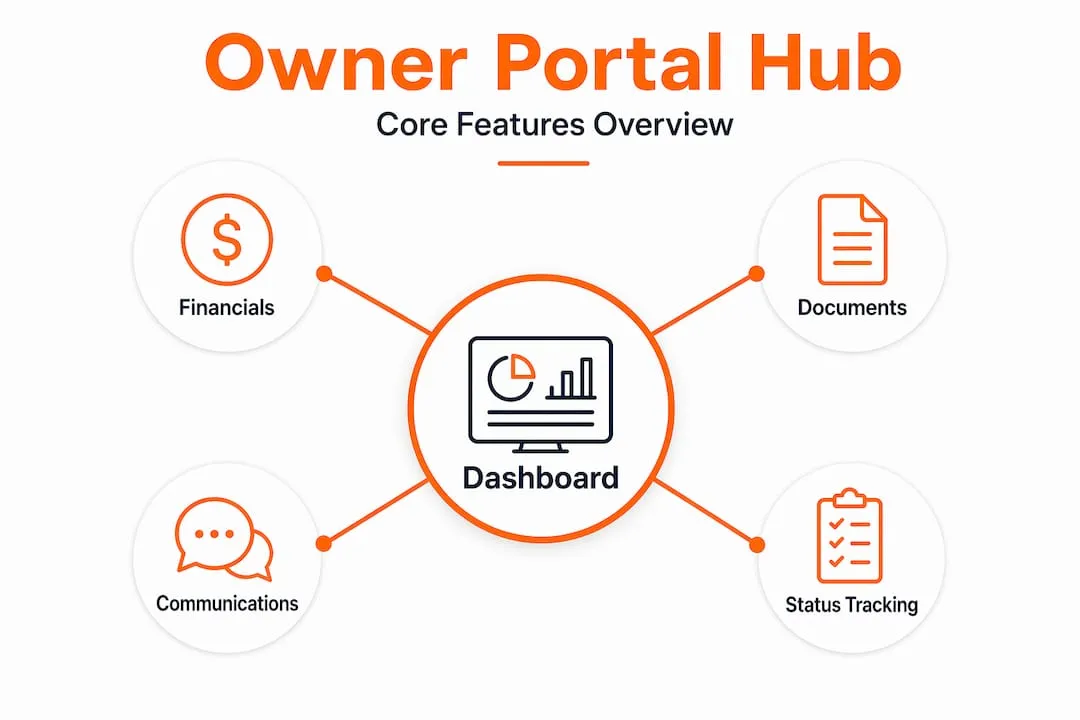
An owner portal is a secure, web-based interface that gives property owners direct access to information and tools related to their managed properties. The access is real-time, role-specific, and structured to support informed decision making without burdening the property management team with repetitive requests.
At the functional level, standard portal features typically include:
- Financial statements and owner distributions with full payment history
- Document storage and access, including leases, inspection reports, and tax forms
- Occupancy data and booking performance for short-term rental properties
- Two-way communication tools between owners and their management team
- Self-service document uploads with status tracking (pending, approved, rejected)
- Maintenance request visibility and resolution updates
The data an owner sees is specifically scoped. Good portals show operational data without exposing anything private, such as Social Security numbers, personal case files, or internal management records. This scoping is intentional. It provides transparency without creating liability or confusion.
What does an owner portal do beyond static data? It becomes the operational hub for the owner-manager relationship. Instead of an owner calling their manager to ask why a payment is late or where a signed lease went, they log in, find it themselves, and move on. That frictionless experience builds trust on both sides.
Pro Tip: If you’re evaluating owner portal software options, prioritize platforms that offer document status tracking alongside financial data. The ability to see whether a document is pending or approved eliminates a huge volume of back-and-forth communication.
From passive reports to active owner experiences
The owner portal has gone through a real transformation in the past few years. The first generation of portals was essentially a read-only statement archive. You could see what happened. You couldn’t do much about it.
Today’s portals are a different category entirely. Platforms built on agentic owner experience design give owners the ability to act, not just observe. Platforms like Blanket already support over $30 billion in assets and are actively pushing the concept of agentic ownership, where the portal doesn’t just report outcomes but helps owners understand causes, flag opportunities, and take next steps.
“Property owners now expect cutting-edge transparency and communication tools — and those expectations are directly tied to financial performance and whether they stay with their management company long-term.”
That shift is not a minor upgrade. Owner experience management is now recognized as a distinct discipline, one that property management companies can use to close more leads and generate higher revenue per managed door. The portal is the delivery mechanism for that experience.
For vacation rental operators specifically, the stakes are even higher. Owners in this space often hold multiple properties, compare performance across markets, and make rapid capital allocation decisions. A portal that shows real-time occupancy, revenue per available night, and guest satisfaction scores gives those owners something they genuinely need. A portal that only shows a monthly PDF gets ignored.

The property owner online tools category is growing fast. You now have platforms that integrate with Airbnb, Vrbo, and direct booking channels to consolidate data inside the owner’s dashboard in real time. The owner dashboard in property management is no longer a reporting layer. It is a performance intelligence layer.
Compare the two generations side by side:
| Feature | Legacy portal | Modern portal |
|---|---|---|
| Financial reporting | Monthly PDF download | Real-time statements with trends |
| Communication | Email outside the platform | In-portal messaging with history |
| Document management | Static file storage | Upload, track, approve workflows |
| Performance data | Basic occupancy numbers | Revenue analytics across channels |
| Owner actions | View only | Upload, request, flag, and respond |
| Audit trail | None | Every action logged automatically |
Best practices for managing owner portals securely
Giving owners more visibility is good. Giving them unchecked access to your operational systems is not. The difference comes down to deliberate design and access scoping.
Here is how property managers should structure their portal setup:
-
Define what owners can see versus what they can do. View access and edit access are not the same. Owners should be able to read their financial statements and see inspection reports. They should not be able to modify accounting records or change tenancy terms. Deliberate scoping prevents over-exposure of internal management data.
-
Use role-based permissions from day one. Role-based access controls (for example, Administrator versus Member) give you granular control over who sees what. An owner with a single condo has different needs than an investor with twenty short-term rentals.
-
Make the audit trail work for you. Every portal action is automatically logged, which creates a compliance record with zero extra effort. Use this to resolve disputes, demonstrate service delivery, and satisfy any regulatory requirements.
-
Communicate the portal to owners proactively. Many owners do not use their portal simply because no one walked them through it. A simple onboarding email with a short walkthrough video eliminates this gap entirely.
-
Review access settings regularly. Property ownership changes, management agreements expire, and personnel shifts happen. A quarterly review of who has access to what prevents outdated permissions from becoming a security issue.
Pro Tip: When onboarding a new property owner, schedule a 15-minute portal walkthrough call. Owners who understand what the portal can do are far less likely to send you repetitive status-check emails.
The practical benefit of getting this right is significant. Portals that are well-scoped reduce staff inquiry volume by letting owners independently track payments, document status, and holds. Your team spends less time answering repetitive questions and more time on work that actually requires human judgment.
How to use owner portals to work smarter
Knowing a portal exists is one thing. Knowing how to use owner portal features to genuinely improve your operations is another. Here is where most owners and managers leave real value on the table.
For property owners, the smartest use of a portal starts with routine. Log in weekly, not just when something goes wrong. Review your owner statements the moment they post. Track occupancy trends across periods rather than just looking at the current month. When you spot a pattern, flag it through the portal’s communication tool instead of sending a one-off email. That creates a documented conversation your manager can act on with full context.
Document management is another underused feature. Self-service document uploads with pending and approved status tracking mean you never have to wonder whether your signed agreement was received. Upload it, watch it move through the approval workflow, and you have your confirmation without a single email exchange.
For property owners managing multiple units or vacation rentals across markets, the owner dashboard becomes genuinely critical. You can spot which properties are underperforming, which ones are approaching maintenance thresholds, and where your cash flow is strongest, all from a single view. That kind of real-time visibility shapes smarter decisions about reinvestment, pricing, and operational priorities.
For property managers, the smartest approach is to treat the portal as your primary communication layer, not a secondary one. Route financial questions, document requests, and status updates through the portal by default. This reduces the number of communication threads you’re managing, keeps everything in one place, and gives you a clean record of every interaction.
Real-time data also helps you get ahead of owner concerns before they become complaints. If you can see that an owner’s property had a down month in occupancy before they do, you can post a note in the portal explaining the cause and your response. That proactive posture is what separates managers who retain owners long-term from those who are constantly putting out fires.
My take on owner portals as a strategic tool
I’ve watched property management companies underinvest in owner portals for years, treating them as a checkbox feature rather than a genuine relationship tool. That is a mistake that compounds over time.
What I’ve found is that the owners who churn, who move their properties to another manager or sell out of frustration, are almost always owners who felt they were operating blind. They didn’t know what was happening with their property. They had to chase their manager for basic information. The portal, when used well, solves that problem at the source.
My honest take is that owner experience management is the next real competitive frontier in property management. The technical quality of your maintenance response or your leasing process matters, but owners increasingly evaluate their managers on how informed and respected they feel. A great portal delivers that feeling at scale, without requiring a human touchpoint every time.
I also think managers worry too much about giving owners “too much” visibility. In my experience, transparency builds trust rather than creating friction. When owners can see the data themselves, they stop second-guessing you. The portal shifts the dynamic from “prove it to me” to “I can see it for myself.”
The challenge ahead is that portal adoption still lags in many smaller operations. The technology exists. The behavior change is what takes work.
— Jose
How Realtevoos supports your owner portal operations
If you manage vacation rentals across multiple markets, you already know that generic property management software rarely matches the pace of short-term rental operations. Realtevoos is built specifically for operators who need real-time intelligence, automated owner reporting, and a consolidated view across channels like Airbnb and Vrbo. Instead of assembling a patchwork of tools, you get one platform that handles owner communications, performance data, maintenance escalation, and AI-driven reporting in one place. For managers who want to deliver the kind of owner portal experience that retains clients and drives revenue growth, Realtevoos is built for exactly that challenge.
FAQ
What is an owner portal in property management?
An owner portal is a secure online platform that gives property owners access to financial statements, documents, occupancy data, and direct communication with their management team. It provides property management owner access without requiring managers to manually send reports or answer repetitive status questions.
What features does an owner portal typically include?
Standard property management portal features include owner statements, payment history, document storage, inspection reports, occupancy data, and in-portal messaging. More advanced platforms also offer real-time revenue analytics, document approval workflows, and automated audit trails.
Can owners make changes through the portal?
Owners can typically upload documents and send communications, but they cannot modify core accounting records or tenancy data. This access structure is intentional and protects the management company’s operational authority while still providing meaningful visibility.
How does an owner portal benefit property managers?
Owner portals reduce staff workload by letting owners independently track payments and document status, which lowers the volume of routine inquiry calls. They also create a documented communication record that supports compliance and faster dispute resolution.
What makes a modern owner portal different from older systems?
Legacy portals were essentially read-only statement archives. Modern platforms offer real-time data, interactive communication tools, document workflow tracking, and performance analytics. Platforms supporting agentic owner experiences now manage assets in the billions, reflecting how far this technology has advanced.