Why Choose SaaS Rental Platforms for Vacation Rentals
Discover why choose SaaS rental platforms for vacation rentals. Enjoy faster setup, lower costs, and seamless operations to grow your business.

Why Choose SaaS Rental Platforms for Vacation Rentals
SaaS rental platforms are defined as cloud-hosted software solutions that property managers access via subscription to run their vacation rental operations without owning or maintaining the underlying infrastructure. The question of why choose SaaS rental platforms comes down to three concrete advantages: faster setup, lower upfront cost, and built-in scalability. Property managers who still rely on spreadsheets or on-premise software spend hours on tasks that cloud platforms handle automatically. Realtevoos, for example, consolidates booking data from Airbnb and Vrbo into one dashboard, replacing fragmented workflows with a single source of truth. The shift to SaaS is not a trend. It is a structural change in how rental businesses operate.
Why choose SaaS rental platforms for scaling your portfolio?
SaaS platforms remove the biggest barrier to growth: setup time. Adding new users or properties takes minutes in a cloud system, compared to potentially days of hardware procurement and IT configuration for on-premise systems. That difference matters when you close a new property deal on a Friday and need it live by the weekend.
The operational gains go beyond speed. SaaS platforms handle software updates, security patches, and infrastructure maintenance automatically. Vendor-managed updates mean your team always works on the latest version without scheduling downtime or hiring a developer. For a property manager running 10 or 20 units, that is hours of IT work eliminated every month.
Automation is where the real efficiency gains show up. Platforms built with AI can handle guest messaging, rate adjustments, and maintenance alerts without manual input. Realtevoos uses AI-driven automation to reduce the manual labor that typically consumes a property manager’s morning. Managers report saving several hours each week once automated communications replace manual follow-ups.
Key capabilities that support scaling include:
- Instant property onboarding: New listings go live across connected channels without duplicate data entry.
- Multi-property dashboards: One view covers occupancy, revenue, and guest status across your entire portfolio.
- Automated guest communication: Pre-arrival messages, check-in instructions, and review requests send without staff involvement.
- Real-time channel syncing: Calendar updates push to Airbnb, Vrbo, and direct booking sites simultaneously to prevent double bookings.
- Workflow automation: Cleaning schedules, maintenance tickets, and inspection checklists trigger automatically based on booking events.
Pro Tip: Before you commit to a platform, test the onboarding flow with a single property. If adding one listing takes more than 30 minutes, the platform will slow you down as you grow.
What are the cost benefits of SaaS rental pricing models?
SaaS pricing replaces large upfront software purchases with predictable monthly or annual subscription fees. That model lowers the barrier to entry significantly. A property manager starting with five units does not need to budget $20,000 for a software license before earning a dollar of revenue.
The cost picture gets more complex at scale. SaaS subscription prices increase an average of 11.4% annually, which means a platform that costs $300 per month today could cost considerably more in three years. That compounding effect catches many operators off guard when they renew contracts without auditing what they actually use.
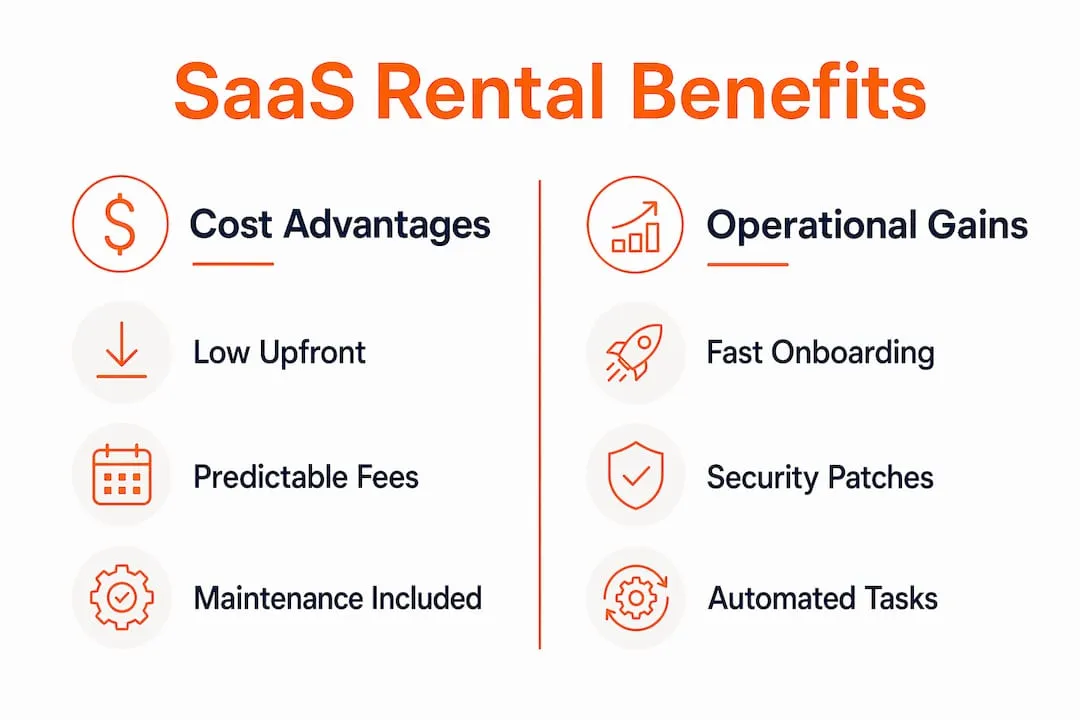
The honest comparison between SaaS and owned software depends on your time horizon. For portfolios under 20 properties, SaaS almost always wins on total cost because you avoid server costs, developer fees, and version upgrade expenses. For larger operations, long-term subscription costs can exceed what a one-time software purchase would have cost. The break-even point varies by platform and portfolio size, but the calculation is worth running before you sign a multi-year contract.
| Cost factor | SaaS model | Traditional on-premise model |
|---|---|---|
| Upfront investment | Low (monthly subscription) | High (license purchase + hardware) |
| IT maintenance | Included in subscription | Requires dedicated staff or contractor |
| Software updates | Automatic, no extra cost | Manual, often paid upgrades |
| Scaling cost | Incremental per user or property | Large capital expense per expansion |
| Long-term risk | Annual price increases | Obsolescence and support end-of-life |
Pro Tip: Run a total cost of ownership calculation before signing any SaaS contract. Add up the monthly fee, per-property charges, payment processing fees, and any add-on modules. Hidden costs in SaaS contracts often live in the line items, not the headline price.
Which features make SaaS rental platforms worth using?
The features that matter most to property managers are the ones that replace manual work. Booking management, payment processing, and calendar syncing are table stakes. The platforms that deliver real value go further with AI automation and third-party integrations.

AI-powered automation in SaaS rental platforms handles tasks that previously required a staff member’s attention: dynamic pricing adjustments, guest screening flags, and post-stay review requests. Realtevoos integrates real-time data from Airbnb and Vrbo to surface occupancy trends and revenue gaps directly in its management dashboard. That kind of visibility used to require a separate analytics tool and a manual export process.
Security is a genuine advantage of cloud platforms, not just a marketing claim. Modern cloud rental software operates within data centers that use advanced encryption, continuous monitoring, and redundancy measures that most small property management companies could not afford to replicate on their own servers. Contrary to common belief, SaaS security frequently surpasses self-hosted security because vendors apply patches continuously rather than waiting for scheduled maintenance windows.
Third-party integrations extend what a SaaS platform can do. A well-integrated platform connects to payment processors, smart lock systems, accounting tools, and guest communication apps. The vacation rental booking workflow becomes fully automated when these integrations work together, from the moment a guest books to the moment they check out.
Core features to evaluate when choosing rental platforms:
- Unified inbox: All guest messages from every channel in one place.
- Dynamic pricing engine: Rate adjustments based on demand, seasonality, and competitor data.
- Owner reporting: Automated statements for property owners without manual spreadsheet work.
- Maintenance tracking: Work orders created and assigned automatically based on guest reports or scheduled intervals.
- Compliance tools: Tax collection, remittance tracking, and local regulation alerts built into the platform.
What are the limitations of SaaS rental platforms?
Vendor lock-in is the most underestimated risk in SaaS adoption. Migrating large datasets out of proprietary SaaS ecosystems often requires professional services that were never factored into the original budget. If you build five years of guest history, pricing data, and owner records inside one platform, switching becomes expensive and disruptive.
Customization limits are the second major trade-off. SaaS platforms support standard workflows but often struggle with unique business processes that fall outside their design assumptions. A property manager running a hybrid model with long-term and short-term rentals may find that a platform built for one model does not flex well for the other. Self-hosted and open-source alternatives offer full customization and data ownership, but they require technical resources and significant upfront investment.
Practical steps to reduce these risks:
- Request a data export before you sign. Confirm you can export all guest records, booking history, and financial data in a standard format like CSV or JSON.
- Read the SLA carefully. Reliable SaaS providers offer 24/7 support and clearly defined performance guarantees with remedies when uptime targets are missed.
- Audit user permissions regularly. Limit access to sensitive financial and guest data to only the team members who need it.
- Negotiate contract terms. Annual price increases are often negotiable, especially if you commit to a multi-year agreement.
- Test support responsiveness before committing. Submit a support ticket during your trial period and measure how fast and how well the team responds.
Pro Tip: Ask any SaaS vendor directly: “What does data migration out of your platform cost and how long does it take?” A vendor that cannot answer that question clearly is one you should think twice about.
Key Takeaways
SaaS rental platforms deliver the fastest path to scalable vacation rental management, but long-term cost control and data portability require deliberate evaluation before you sign.
| Point | Details |
|---|---|
| Scaling speed | Cloud platforms add new properties in minutes, not days, removing the biggest growth bottleneck. |
| Cost structure | Subscription pricing lowers entry costs but annual price increases of 11.4% compound over time. |
| Security advantage | SaaS data centers provide encryption and redundancy that most self-hosted setups cannot match. |
| Vendor lock-in risk | Always confirm data export options and migration costs before committing to any platform. |
| Feature evaluation | Prioritize AI automation, channel syncing, and third-party integrations when choosing rental platforms. |
What I’ve learned from watching operators choose the wrong platform
Property managers tend to evaluate SaaS platforms the same way they evaluate a hotel room: they look at the price and the photos, then book. That approach works for a one-night stay. It fails badly for a software contract you will live inside for three to five years.
The operators I have seen get this right share one habit. They treat platform selection as a business architecture decision, not a software purchase. They ask: “Where do I want to be in three years, and does this platform get me there without holding my data hostage?” That question filters out a lot of attractive-looking tools with weak export functions and opaque pricing.
The cost conversation also needs more honesty than most vendors offer. A $200 per month platform sounds affordable until you add per-property fees, payment processing markups, and the annual price increase. The role of property management platforms in driving real revenue growth depends on what you actually use, not what the feature list promises. I have watched managers pay for dynamic pricing tools they never configured and owner reporting modules that duplicated work they were already doing in a spreadsheet.
My honest recommendation: start with a platform that covers your core workflow well, even if it lacks advanced features. Add complexity only when a specific operational gap costs you real time or money. Realtevoos takes that approach by centering its design on the rental operations scaling process rather than feature accumulation. That focus is rarer than it should be in this market.
— Jose Villeda
Realtevoos: built for property managers who are serious about growth
Property managers who want a SaaS platform that actually reduces workload rather than adding a new system to manage should look at what Realtevoos does differently. Its management deck centralizes every operational workflow across multiple properties into one dashboard, with AI automation handling the repetitive tasks that consume hours every week.
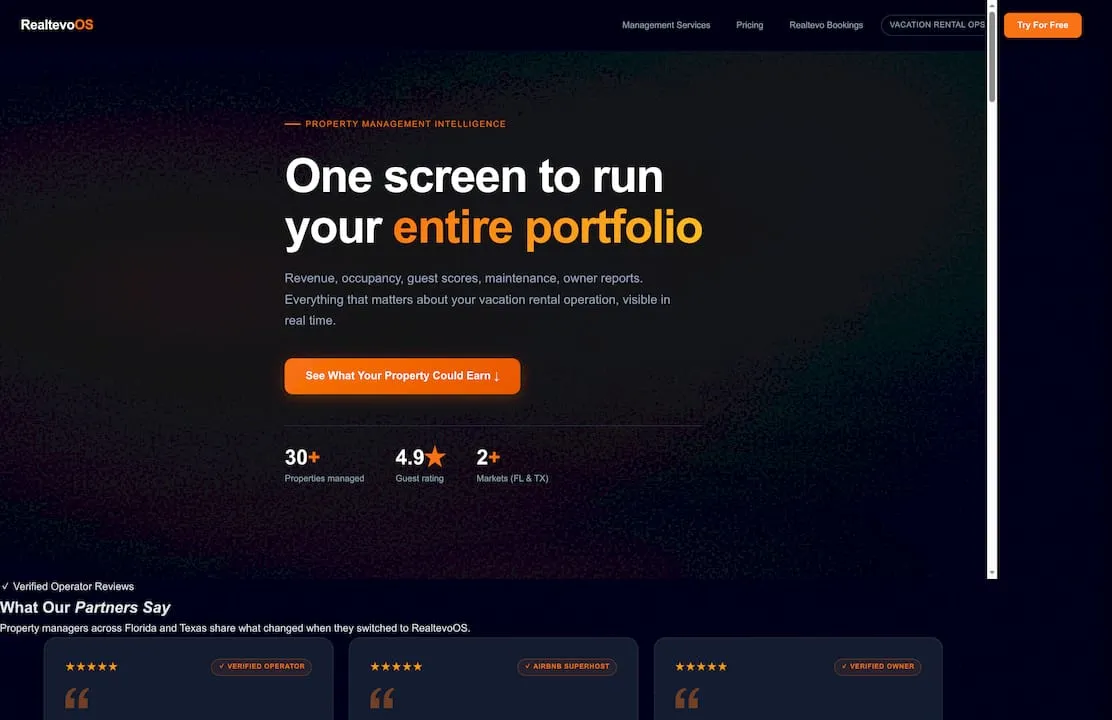
Realtevoos connects directly to Airbnb and Vrbo for real-time data syncing, automates guest communications from booking to checkout, and gives property managers the reporting clarity they need to make fast decisions. Onboarding a new property takes minutes, not days. For managers ready to grow their portfolio without growing their workload, Realtevoos is built for exactly that.
FAQ
What is a SaaS rental platform?
A SaaS rental platform is cloud-hosted software that property managers access via subscription to handle bookings, guest communication, payments, and reporting without owning or maintaining the underlying servers.
How does SaaS rental software reduce costs compared to traditional systems?
SaaS eliminates upfront license fees and hardware costs by replacing them with a monthly subscription. Maintenance, updates, and security are included, removing the need for dedicated IT staff.
What is vendor lock-in and why does it matter for rental managers?
Vendor lock-in occurs when your data and workflows become so embedded in one platform that switching becomes costly and complex. Migrating large datasets out of proprietary systems often requires professional services not included in the original contract.
How secure is SaaS rental software compared to self-hosted options?
SaaS platforms typically offer stronger security than self-hosted alternatives because vendors apply continuous patches and operate within data centers with advanced encryption and redundancy. Most small property management companies cannot replicate that infrastructure independently.
What should I look for when choosing a SaaS rental platform?
Prioritize platforms with clear data export options, transparent pricing, 24/7 support, and integrations with the booking channels you already use. Test the onboarding process and support responsiveness before committing to a contract.