Cross-Property Inventory Management Guide for Multi-Property Managers
Unlock efficiency with our cross-property inventory management guide. Learn to streamline operations and reduce emergency supply runs.

Cross-Property Inventory Management Guide for Multi-Property Managers
A centralized, webhook-driven inventory system eliminates manual sync errors and makes turnover predictable across your entire vacation rental portfolio. The first three moves: build a master catalog with standardized SKUs, map every listing to its physical unit in your PMS, and subscribe to reservation.checkout webhook events to trigger automated restocking. Managers who execute this sequence report faster turns and fewer emergency supply runs within the first 30 days.
Immediate priorities:
- Build a master catalog covering all consumables and assets (target a standardized number of SKUs per property type)
- Enable webhook-first sync with your PMS and channel layer for near-instant event capture
- Pre-kit turnover supplies by room so cleaners stage, not shop
- Set automated reorder thresholds for critical items before going live
Two benchmarks worth tracking from day one: hours saved per property per week on manual inventory tasks, and the percentage reduction in emergency supply runs after automation goes live.
Table of Contents
- Why centralized inventory management prevents revenue loss
- What does an effective cross-property inventory system require?
- Why webhooks beat polling for inventory sync
- How turnover workflows connect inventory to guest readiness
- How to audit inventory across multiple properties
- Which KPIs actually move the needle on inventory performance?
- Phased implementation checklist for rolling out inventory controls
- Common failure modes and how to fix them fast
- Key Takeaways
- The trade-offs most managers get wrong when scaling inventory
- Realtevoos gives you the inventory infrastructure to scale without the chaos
- Useful sources for deeper research
Why centralized inventory management prevents revenue loss
Manual spreadsheets and polling-based sync are not just inconvenient. They are a direct source of revenue loss. When availability updates travel through iCal or scheduled polling, delays of minutes to hours create booking conflicts that cost you nights and guest trust. Supply-side failures compound the problem: a cleaner who discovers no toiletries at a same-day turn either delays check-in or triggers an emergency run, both of which show up in reviews.
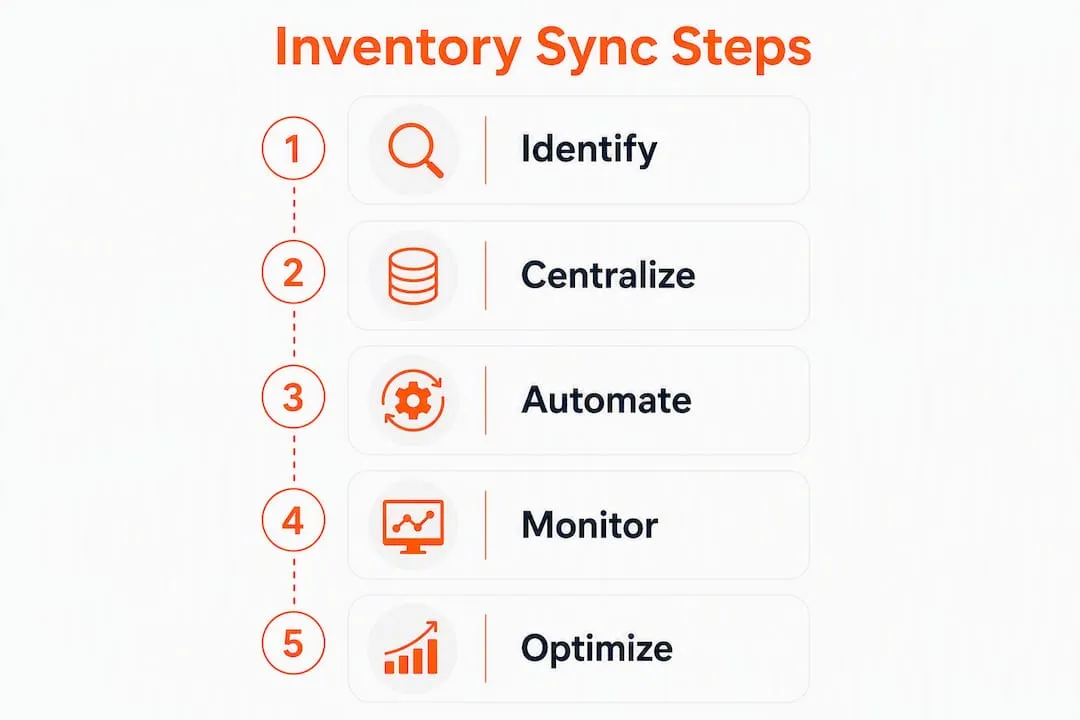
The business case for centralization is straightforward. Automation significantly reduces inventory waste and emergency supply runs and lets coordination scale without proportional headcount increases. That math changes quickly once you manage more than ten units.
Benefits of centralized multi-site inventory control:
- Fewer guest complaints tied to missing or low-quality supplies
- Faster, more consistent turns with pre-kitted room supplies
- Predictable monthly supply spend instead of reactive purchasing
- Easier portfolio expansion without rebuilding workflows from scratch
What does an effective cross-property inventory system require?
Six components are non-negotiable. Every multi-property manager needs all of them.

| Component | What it contains | Who owns it |
|---|---|---|
| Master catalog | All SKUs, descriptions, categories, reorder thresholds | Operations lead |
| Per-unit stock ledger | unit_tag, quantity_on_hand, location, last_used |
Property coordinator |
| Turnover/event processor | Webhook listener, kit assembly triggers, cleaner assignment | Automation layer |
| Supplier/order engine | Vendor accounts, PO templates, net-30 terms | Procurement lead |
| Audit/cycle-count module | Count schedules, variance logs, damage reports | Regional manager |
| Reporting dashboard | KPIs, burn rates, reorder frequency, shrinkage | Portfolio director |
A master catalog item maps to per-property stock like this: SKU BATH-TOWEL-WHT exists once in the catalog with a reorder threshold of 12. Unit STL-204 carries a ledger entry showing quantity_on_hand: 8, triggering a reorder flag automatically when a checkout event fires.
Assets (furniture, appliances) and consumables (toiletries, paper goods) need separate modeling. Assets carry depreciation fields and damage-claim routing; consumables carry burn rates and auto-reorder rules. Role-based permissions matter here: cleaners see kit checklists, not purchase orders. Regional managers see variance reports, not supplier contracts.
Standardizing to a consistent bill of materials per property delivers consistent photos, predictable installs, and bulk purchasing leverage. At portfolio scale, opening B2B vendor accounts with suppliers like Wayfair Professional or IKEA Business unlocks volume pricing and net-30 terms that meaningfully reduce per-unit supply costs. For linens specifically, a multi-property textile contract with a dedicated supplier locks in continuous restocking and rotation terms that manual purchasing cannot match.
Why webhooks beat polling for inventory sync
Adopt webhook-first, two-way API connections between your PMS, inventory system, and channel manager. This is the architecture that makes multi-channel booking management reliable at scale.
Integration checklist:
- Subscribe to
reservation.created,reservation.cancelled, andreservation.checkoutevents - Capture
property_id,unit_id,checkout_datetime, andguest_countfrom each event - Map every channel listing to a single canonical
unit_idin your inventory system - Confirm two-way write access so inventory updates flow back to the PMS
The operational risk of polling is not theoretical. With a 15-minute polling interval, a checkout event that fires at 10:00 AM may not trigger restocking until 10:15 AM. On a same-day turn with a 3:00 PM check-in, that delay cascades through cleaner assignment, kit staging, and final inspection.
Pro Tip: For split listings and multi-unit buildings, create a mapping file that links each channel listing ID to its physical unit_id. Shared consumables (pool-house supplies, common-area items) get their own unit_tag with a separate ledger entry so they never deplete a single unit’s stock count.
How turnover workflows connect inventory to guest readiness
The reservation.checkout webhook is your operational starting gun. When it fires, the system should immediately trigger cleaner assignment, kit staging, and an inventory pre-check, then confirm via cleaner photo compliance before marking the unit GUEST_READY.
Sequential turnover workflow:
reservation.checkoutfires → system assigns cleaner and sends task notification- Cleaner confirms receipt within 30 minutes (escalation timer activates if no response)
- Pre-kitted supply kit (staged by room, color-coded) is pulled from on-site storage
- Cleaner completes room-by-room checklist and submits photo proof for each area
- Inventory reconciliation runs: consumed items are logged against the unit ledger
- Reorder logic checks thresholds; items below par generate a reorder queue entry
- Unit status updates to
GUEST_READYafter photo review passes
Amenity automation pre-kits supplies per reservation and integrates with PMS calendars to deliver timed restocks, which directly reduces the cleaner’s decision load on turn day. Color-coding kits by room (blue for bathrooms, green for kitchen) eliminates staging errors on same-day turns.
Reorder trigger examples:
- Toilet paper drops below 4 rolls per unit → immediate reorder flag
- Bath towels fall below 6 per bedroom → weekly consolidated order
- Coffee pods below 8 → auto-submit to supplier if configured
How to audit inventory across multiple properties
Short, frequent cycle counts by category beat annual full inventories every time. Daily spot checks on high-velocity consumables, weekly room-level cycles, and monthly deep counts for assets give you a continuous picture without shutting down operations.
| Audit type | Frequency | Items covered | Owner |
|---|---|---|---|
| Spot check | Daily | Toiletries, paper goods, coffee supplies | Cleaner |
| Room cycle | Weekly | All consumables per room category | Property coordinator |
| Deep count | Monthly | All assets + consumables, full unit | Regional manager |
| Portfolio reconciliation | Quarterly | Cross-property variance, shrinkage totals | Portfolio director |
Loss reporting should capture: item, property_id, date_found, damage_photos, suspected_cause, and a replacement_order_link. That record routes automatically to three places: the guest damage claim workflow, the owner report, and the reorder queue.
Pro Tip: Flag linens for more frequent cycle counts. Linen shrinkage from guest use, laundering errors, and unreported damage is one of the highest-cost inventory losses in short-term rental portfolios, and it compounds silently across properties.
Which KPIs actually move the needle on inventory performance?
Focus on five metrics. Operational analytics should include turn time per property, photo compliance rates, inventory burn rates, and escalation frequency, but these five drive purchasing and staffing decisions directly.
| KPI | How to calculate | Healthy target |
|---|---|---|
| Stockout rate | Stockouts ÷ total turns | A low stockout rate per property per month |
| Days of supply | Quantity on hand ÷ daily burn rate | A replenishment window for consumables that balances supply and demand |
| Cost per turnover | Total supply spend ÷ total turns | Track trend, reduce quarter-over-quarter |
| Emergency restock rate | Emergency orders ÷ total restock orders | A low emergency restock rate |
| Inventory shrinkage rate | Variance (expected vs. actual) ÷ expected | A minimal inventory shrinkage rate per month |
Burn-rate forecasting feeds reorder frequency directly. Compute burn rates per reservation night by property type, then set reorder thresholds as (lead time × average nightly burn) + safety stock. Re-evaluate monthly using actual consumption data. A portfolio performance tracking workflow that surfaces these KPIs in a single dashboard makes the monthly review a 20-minute task instead of a half-day spreadsheet exercise.
KPI ownership matters. Assign stockout rate and emergency restock rate to your operations lead. Cost per turnover belongs to procurement. Shrinkage rate sits with regional managers who run the cycle counts.
Phased implementation checklist for rolling out inventory controls
Implement in phases. A rushed portfolio-wide rollout without clean data is the fastest way to generate false reorder signals and lose cleaner trust.
- Weeks 1–2 (Data prep): Audit existing SKUs, build the master catalog, create the unit mapping file, confirm supplier accounts and net-30 terms
- Weeks 3–4 (Pilot launch): Select a 5–10 unit cluster, enable webhook subscriptions, pre-kit first round of turn kits, train cleaners on photo compliance
- Weeks 5–6 (Pilot validation): Measure sync reliability, cleaner compliance rate, and emergency restock frequency against baseline
- Weeks 7–10 (Regional rollout): Expand by portfolio tranche, apply lessons from pilot, onboard regional managers to the audit module
- Weeks 11–12 (Full go-live): Activate automated PO submission for high-velocity consumables, enable owner-facing inventory reports
Pilot success criteria:
- Webhook events captured within 60 seconds of checkout for 95%+ of reservations
- Cleaner photo compliance above 85% by end of week 4
- Emergency restock rate drops measurably versus pre-pilot baseline
Pro Tip: Before the pilot, communicate the change to cleaners and owners in plain language. Cleaners need to know why photo compliance matters (it protects them from false damage claims). Owners need to know the system will reduce supply-related guest complaints.
A standardized install day with a QC checklist lets portfolio operators push listings live within 48 hours of photos. Apply the same discipline to inventory setup: one day per property cluster, one person responsible for the mapping file.
Common failure modes and how to fix them fast
The three most common reasons cross-property inventory programs fail: data-mapping errors, webhook misconfigurations, and process drift in cleaning teams.
Pitfall/fix pairs:
- Mis-mapped SKUs → run a reconciliation workflow weekly; flag any
unit_idwith zero consumption after 3+ turns as a mapping error - Delayed or missing webhooks → switch to direct API connections; increase retry attempts to 5 with exponential backoff; log all failed events
- Cleaner process drift → retrain monthly; tie photo compliance rates to cleaner performance reviews
- False reorder triggers → audit reorder thresholds quarterly; adjust burn-rate calculations after seasonal demand shifts
- Shared consumable depletion → assign shared items (pool supplies, common-area paper goods) their own
unit_tagwith independent thresholds
Quick triage checklist when a turn fails:
- Was the
reservation.checkoutevent received and logged? - Did the cleaner confirm assignment within 30 minutes?
- Was the kit pre-staged, or did the cleaner have to source supplies manually?
- Is the reorder threshold set correctly for the affected items?
Pro Tip: Pause automated PO submission for any SKU that generates more than two emergency reorders in a single week. That pattern signals a threshold miscalculation or a mapping error, not a genuine supply shortage.
When automated systems generate conflicting signals, revert to manual intervention for that property cluster and investigate before re-enabling automation. Speed matters less than accuracy when purchase orders are involved.
Key Takeaways
Centralized, webhook-driven inventory management is the only approach that makes multi-property turnover predictable, supply spend measurable, and portfolio scaling operationally sound.
| Point | Details |
|---|---|
| Build the master catalog first | Standardize 180–220 SKUs per property type before enabling any automation. |
| Webhooks over polling | Subscribe to reservation.checkout events for near-instant restock triggers and zero sync delays. |
| Pre-kit by room | Color-coded turn kits eliminate cleaner decision-making and cut staging errors on same-day turns. |
| Track five KPIs | Stockout rate, days of supply, cost per turnover, emergency restock rate, and shrinkage rate drive every purchasing decision. |
| Realtevoos centralizes the full workflow | Realtevoos connects master catalog, webhook-first PMS integrations, automated restocking, and KPI dashboards in one platform. |
The trade-offs most managers get wrong when scaling inventory
Most operators scaling past 20 properties make the same mistake: they prioritize cosmetic uniformity over operational repeatability. They spend weeks debating throw pillow colors instead of locking down a standardized bill of materials that their cleaners can execute without supervision.
The real trade-off at scale is not design versus function. It is speed to market versus customization. Every bespoke furnishing decision you make for a single property is a decision your operations team has to reverse-engineer when that property turns over, gets damaged, or needs a replacement order. A brand kit built around a procurement function cuts per-unit furnishing costs by 20–30% and shortens deployment timelines from six weeks to about ten days. That is not a design compromise. That is a competitive advantage.
On the automation side, the temptation is to build everything at once. Resist it. Start with the highest-impact piece: automated cleaner assignment and escalation triggered by PMS checkout events. Layer on inventory tracking, then reporting, then automated POs. Each layer only works cleanly if the one beneath it is stable.
Centralized purchasing versus local sourcing is a real tension for geographically distributed portfolios. Local sourcing offers flexibility and faster emergency fulfillment. Centralized purchasing offers volume discounts and consistent quality. The answer is usually a hybrid: centralized contracts for high-velocity consumables (linens, toiletries, paper goods) and local vendor relationships for emergency restocks only.
Realtevoos gives you the inventory infrastructure to scale without the chaos
Property managers running 10, 30, or 100+ units face the same bottleneck: inventory chaos that grows faster than the portfolio. Realtevoos is built specifically to eliminate that bottleneck. The platform centralizes your master catalog, connects via webhook-first integrations with Airbnb, Vrbo, Guesty, Hostaway, and other common PMS platforms, and automates turnover-triggered restocking from a single management command center.

What Realtevoos handles for you:
- Master catalog management with per-unit stock ledgers and reorder thresholds
- Event-driven webhook processing for
reservation.checkout,reservation.created, andreservation.cancelled - Automated purchase order generation and supplier coordination
- Role-based access control so cleaners, coordinators, and owners each see exactly what they need
- KPI dashboards covering stockout rate, cost per turnover, and inventory shrinkage
Clients report saving significant time on manual inventory tasks and a noticeable drop in supply-related guest complaints after going live. A pilot over several weeks on a small cluster of units is the standard starting point: clean your master catalog, map your units, and let the platform validate your webhook connections before expanding. Start your pilot with Realtevoos and see what predictable turns actually look like at scale.
Useful sources for deeper research
- Automate Vacation Rental Turnover Cleaning and Restocking Coordination — Detailed walkthrough of AI-driven cleaner assignment, photo compliance, and inventory reconciliation workflows.
- The Basics of Rental Inventory Management and Best Practices — Foundational primer on categorizing and tracking vacation rental assets.
- Vacation Rental Furnishing Strategy for Property Managers — Portfolio-level playbook on brand kits, procurement, and bulk sourcing.
- Choosing the best channel manager for multi-unit vacation rentals — Industry analysis of webhook-first sync and the risks of manual data entry across channels.
- Managing the Turn of 700 Vacation Rental Properties — Case study on pre-kitting and PMS-integrated amenity automation at scale.
- How to optimize your hotel textile supply chain — Supplier perspective on bulk linen procurement and rotation best practices.
- Why Integrate Data from Airbnb and Vrbo — Realtevoos guide on PMS/channel integration for portfolio managers.
- Data Integration in Rental Management — Technical primer on API-first integration and data hygiene for implementation teams.