Data-Driven Rental Strategy: Your 2026 Property Guide
Discover what is data-driven rental strategy and how it boosts your vacation rental success in 2026. Make informed decisions today!

Data-Driven Rental Strategy: Your 2026 Property Guide
A data-driven rental strategy is the systematic use of real-time market data, historical booking trends, and performance analytics to make every pricing, occupancy, and operational decision in your vacation rental business. This approach replaces gut-feel management with forecasting algorithms, dynamic pricing models, and benchmarked KPIs. Booking windows have shrunk by 10–15% globally as of early 2026, which means managers who wait for patterns to become obvious are already losing revenue. The vacation rental managers who win in this market embed data into every decision, from setting nightly rates to scheduling maintenance.
What is a data-driven rental strategy and why does it matter?
A data-driven rental strategy is defined as a management framework where every operational and pricing decision is grounded in quantifiable evidence rather than assumption. The industry term for this practice is revenue management, borrowed from hospitality, but applied specifically to short-term rental portfolios. Both terms describe the same core discipline: using data to make better decisions faster.
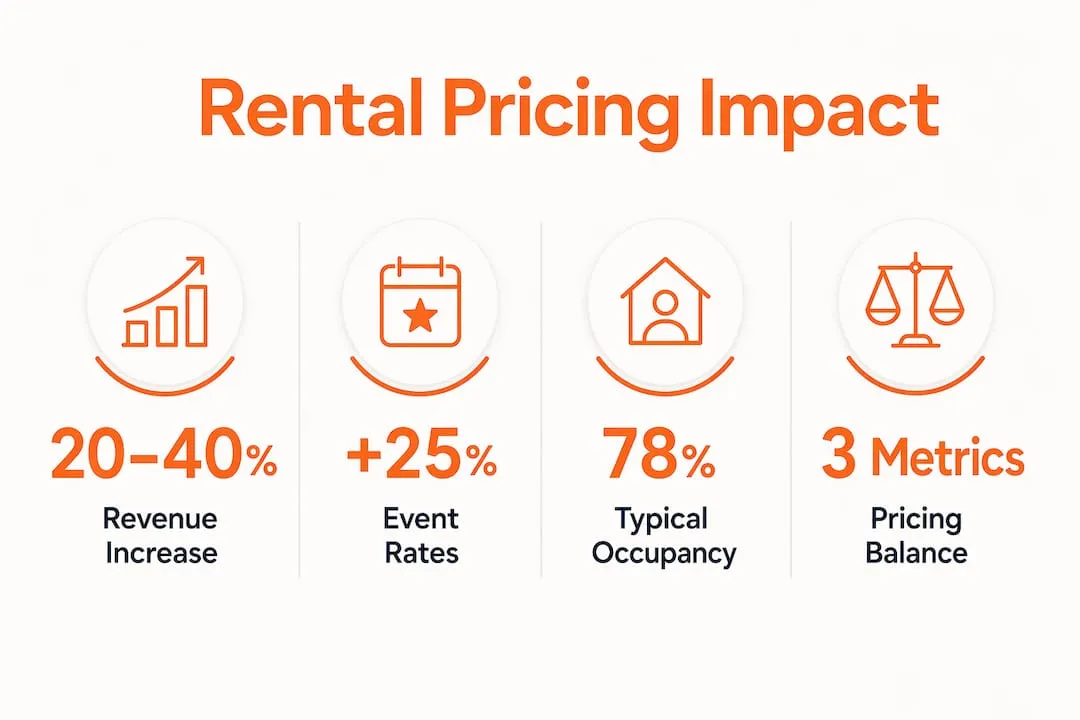
The practical difference between data-driven and intuition-based management shows up in revenue. Hosts using dynamic pricing tools earn 20–40% more annual revenue compared to those using static pricing. That gap exists because static pricing ignores demand signals that change daily, sometimes hourly. A manager who sets a flat weekend rate in january misses the surge from a local festival in february and the drop in demand during a regional conference blackout week.

The importance of data in rentals goes beyond pricing. Operational decisions, from minimum stay requirements to cleaning schedules, directly affect occupancy and profitability. Vacation rental market success hinges on embedding data into every pricing, forecasting, and reporting decision. Managers who treat data as a reporting tool rather than a decision engine consistently underperform their data-driven peers.
How does dynamic pricing work in a data-driven rental strategy?
Dynamic pricing is the practice of adjusting nightly rates in real time based on demand signals rather than a fixed calendar schedule. It differs from static pricing the same way airline ticketing differs from a fixed-price menu. The rate changes because the market changes, not because a manager manually updated a spreadsheet.
The demand signals that drive rate adjustments include local events, seasonality, booking pace, competitor availability, and day-of-week patterns. Local events drive rental demand spikes, allowing managers to raise nightly rates by 25–100% over base price, while off-season periods often require reductions of 25–40%. A music festival weekend and a slow tuesday in november require completely different rate logic.
One nuance that separates experienced managers from beginners is rate elasticity. During high-demand events, guests may be price-inelastic, meaning lowering prices during peak periods actually reduces total revenue without increasing occupancy. The instinct to drop rates when bookings slow is often wrong during event weekends. Data tells you when to hold firm.
The three metrics that dynamic pricing balances are occupancy rate, average daily rate (ADR), and revenue per available night (RevPAN). No single metric tells the full story. A property with 95% occupancy but a low ADR is leaving money on the table. A property with a high ADR but 55% occupancy has a demand problem.
| Pricing trigger | Typical rate adjustment | Primary metric affected |
|---|---|---|
| Major local event | +25% to +100% | ADR |
| Off-season low demand | -25% to -40% | Occupancy |
| Last-minute booking window | -10% to -20% | Occupancy |
| Holiday peak period | +30% to +60% | RevPAN |
| Weekday vs. weekend gap | -15% to -25% weekday | Occupancy |
Pro Tip: Set rate floors before enabling dynamic pricing. Without a minimum price, automated tools can drop your rate below your cost basis during slow periods. Define your floor based on cleaning fees, mortgage, and utility costs per night.
For a deeper look at how managers apply demand data to rate decisions, the dynamic pricing guide for property managers covers the full framework. Vancouver-based operators have also documented how real-time dynamic pricing plays out in a competitive local market.
How does data analytics reduce costs and improve operations?
Operational efficiency is where data-driven rental strategies pay dividends that pricing alone cannot deliver. Adopting predictive maintenance and data-driven pricing leads to reduced vacancy, lower turnover costs, and fewer emergency repair incidents. Each of those outcomes compounds over a portfolio.
Predictive maintenance is the practice of using equipment usage data, age records, and sensor alerts to schedule repairs before failures occur. A water heater that fails mid-stay costs you a guest refund, a negative review, and an emergency plumber rate. A water heater replaced on a scheduled basis costs you a planned service call. The difference in total cost is significant, and the difference in guest experience is even larger. The predictive maintenance guide for vacation rentals explains how to build this system from scratch.
Data also improves turnover management. Cleaning and restocking schedules tied to actual booking data, rather than fixed weekly slots, reduce labor waste and prevent gaps between checkout and check-in. When your operational calendar syncs with your booking calendar, you stop paying for cleaning days that do not correspond to guest departures.
Key operational metrics worth tracking in a data-driven approach to property management include:
- Maintenance cost per booking: Tracks whether repair frequency is rising relative to revenue.
- Turnover time per property: Identifies which units need process changes or additional staff.
- Booking rule impact on occupancy: Measures whether minimum stay requirements are blocking bookings.
- Guest satisfaction scores by property: Surfaces operational issues before they become review problems.
- Cleaning cost as a percentage of revenue: Flags properties where turnover costs are eroding margins.
Pro Tip: Integrate your maintenance log with your booking calendar. When you can see that a property had three maintenance calls in the same month it received two negative reviews, the connection becomes clear and fixable.
Why does benchmarking matter in rental data analysis?
Internal KPIs alone produce misleading conclusions. A property with 78% occupancy looks healthy until you learn that comparable properties in the same zip code are running at 91%. KPI evaluation without relevant market context leads to misguided decisions. Benchmarking against a well-matched competitive set is what separates accurate performance evaluation from self-congratulation.
Using benchmarking tools to compare occupancy, ADR, and RevPAR against a relevant competitive set helps managers avoid the trap of celebrating mediocre results. The competitive set must match on location, property size, amenity tier, and guest type. Comparing a two-bedroom mountain cabin to a five-bedroom beachfront home produces useless data.
Benchmarking also serves a critical function in owner relations. Transparent, data-driven reporting enhances owner retention by replacing subjective conversations with objective comparisons. When an owner asks why revenue dropped in march, a benchmarked report showing that every comparable property in the market dropped by the same amount is far more persuasive than an explanation. Objective data reduces owner churn. The property management reporting examples resource shows how to structure these reports effectively.
| Performance view | Without market benchmarking | With market benchmarking |
|---|---|---|
| Occupancy at 78% | Appears strong | Reveals 13-point gap vs. market |
| ADR at $185 | Seems competitive | Shows 8% below comparable set |
| RevPAR at $144 | Looks acceptable | Flags underperformance vs. peers |
| Revenue decline in march | Feels like a problem | Confirmed as market-wide trend |
How do you implement rental data analytics effectively?
Effective implementation of a rental data analytics system starts with identifying the data types that actually drive decisions. Booking data, market demand indicators, guest review scores, operational cost records, and channel performance metrics form the foundation. Effective data integration requires clean, consistent, and connected data streams for analysis. Quality matters more than volume.
AI and machine learning enable frequent, automated rental price updates to maintain competitiveness and adjust to renter behavior daily or weekly. Manual pricing reviews cannot match that frequency. A manager overseeing ten properties cannot realistically check market rates every morning across all listings. AI-driven automation solves that problem at scale. The AI benefits guide for rental managers covers how these systems work in practice.
When selecting a data analytics platform for your rental portfolio, prioritize these features:
- Centralized dashboard: All properties, channels, and metrics visible in one place.
- Real-time market data integration: Pulls live demand signals from platforms like Airbnb and Vrbo.
- Automated pricing rules: Sets rate floors, ceilings, and adjustment triggers without manual input.
- Predictive maintenance alerts: Flags equipment or property issues before they become guest-facing problems.
- Owner-facing reporting: Generates benchmarked performance reports automatically.
- Data validation tools: Flags inconsistent or missing data before it corrupts your analysis.
Shifting from reactive to predictive management using historical and real-time data allows early anticipation of market changes. The managers who implement these systems in 2026 are not just reacting faster. They are acting before problems appear.
Key Takeaways
A data-driven rental strategy outperforms intuition-based management because it replaces assumptions with evidence at every decision point, from nightly pricing to maintenance scheduling.
| Point | Details |
|---|---|
| Dynamic pricing drives revenue | Hosts using dynamic pricing earn 20–40% more annually than those using static rates. |
| Benchmarking reveals true performance | Internal KPIs without market context produce misleading conclusions about property health. |
| Predictive maintenance cuts costs | Scheduling repairs before failures reduces emergency costs and protects guest experience. |
| Data quality determines output quality | Clean, connected data streams are the prerequisite for any reliable analytics system. |
| Transparent reporting retains owners | Objective, benchmarked reports replace subjective conversations and reduce owner churn. |
The shift I keep watching managers get wrong
The most common mistake I see vacation rental managers make when adopting a data-driven approach is treating it as a one-time setup rather than an ongoing discipline. They install a pricing tool, connect their channels, and then stop paying attention. Six months later, their rates are still running on the same rules they configured at launch, while the market has shifted completely.
Data-driven management is not a product you buy. It is a practice you build. The managers who get the most from their analytics are the ones who review their benchmarks monthly, adjust their pricing rules seasonally, and actually read what their maintenance logs are telling them. The data does not manage your property. You do, but with better information.
The other pitfall I see constantly is over-indexing on occupancy. A manager celebrates hitting 90% occupancy without noticing their ADR dropped 15% to get there. That is not a win. RevPAN is the metric that tells the real story, and most managers I talk to cannot calculate it off the top of their head. Start there.
My honest view is that the managers who will dominate vacation rental markets in the next three years are not the ones with the most properties. They are the ones who treat every data point as a question worth answering. The rental occupancy optimization guide is a good place to start building that habit.
— Jose Villeda
How Realtevoos puts data to work for your portfolio
Realtevoos is built specifically for vacation rental managers who need real-time data, automated pricing, and operational analytics in one place. The platform pulls live market data from Airbnb and Vrbo, runs AI-driven pricing adjustments, and surfaces predictive maintenance alerts before they become guest-facing problems.
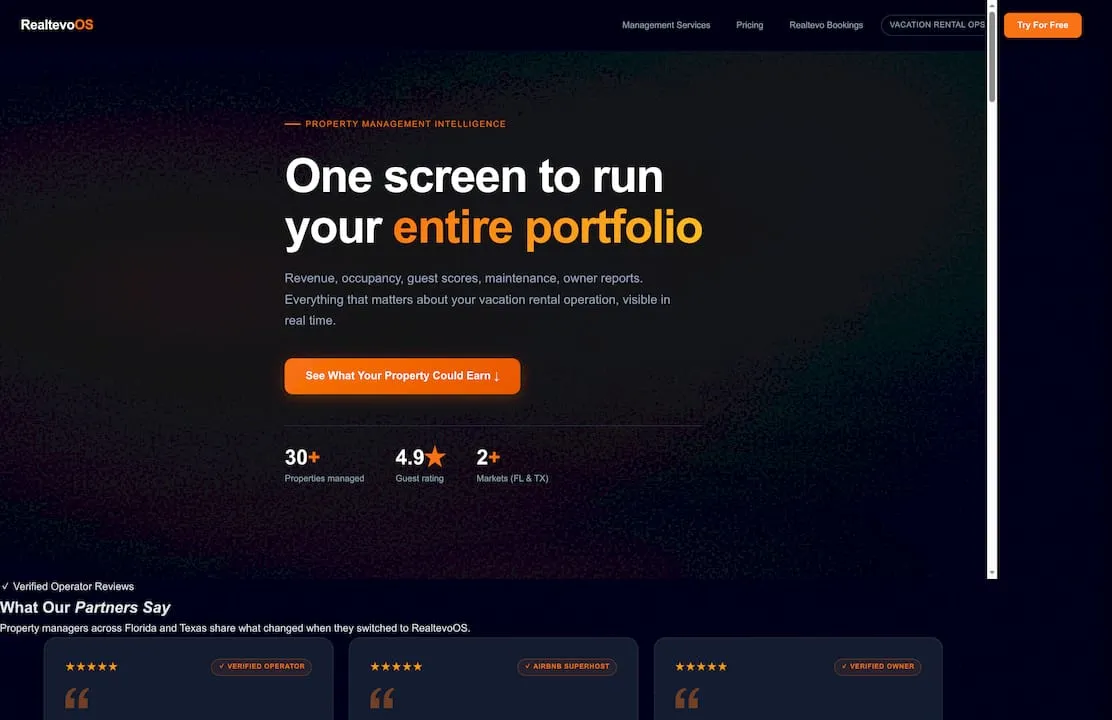
Property managers using Realtevoos report saving several hours each week by replacing manual reporting with automated, benchmarked dashboards. Owner reports generate automatically, with market context included. If you manage multiple properties and want every decision backed by data rather than instinct, explore the Realtevoos platform to see how it consolidates your entire operation into a single command center.
FAQ
What is a data-driven rental strategy?
A data-driven rental strategy is a management approach that uses real-time market data, booking trends, and performance analytics to guide every pricing and operational decision. It replaces intuition-based management with forecasting models and benchmarked KPIs.
How much more revenue does dynamic pricing generate?
Hosts using dynamic pricing tools earn 20–40% more annual revenue compared to those using static pricing methods. The gap comes from capturing demand spikes during events and adjusting rates during slow periods.
What data sources are most important for rental analytics?
Booking data, market demand indicators, guest review scores, channel performance metrics, and operational cost records form the core data set. Clean, connected data streams produce more reliable analysis than large volumes of inconsistent data.
How does benchmarking improve rental performance?
Benchmarking compares your occupancy, ADR, and RevPAR against a matched competitive set, revealing whether your performance reflects your management or just market conditions. Without that context, internal KPIs can look strong while you are actually underperforming the market.
What role does AI play in rental data strategies?
AI and machine learning automate daily or weekly pricing updates based on renter behavior and demand signals, a frequency no manager can match manually across a multi-property portfolio. AI also powers predictive maintenance alerts and automated owner reporting.