Property Onboarding Automation: A 2026 Guide for Rental Managers
Discover what is property onboarding automation and how it streamlines tasks for rental managers, saving time and boosting productivity.

Property Onboarding Automation: A 2026 Guide for Rental Managers
Property onboarding automation is the use of software and digital workflows to replace manual, repetitive tasks involved in preparing a vacation rental property for new guests, owners, or tenants. Tools like Buildium, Moxo, and OnboardMap now handle everything from document collection to payment processing without a single email chain. For vacation rental managers juggling multiple listings on Airbnb and Vrbo, understanding what is property onboarding automation is the difference between scaling a portfolio and drowning in admin work. The right system compresses timelines, cuts errors, and frees you to focus on the work that actually grows your business.
What is property onboarding automation and what tasks does it handle?
Property onboarding automation covers every repeatable step in the process of bringing a new property or owner into your management system. The industry term for the broader practice is automated property management, and onboarding is its most labor-intensive phase. When you automate it, you replace manual follow-up with triggered workflows that run without your input.
The tasks that automation handles most effectively fall into six categories:
- Document collection: Digital portals request, receive, and store owner agreements, insurance certificates, and property photos automatically. Automation reduces human error by standardizing intake and unifying document uploads, eliminating manual follow-ups entirely.
- Background and compliance checks: Automated systems trigger screening requests the moment an application is submitted, rather than waiting for a manager to notice it.
- Lease and contract generation: Templates auto-populate with property details, owner names, and fee structures, then route documents for e-signature.
- Payment setup: Automated workflows configure bank account details, set up recurring owner disbursements, and send rent reminders on a fixed schedule.
- Guest and owner communication: Chatbots and triggered messages answer common questions 24 hours a day, 7 days a week. Moxo details six onboarding stages automated with forms, checks, payments, and scheduling for around-the-clock manager support.
- Maintenance coordination: Work orders generate automatically when a new property enters the system, covering safety checks, photography, and listing setup.
The step by step property onboarding process, when automated, moves from intake form to live listing without a manager touching each individual task. That is the core value: the system does the chasing so you do not have to.
Pro Tip: Set up automated reminders for outstanding documents at 48 hours and 7 days after the initial request. Most owners respond within the first reminder window, which keeps your pipeline moving without personal follow-up.

How does automation improve the property onboarding process?
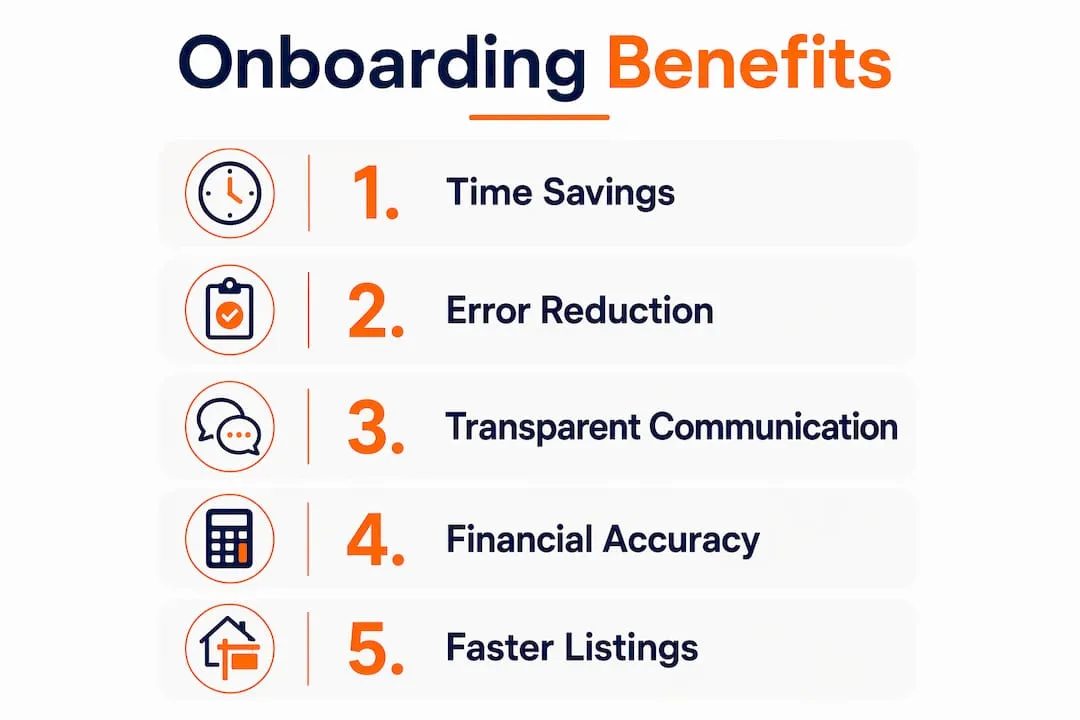
The measurable benefits of onboarding automation are significant and well-documented. Automating tenant onboarding reduces manual workload by up to 50% and shortens wait times by 40–60%. That means a process that consumed 20 hours of manager time per property can drop to 10 hours or fewer.
Timeline compression is equally dramatic. Automation can compress large-scale property onboarding from 12 months down to 4 months using scripted data extraction and mapping. For vacation rental managers adding properties in bulk before peak season, that difference is the gap between a profitable summer and a missed opportunity.
“Treat property onboarding as a strategic function rather than an administrative task to improve accuracy and client trust.” — Redirect Consulting
Communication transparency is another concrete gain. When owners can log into a portal and see exactly which documents are pending, which steps are complete, and when their first disbursement will arrive, they stop calling you. Centralized portals and visible checklists reduce onboarding friction and improve transparency with owners and tenants. That transparency builds trust faster than any personal email can.
Financial accuracy also improves. Manual data entry produces errors in fee structures, bank routing numbers, and tax IDs. Automated intake forms with validation rules catch those errors at the source, before they appear in your first owner statement. The result is fewer corrections, fewer awkward conversations, and a cleaner audit trail from day one.
What are the best practices and common pitfalls in implementation?
Most property managers who struggle with automation make the same mistakes. Knowing them in advance saves weeks of rework.
Pitfall 1: Drip email communication. Sending document requests one at a time via email is the single biggest source of onboarding delays. Drip requests via email cause onboarding delays. Modern tools replace this with a unified portal that shows every outstanding item in one view, with status tracking the owner can check independently.
Pitfall 2: Skipping sandbox testing. Before you push automated data uploads to your live system, test them in a controlled environment. Experienced managers test automated data imports in sandbox databases before going live to avoid disrupting operational workflows. Assetsoft recommends a four-stage sequence: development, verification, test, and live. Skipping any stage risks corrupted legacy data breaking active workflows.
Pitfall 3: Treating onboarding as purely administrative. High-performing organizations treat onboarding as strategic, setting up data validation checkpoints before the first reporting cycle to avoid financial errors. If you configure your automation without validation rules, errors compound silently until they show up in owner statements.
The table below compares reactive versus proactive onboarding approaches:
| Approach | Method | Outcome |
|---|---|---|
| Reactive (email-based) | Manual follow-up per document | Delays, missed items, owner frustration |
| Proactive (portal-based) | Single portal with status tracking | Faster completion, owner self-service |
| Strategic (validated) | Data checkpoints before first report | Clean financials, fewer corrections |
Pro Tip: Use pre-built templates from your automation tool for the first 10 properties you onboard. Customizing every field from scratch adds setup time and introduces inconsistencies. Standardize first, then customize for edge cases.
How to choose and implement property onboarding software solutions
Choosing the right tool is not about finding the most feature-rich platform. It is about finding the one your team will actually use consistently.
Evaluate tools on three criteria:
- Ease of use: User-friendly automation tools with templates and guided setup are the key factor in successful property management automation implementations. Buildium experts specifically flag ease of use and reliable support as the variables that determine whether implementations succeed or stall.
- Integration capabilities: Your onboarding tool must connect to the platforms where your properties live. For vacation rental managers, that means native integrations with Airbnb and Vrbo, plus your accounting software.
- Support quality: Automation implementations always surface edge cases. A vendor with responsive support resolves those cases in hours, not weeks.
The step by step approach to implementation that works in practice:
- Map your current manual process on paper before touching any software.
- Identify the three tasks that consume the most time per property.
- Automate those three tasks first using your chosen tool’s pre-built workflows.
- Run the automated process alongside your manual process for two onboardings to catch gaps.
- Retire the manual process once the automated version produces consistent results.
- Add more automated workflows as your team builds confidence.
Start automations with simple workflows like leasing emails and rent reminders, then add complexity as the team gains confidence. Buildium advises this incremental approach specifically because teams that try to automate everything at once tend to abandon the effort when problems arise.
Realtevoos is built for exactly this kind of phased implementation. The platform consolidates workflows across multiple properties, pulls real-time data from Airbnb and Vrbo, and gives managers a single dashboard for onboarding status, owner communications, and financial reporting. Property managers using Realtevoos report saving several hours each week compared to manual processes. You can learn more about automating rental workflows and how the platform fits into a broader operational system.
Key Takeaways
Property onboarding automation reduces manual workload by up to 50%, compresses timelines from months to weeks, and eliminates the communication gaps that frustrate owners and slow your pipeline.
| Point | Details |
|---|---|
| Define automation scope first | Map manual tasks before selecting software to avoid buying features you will not use. |
| Use centralized portals | Replace email chains with a single portal showing document status to cut delays and owner frustration. |
| Test before going live | Run automated data uploads in a sandbox environment to protect active workflows from corrupted data. |
| Start with simple workflows | Automate leasing emails and rent reminders first, then expand as your team gains confidence. |
| Treat onboarding as strategic | Set data validation checkpoints before the first reporting cycle to prevent financial errors from compounding. |
What I have learned about onboarding automation after years in vacation rentals
The part most guides skip is the human side of automation. Property managers often worry that automating owner communication will feel cold or impersonal. In practice, the opposite happens. When an owner receives an immediate confirmation that their documents arrived, sees a real-time checklist of what is still needed, and gets their first statement on the exact date you promised, they trust you more, not less. The automation signals that you run a tight operation.
The second thing I have learned is that the managers who get the most from automation are the ones who treat onboarding as a data accuracy problem, not a communication problem. Every error in your owner statement traces back to a data entry mistake at onboarding. Fix the intake process with validation rules and standardized templates, and your reporting becomes reliable by default.
The third observation is about timing. The best moment to implement automation is before you need it, not after your portfolio has grown beyond what you can manage manually. Managers who wait until they are overwhelmed try to automate under pressure, which leads to shortcuts and poor configurations. Start with five properties. Build the system correctly. Then scale.
— Jose
Realtevoos: built for vacation rental onboarding at scale
Vacation rental managers who want to put the benefits of onboarding automation into practice need a platform designed for their specific workflows, not a generic property management tool retrofitted for short-term rentals.
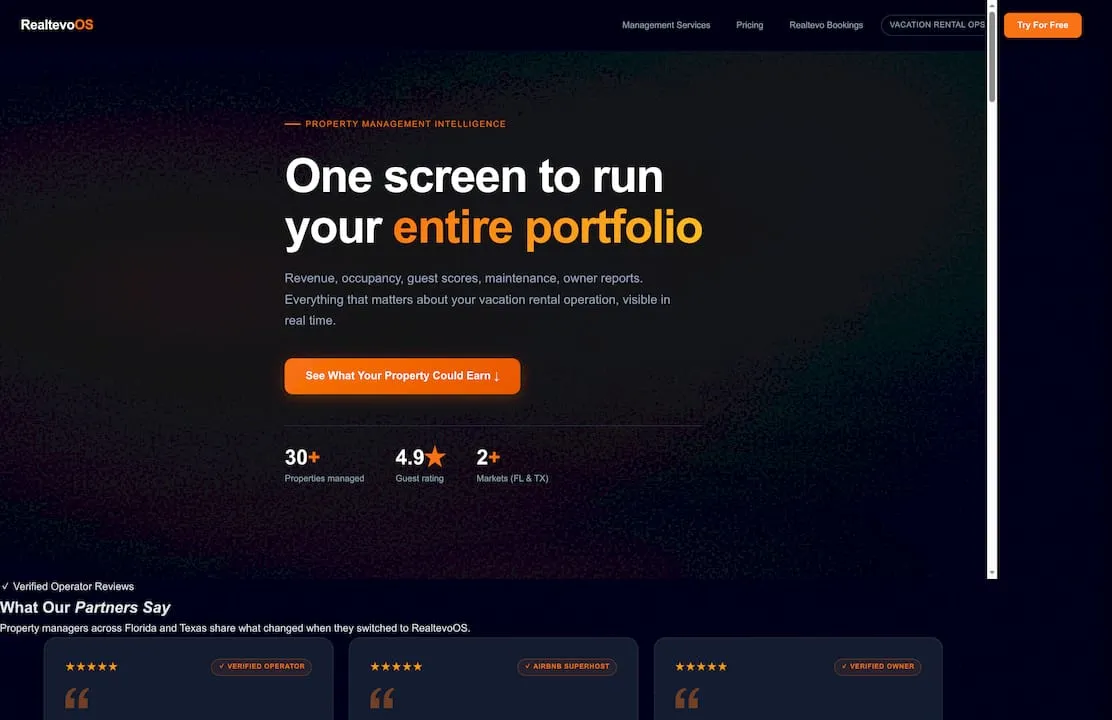
Realtevoos consolidates your entire onboarding and operational workflow into one dashboard, with AI-driven automation that connects directly to Airbnb and Vrbo data. From document collection to owner reporting, the platform handles the repetitive work so your team focuses on growing the portfolio. Property managers using Realtevoos report measurable reductions in manual labor and stronger owner relationships from day one. If you manage multiple vacation rental properties and want a system that scales with you, Realtevoos is worth a close look.
FAQ
What is property onboarding automation?
Property onboarding automation is the use of software and digital workflows to handle repetitive tasks involved in setting up a new property or owner in a management system. It replaces manual document collection, email follow-ups, and data entry with triggered, rule-based processes.
How much time does automation save during onboarding?
Automating the onboarding process reduces manual workload by up to 50% and shortens wait times by 40–60%, according to Moxo’s 2026 data. For a manager handling 20 properties, that translates to several hours saved per week.
What is the biggest mistake managers make when automating onboarding?
The most common mistake is relying on drip email requests instead of a centralized portal. Sending document requests one at a time causes delays and frustrates owners. A single portal with visible status tracking resolves both problems.
Which tools are best for vacation rental property onboarding?
Buildium, Moxo, OnboardMap, and Realtevoos are purpose-built options for property managers. Realtevoos is specifically designed for vacation rental operators and integrates directly with Airbnb and Vrbo for real-time data management.
How do I start automating my property onboarding process?
Start with simple, high-impact workflows like leasing emails and rent reminders before adding more complex automations. Map your current manual process first, identify the three most time-consuming tasks, and automate those before expanding to the full onboarding workflow.