Rental management intelligence systems: What they do and why they matter
Discover what a rental management intelligence system is and how it can transform your property management strategy with actionable insights.

Rental management intelligence systems: What they do and why they matter
Most property management companies running five or more rentals have some version of a dashboard. You can see last month’s occupancy, pull a revenue report, and flag a maintenance ticket. The problem is that all of this is backward-looking. A rental management intelligence system is an analytics and AI decision layer that does something fundamentally different: it turns your data into recommended or automated next actions, not just historical summaries. For operators scaling across multiple markets, that shift from reporting to recommending changes everything about how you run your portfolio.
Table of Contents
- Defining rental management intelligence systems
- Core capabilities: From data to decisions
- Solving common pain points for multi-property managers
- KPIs and benchmarks: Measuring success at scale
- The uncomfortable truth: Intelligence is not a silver bullet
- Next steps: Transforming your rental operations
- Frequently asked questions
Key Takeaways
| Point | Details |
|---|---|
| Goes beyond reporting | Intelligence systems actively guide actions and automate workflows, not just show data. |
| Bridges system gaps | They centralize fragmented data from multiple platforms for unified decision-making. |
| Tracks vital KPIs | Occupancy, revenue, and guest satisfaction metrics are benchmarked for faster improvement. |
| Success needs strong data | Clean data and process alignment are essential for intelligence platforms to deliver results. |
| Integrates with your stack | Most solutions work alongside your existing software, not as replacements. |
Defining rental management intelligence systems
Let’s clarify what actually sets intelligence systems apart from typical dashboards, especially for growing portfolios.
A standard property management platform stores data. A reporting dashboard visualizes it. An intelligence system, by contrast, centralizes data, benchmarks performance, and recommends or automates actions to continuously improve your results. That distinction matters enormously when you are overseeing dozens of properties across different cities, each feeding data into separate channel managers, booking platforms, and maintenance tools.
For multi-property operators, the core challenge is not a lack of information. It is a flood of disconnected information arriving from different sources at different times. You might have Airbnb metrics in one tab, revenue reports in a spreadsheet, and guest reviews scattered across platforms. An intelligence system solves that fragmentation by acting as the connective tissue between all of those data streams.
“Data without context is just noise. What operators need is a system that understands the patterns in that noise and tells them what to do next.”
The RealtevoOS platform is built on exactly this principle, pulling together channels, financials, and guest communications into one unified layer that advises rather than just reports. When evaluating whether a tool qualifies as an intelligence system, ask one question: does it tell me what happened, or does it tell me what to do about it?
| Feature | Standard dashboard | Intelligence system |
|---|---|---|
| Data display | Historical snapshots | Real-time, unified view |
| Recommendations | None | AI-driven next actions |
| Learning over time | No | Yes, continuous model updates |
| Workflow automation | Minimal | Integrated and triggered |
| Multi-property coverage | Limited | Designed for portfolio scale |
Connecting seamlessly with your existing property management systems is not optional for these tools. It is a baseline requirement. If the integration is incomplete, the intelligence layer is only as good as the data it receives, and partial data leads to partial recommendations.
Following property management best practices around data hygiene and workflow documentation makes the difference between an intelligence system that delivers real returns and one that just adds another tool to an already overcrowded stack.
Core capabilities: From data to decisions
Now that we’ve established what these tools do differently, let’s look at what makes their functionality so valuable day-to-day.

The most immediate value is data unification. Intelligence platforms connect performance data from across your entire stack and close the loop to continuously learn and optimize outcomes. That means your occupancy rates, nightly pricing, guest satisfaction scores, and maintenance tickets are no longer siloed. They inform each other.
Here are the core capabilities you should expect from a mature intelligence system:
- Real-time KPI tracking: Occupancy rates, average daily rate, revenue per available rental, maintenance completion time, and guest satisfaction scores all update continuously rather than in weekly or monthly batches.
- Automated benchmarking: The system compares each property’s performance against your own portfolio averages and, where data is available, market benchmarks. You know immediately if a property in your coastal portfolio is underperforming its neighbors.
- AI-driven recommendations: Rather than letting you discover a problem in your next weekly review, the system flags it and suggests a corrective action. A sudden drop in booking conversion might trigger a pricing review suggestion or a listing quality audit.
- Workflow automation triggers: When a guest checks out, the system automatically queues a cleaning task, sends a review request, and updates the availability calendar across all channels simultaneously.
- Owner reporting automation: For operators managing owner relations, the system generates financial and performance summaries without anyone manually pulling data from three different tools.
Pro Tip: When evaluating any intelligence platform, request a live walkthrough of the automation trigger setup. If it requires a developer to configure, it will not get used by your on-the-ground team.
| KPI category | What is tracked | Why it matters |
|---|---|---|
| Occupancy | Booked nights vs. available nights | Identifies pricing and availability gaps |
| Revenue | Total income, ADR, RevPAR | Drives profitability decisions |
| Maintenance | Ticket volume, response time | Impacts guest satisfaction and asset value |
| Guest experience | Review scores, complaint frequency | Signals reputation risk early |
| Channel performance | Bookings by source | Guides marketing budget allocation |
For operators seeking premium villa management insights across different market types, this kind of multi-dimensional KPI tracking provides the visibility needed to act with confidence rather than instinct. The real breakthrough is when these metrics stop existing in separate reports and start talking to each other inside one vacation rental command center.
Solving common pain points for multi-property managers
With those capabilities in focus, what real differences do these platforms make for the problems multi-property managers face every day?
The biggest pain point most operators describe is not any single problem. It is the time they lose bridging gaps between tools that were never designed to communicate. A property manager running 20 rentals might spend two hours every Monday morning consolidating data from their channel manager, their accounting tool, their guest messaging platform, and their maintenance tracker just to understand what happened last week. Disconnected dashboards and manual reporting create bottlenecks that prevent teams from acting on portfolio insights quickly.
Here is how intelligence systems address the four most common pain points in practical terms:
- Fragmented data across tools: Automated integrations pull data from booking channels, financial platforms, and maintenance systems into a single environment. There is no manual export or copy-paste required.
- Delayed responses to revenue problems: Real-time monitoring with automated alerts means a property experiencing a sudden spike in cancellations gets flagged within hours, not at the end of the month.
- Inconsistent guest experience at scale: When a maintenance issue goes unresolved before a guest arrival, the system escalates it automatically based on check-in timelines rather than waiting for a manager to notice.
- Scaling without adding headcount: Streamlined rental operations through automation allow a team managing 20 properties to handle 40 without proportionally growing their staff.
A useful way to think about it: if your current workflow requires a human to look at a screen and decide to act, that is a bottleneck. Intelligence systems move those decisions into automated triggers, reserving human judgment for the exceptions that genuinely need it.
Statistic to consider: According to industry research on vacation rental operation tips, operators who adopt automated monitoring systems report significantly faster response times to guest issues and fewer revenue-impacting maintenance delays compared to manual workflows.
The closed-loop measurement aspect is particularly valuable for growing companies. Every time the system makes a recommendation and you act on it, it measures the outcome and refines its future recommendations. This means the system actually gets smarter about your specific portfolio over time. Generic benchmarks give way to highly specific guidance built around your properties, your guest demographics, and your pricing patterns.
Pro Tip: Before deploying an intelligence system, document your three most time-consuming manual processes. Use those as the first automation targets. Teams that see immediate time savings in familiar workflows adopt the broader platform much faster.
KPIs and benchmarks: Measuring success at scale
Centralizing data is just the first step; let’s see how the system helps operators measure and improve on the numbers that truly matter.
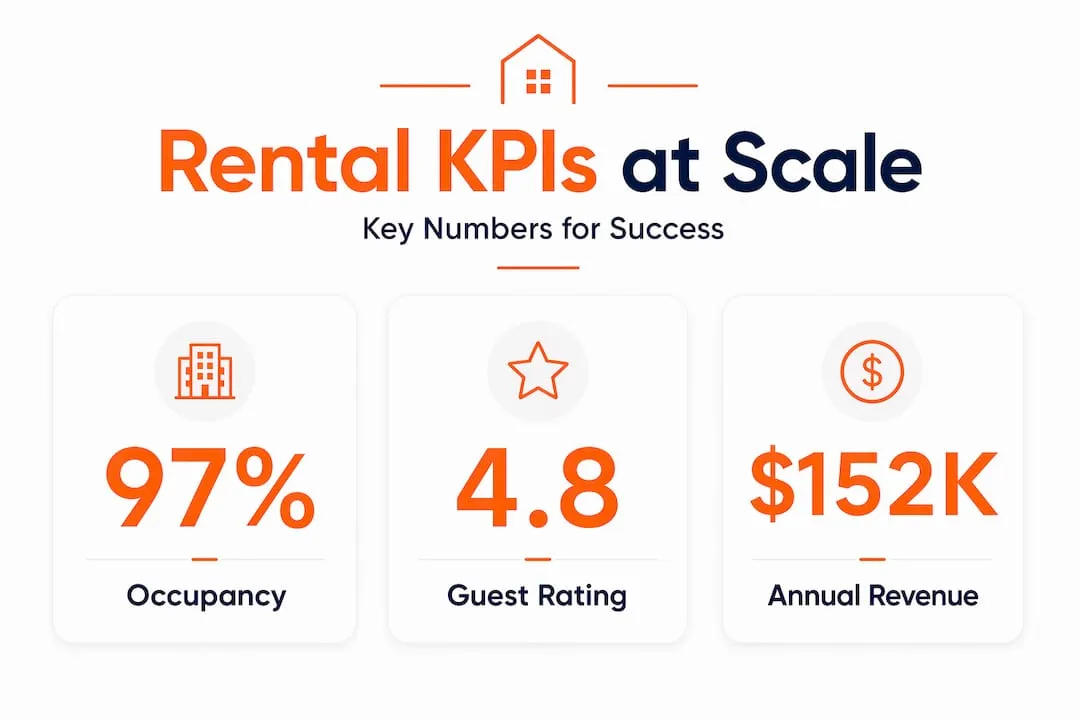
An intelligence system earns its keep not by displaying more data but by helping you understand which numbers actually drive outcomes. According to Bold BI’s property management dashboard research, key benchmarks include occupancy and rate performance, rental income, maintenance activity, and guest satisfaction, all compared across multiple properties in a single view.
The most important KPIs for multi-property operators break down into three buckets:
- Financial performance: Total rental income, revenue per available rental unit (RevPAR), and average daily rate (ADR) tell you whether each property is earning what the market will bear.
- Operational efficiency: Maintenance ticket resolution time, cleaning turnaround speed, and owner report generation time reveal where your team is losing hours.
- Guest experience: Review score trends, complaint categories, and repeat booking rates signal whether your brand is building loyalty or eroding it.
“What gets measured gets managed, but what gets benchmarked gets improved. You need context to know whether a 78% occupancy rate is excellent or a warning sign.”
Benchmarking across regions and property types surfaces opportunities that pure reporting misses. A coastal villa with a 65% summer occupancy rate looks acceptable in isolation. Benchmarked against comparable properties in the same market, it might reveal a pricing strategy that is leaving 20% of potential revenue on the table.
The portfolio KPI dashboard approach matters because alerts are only useful when they are calibrated to realistic thresholds. A system that alerts on every minor deviation creates noise. A well-configured intelligence system alerts selectively based on meaningful deviations from your specific benchmarks.
| KPI | What good looks like | Action if underperforming |
|---|---|---|
| Occupancy rate | Above market average for season | Adjust pricing or improve listing |
| Guest review score | 4.7 or above on major platforms | Audit recent complaints for patterns |
| Maintenance response time | Under 4 hours for urgent issues | Review escalation workflow |
| Rental income growth | Month-over-month improvement | Evaluate channel mix and promotions |
Continuous monitoring enables faster course corrections because problems are caught at the beginning of a downward trend, not after they have already impacted your annual revenue figures. For operators managing portfolios across multiple markets, real-time benchmarking against villa performance standards provides the competitive context needed to make confident decisions quickly.
The uncomfortable truth: Intelligence is not a silver bullet
Here is the perspective that most technology vendors will not give you directly: the most sophisticated AI recommendation engine in the world produces garbage outputs when it is fed garbage inputs.
We see this repeatedly. An operator purchases an intelligence platform expecting it to diagnose and solve their revenue problems. Three months later, they are frustrated because the recommendations seem generic or irrelevant. When you dig into the root cause, the culprit is almost always one of two things: incomplete data integration or workflows that nobody actually follows consistently.
These tools are analytics and automation aids, not replacements for human oversight. They require correct workflows, consistent data entry, and genuine adoption from the team using them day-to-day. A system that recommends a pricing adjustment based on demand signals cannot help you if your rates are managed manually in a spreadsheet that nobody syncs to the platform.
The change management side of adopting an intelligence system is genuinely hard. Your team needs to trust the recommendations enough to act on them. That trust takes time to build and requires early wins. It also requires leadership to stop rewarding the “gut feel” culture that most experienced property managers have built their careers on. This is uncomfortable. Do it anyway.
The operators who extract real value from intelligence systems share one trait: they treated the platform rollout as an operational transformation project, not a software installation. They mapped their data flows before signing a contract. They trained their teams on why the system makes certain recommendations before expecting them to follow those recommendations. They set a clear definition of success at the 90-day mark so they could measure actual impact rather than activity.
Start with a data strategy. Audit what data you currently capture, where it lives, and how consistently it is entered. Then identify the gaps that would compromise the intelligence layer before you build on top of them. That upfront investment in data health makes every subsequent AI recommendation more accurate and every automation trigger more reliable.
Next steps: Transforming your rental operations
With the landscape and pitfalls clear, you’ll need a solid partner and tech approach for a real transformation.
Adopting a rental management intelligence system is not about replacing your team. It is about eliminating the hours they spend on manual reporting, fragmented communication, and reactive problem-solving so they can focus on what actually builds your business. The technology exists today to automate the routine and amplify the strategic.
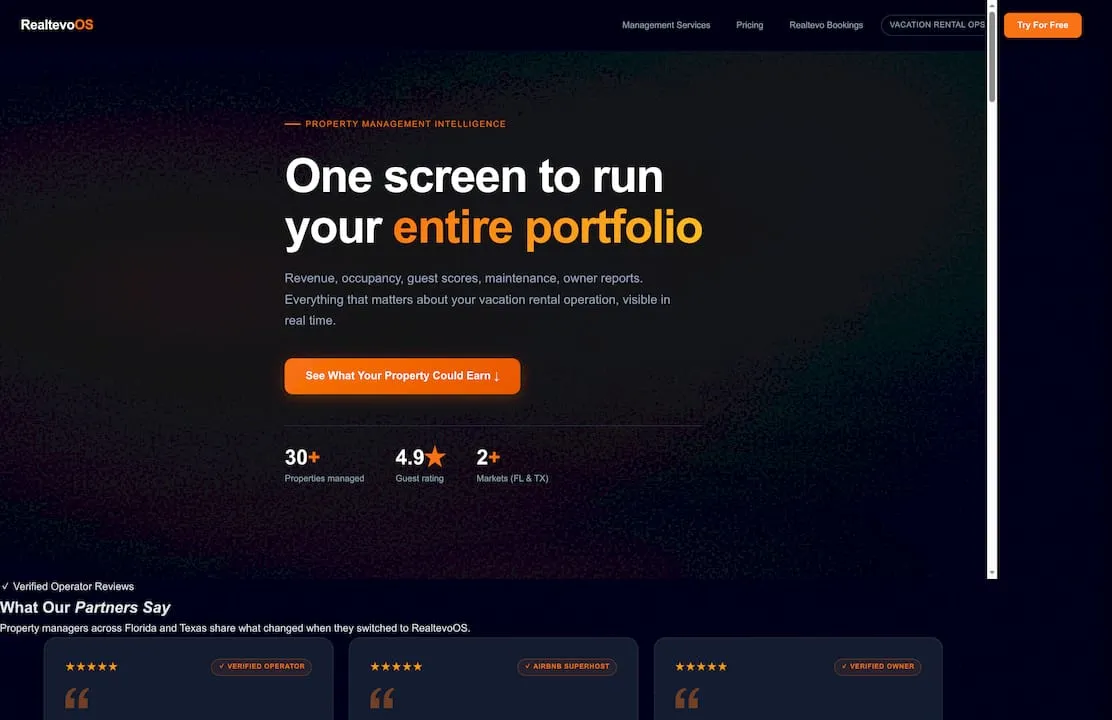
Get started with RealtevoOS and see how a purpose-built intelligence layer handles the complexity of multi-property management. RealtevoOS consolidates your Airbnb, Vrbo, and direct booking data into one unified dashboard, automates guest communications and maintenance escalation, and provides the real-time KPI benchmarking your portfolio needs to grow without operational chaos. If you are ready to move from reactive reporting to proactive, AI-driven management, schedule a personalized demonstration to see exactly how the platform maps to your current portfolio structure and growth goals.
Frequently asked questions
How does a rental management intelligence system differ from standard property management software?
It goes beyond storing and reporting data by using analytics and AI to recommend or automate next steps for improving revenue, occupancy, and guest satisfaction, rather than simply logging what already happened.
What types of data do these intelligence systems analyze?
They track operational, financial, and guest experience data, including occupancy rates, rental income, and maintenance activity, to generate insights and prioritized recommendations.
Do I need to replace my current software to use an intelligence system?
Most intelligence layers integrate on top of your existing tech stack and connect to your property management, marketing, and messaging systems without requiring a full platform replacement.
Will adopting an intelligence system require major changes to our daily operations?
You may need to update workflows or improve data consistency, since intelligence systems require correct workflows and connected data to generate reliable, actionable recommendations.