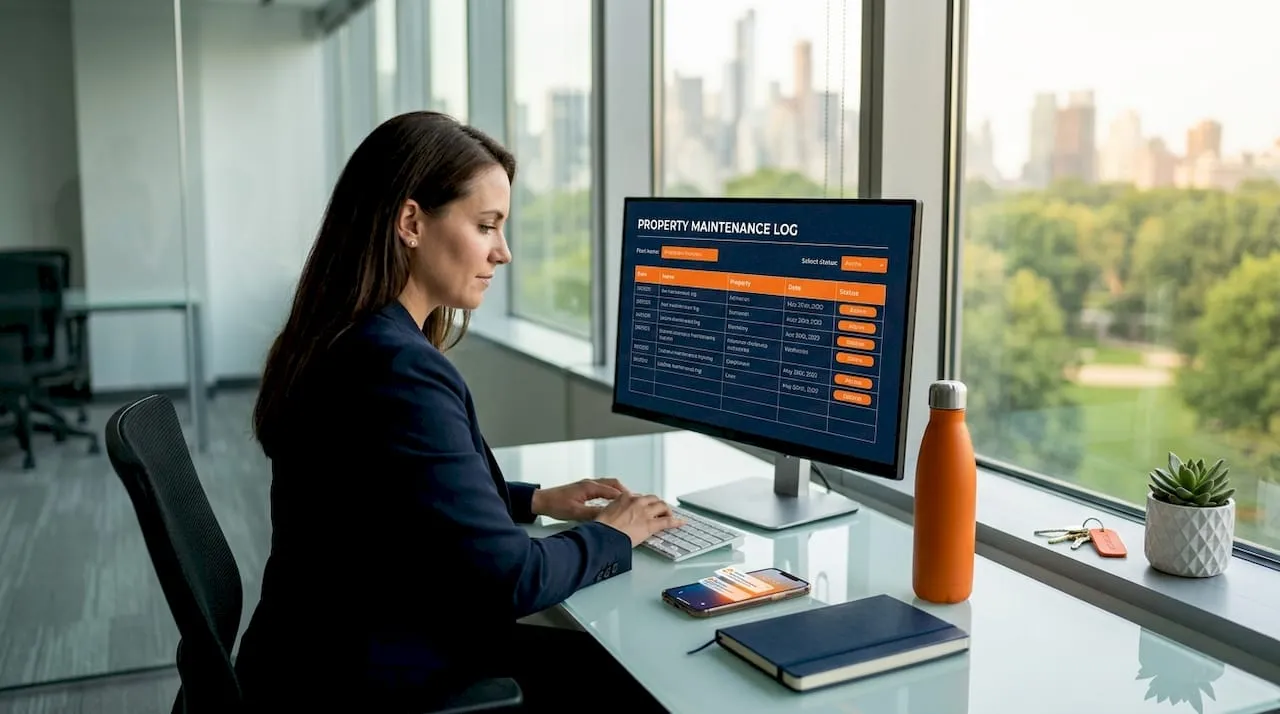
Streamline Rental Operations Workflow in 2026
Discover how to streamline rental operations workflow for 2026. Automate tasks to boost efficiency and profits with proven tools and strategies.

Streamline Rental Operations Workflow in 2026
Efficient rental management is defined as the systematic automation of key property management tasks, from rent collection to maintenance dispatch, to cut manual effort and increase profit. Vacation rental managers who automate 40% of back-office tasks achieve a 22% higher profit margin than those relying on manual processes. That number alone makes the case for rethinking how your operation runs. This guide gives you a practical, step-by-step path to streamline your rental operations workflow using proven tools like Realtevoos, Streamline VRS, AppFolio, and NetSuite, with 2026 benchmarks to measure your progress.
Which rental workflows yield the highest ROI when automated?
Not every workflow deserves your attention first. The right way to prioritize is to multiply time saved by task frequency and cost of error. Three workflows consistently top that calculation: rent collection, maintenance routing, and guest communication.
Rent collection is the clearest win. Automated rent reminders sent three days before the due date reduce late payments by 23%. Day-of reminders add another 11% reduction. That is a 34% improvement in on-time payments from two scheduled messages. For a 20-property portfolio, that translates directly into fewer cash flow gaps and less time spent chasing down payments.

Maintenance routing is the second priority. Manual dispatch means someone reads a request, decides who handles it, and sends a message. Automated routing removes that middle step entirely. The result is faster resolution and fewer complaints in guest reviews.
| Workflow | Automation Effort | Estimated Time Saved | ROI Level |
|---|---|---|---|
| Rent collection reminders | Low | 4–6 hours/month | High |
| Maintenance dispatch | Medium | 8–12 hours/month | High |
| Guest check-in messaging | Low | 3–5 hours/month | Medium |
| Financial reporting | High | 10–15 hours/month | Medium |
| Lease renewal notices | Medium | 5–8 hours/month | High |
Pro Tip: Start with rent collection automation before anything else. It delivers visible results within weeks, builds team confidence, and creates the cash flow stability that funds your next automation investment.
Quick-win automations like rent reminders and maintenance intake deliver measurable results fast. That speed matters because it reduces team resistance and builds momentum for larger workflow changes.
How do you connect automation tools to your existing rental software?
Most property managers already use at least one platform, whether that is AppFolio, Buildium, Yardi, or Streamline VRS. The problem is that these platforms handle their own tasks well but do not talk to each other. That gap creates duplicate data entry, missed triggers, and inconsistent guest experiences.
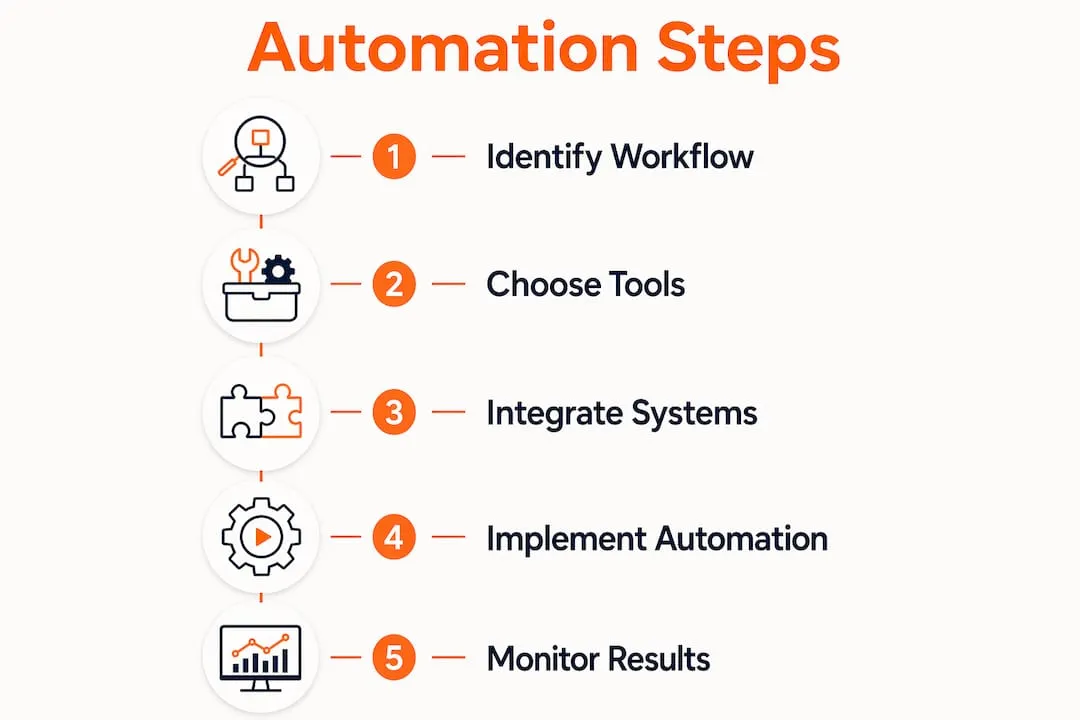
The solution is an orchestration layer. Tools like US Tech Automations sit above your existing software and connect workflows across systems. Think of it as a conductor that tells each platform when to act and what to send. This cross-system approach improves operational consistency in ways that native automations simply cannot match.
Here is a practical setup sequence for a typical vacation rental operation:
- Audit your current tools. List every platform you use and identify where manual handoffs occur between them.
- Map your highest-frequency workflows. Focus on rent reminders, maintenance requests, and check-in messaging first.
- Choose your orchestration platform. US Tech Automations or a similar integration layer connects your existing tools without replacing them.
- Build your first automated sequence. Set up rent reminders at three days out and on the due date. Test with a small property subset before rolling out.
- Add maintenance dispatch next. Create intake forms that auto-route requests to the right vendor based on category and property location.
- Integrate financial reporting. NetSuite’s SuiteFlow and SuiteScript tools automate workflows from lead-to-lease through financial close, reducing manual work by up to 80%.
- Review and expand. After 30 days, measure time saved and error rates. Then add the next workflow.
A common pitfall is relying solely on the native automation features inside a single platform. Those features work well within that system but break down the moment a task crosses into another tool. The orchestration layer is what makes your entire rental workflow software stack function as one unit.
What operational best practices keep your rental workflow error-free?
Automation handles the triggers and timing. Operational standards determine whether the underlying data is accurate enough for automation to work correctly. Without clean processes behind the scenes, automated systems send wrong information at the right time.
The most overlooked best practice comes from warehouse management principles adapted for vacation rentals. The core rule is to separate physical location from readiness status for every asset you manage. A property can be physically available but not ready to rent if it has not passed inspection. Treating those two states as one is the root cause of most booking errors.
Here is how to apply this in practice:
- Define operational zones. Label every property or unit as one of three states: In Cleaning, In Maintenance, or Ready to Rent. Never allow a booking system to pull from anything outside the Ready to Rent zone.
- Use status-based check-in. Before a property moves to Ready to Rent, require a checklist confirmation from your cleaning or inspection team. This creates a verified audit trail.
- Validate orders before dispatch. When a booking triggers a cleaning or maintenance task, the system should confirm the asset’s current status before sending the work order.
- Track asset history. Log every status change with a timestamp. This data becomes critical when diagnosing recurring issues or defending against guest complaints.
Controlled overbooking protocols add another layer of protection. These protocols use scheduling-aware inventory checks, maintenance hold windows, and buffer times between bookings to prevent resource conflicts before they happen.
Pro Tip: Build a 2-hour buffer between checkout and the next check-in for every property. It sounds like lost revenue, but it eliminates the guest complaints and refund requests that cost far more than one night’s booking.
Automated late notices also reduce compliance risk. Manual notices vary in timing and create documentation gaps. Automated notices go out simultaneously, consistently, and with a verifiable record. That consistency is a direct defense against fair housing exposure.
| Operational Zone | Status | Booking Eligible |
|---|---|---|
| In Cleaning | Not ready | No |
| In Maintenance | Not ready | No |
| Inspection Pending | Not ready | No |
| Ready to Rent | Confirmed | Yes |
How do you measure and improve rental operation efficiency over time?
Automation without measurement is just spending money on software. The managers who get the most from their systems treat automation as a continuous improvement loop: measure, refine, and scale. That mindset is what separates operators who plateau from those who keep compounding gains.
The KPIs that matter most for vacation rental operations are:
- Manual hours saved per month. Benchmark: 120 hours down to 30 hours monthly for a 50-property portfolio after full automation. Use this as your target ratio.
- Late payment rate. Track month over month after activating rent reminders. A 30%+ reduction is achievable within 60 days.
- Maintenance turnaround time (MTTR). A 1% reduction in MTTR increases asset utilization by 0.5–1%. That compounds across a large portfolio.
- Guest satisfaction scores. Pull ratings from Airbnb and Vrbo monthly. Automated check-in messaging and faster maintenance resolution directly improve these scores.
- Booking error rate. Track how often a confirmed booking hits a property that is not ready. This number should trend toward zero as your status-based workflow matures.
“The goal is not to automate everything at once. The goal is to measure what you have, find the single biggest drag on your operation, fix it, and then measure again.”
Real-time dashboards make this process practical. Realtevoos pulls live data from Airbnb, Vrbo, and your property management tools into one view, so you can see KPI trends without pulling reports manually. That visibility is what makes the measure-refine-scale loop actually work in a busy operation. For a deeper look at how scaling rental operations connects to workflow refinement, the process is worth reviewing as your portfolio grows.
Key takeaways
Automating your rental operations workflow delivers measurable gains only when you combine the right tools with clean operational standards and consistent KPI tracking.
| Point | Details |
|---|---|
| Prioritize rent collection first | Automated reminders reduce late payments by up to 34%, delivering fast, visible ROI. |
| Use an orchestration layer | Tools like US Tech Automations connect AppFolio, Buildium, and Yardi into one unified workflow. |
| Separate location from readiness | Define cleaning, maintenance, and ready-to-rent zones to prevent booking errors at the source. |
| Track MTTR and manual hours | A 1% MTTR improvement increases utilization by 0.5–1%; target 30 manual hours per month for a 50-property portfolio. |
| Treat automation as a loop | Measure KPIs monthly, refine the weakest workflow, then scale what works before adding new automations. |
What i’ve learned after watching managers automate the wrong things first
Most property managers I talk to make the same mistake. They spend their first automation budget on the flashiest feature, usually a dynamic pricing tool or a guest-facing chatbot, and then wonder why their operation still feels chaotic six months later. The back office is still a mess. Payments are still late. Maintenance requests still fall through the cracks.
The managers who actually move the needle start with the boring stuff. Rent reminders. Maintenance intake forms. Status-based property checklists. These are not exciting, but they are the foundation that every other automation depends on. You cannot build a reliable guest experience on top of a broken operational base.
The second thing I always tell people is that team buy-in matters more than the software you choose. I have seen great platforms fail because the staff did not trust the system and kept doing things manually anyway. The fix is not more training sessions. It is starting with automations that make your team’s life easier immediately, not just yours. When your maintenance coordinator stops getting 11 PM phone calls because the intake form routes requests automatically, they become your biggest advocate for the next phase.
Expect the first 90 days to feel slower than manual. You are building the system while running the operation. That is hard. But by month four, the compounding effect kicks in, and the time you get back is real. Use it to scale your rental portfolio instead of just maintaining what you already have.
— Jose
Run your entire operation from one place with Realtevoos
Managing workflows across Airbnb, Vrbo, and multiple property management tools creates the exact fragmentation that kills efficiency. Realtevoos is built to fix that.
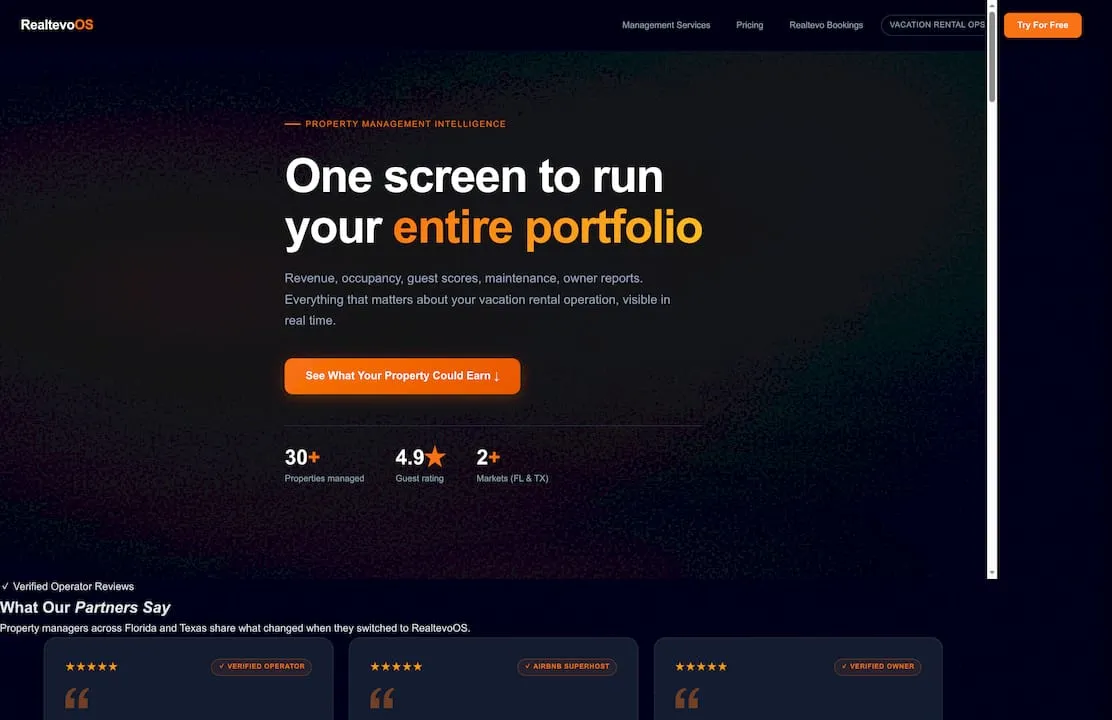
Realtevoos consolidates your operational workflows across every property into a single AI-powered dashboard. It pulls live data from your existing platforms, automates guest communications, and gives you the real-time visibility you need to act fast. Property managers using Realtevoos report saving several hours each week while improving guest satisfaction scores. Whether you manage 5 properties or 50, the platform scales with you. Explore what Realtevoos can do for your operation and see why it is the command center vacation rental managers trust in 2026.
FAQ
What does it mean to streamline a rental operations workflow?
Streamlining a rental operations workflow means automating and standardizing key property management tasks, such as rent collection, maintenance routing, and guest communication, to reduce manual effort and improve consistency across your portfolio.
Which rental workflow should i automate first?
Start with rent collection reminders. Automated reminders sent three days before and on the due date reduce late payments by up to 34%, delivering fast results with minimal setup effort.
How much time can automation actually save a property manager?
Automating property management workflows reduces manual time from 120 hours to 30 hours per month for a 50-property portfolio, a 60–80% reduction in hands-on labor.
What is an orchestration layer and do i need one?
An orchestration layer is a platform that connects multiple property management tools, like AppFolio, Buildium, and Yardi, so they trigger actions across systems. You need one if your current tools do not communicate with each other automatically.
How do i know if my rental workflow improvements are actually working?
Track four KPIs monthly: manual hours saved, late payment rate, maintenance turnaround time, and guest satisfaction scores from Airbnb and Vrbo. Consistent improvement across all four confirms your workflow changes are producing real operational gains.