The Role of Automation in Owner Relations: 2026 Guide
Discover the role of automation in owner relations for 2026. Learn how technology boosts communication, improves satisfaction, and enhances efficiency.

The Role of Automation in Owner Relations: 2026 Guide
Automation in owner relations is defined as the use of technology to handle routine communication, financial reporting, and workflow tasks between property managers and vacation rental owners. The role of automation in owner relations has shifted from a convenience to a competitive necessity. Poor communication is the number one reason owners fire their property managers. Automation directly addresses that failure point by delivering consistent, branded, and timely reports without relying on manual effort. Property managers who adopt automation report measurable gains in owner satisfaction, retention, and operational efficiency.
How does automation improve owner communication and reporting?
Automated communication in property management works by replacing manual, ad hoc outreach with scheduled, data-driven reporting. Owners receive financial summaries, occupancy updates, and maintenance alerts on a fixed cadence, regardless of how busy the management team is. That consistency builds trust faster than any personal email ever could.
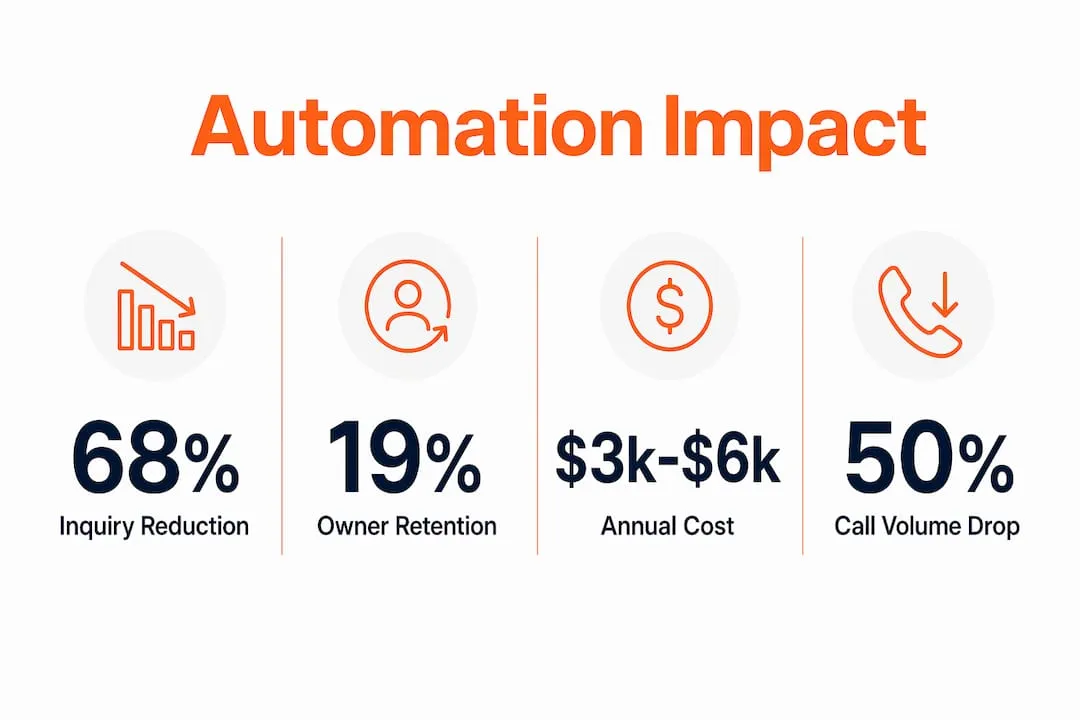
The most direct benefit is inquiry reduction. Automation deflects 68% of routine owner inquiries by delivering the information owners would otherwise call or email to request. Fewer inbound questions mean managers spend less time on status updates and more time on decisions that actually move the needle.

Exception flagging is the technical mechanism that makes this possible at scale. Rather than reviewing every line of every report, exception flagging reduces manual oversight by roughly 90% by surfacing only the anomalies that require human review. A manager overseeing 50 properties can now catch a revenue discrepancy in minutes rather than hours. For a deeper look at what automated reports actually contain, the property management reporting examples on the Realtevoos blog show real-world formats worth studying.
Key communication workflows that benefit most from automation include:
- Monthly owner statements delivered on a fixed schedule with no manual assembly
- Maintenance notifications triggered automatically when a work order is opened or closed
- Occupancy and revenue summaries pulled directly from booking platforms like Airbnb and Vrbo
- Year-end financial packages compiled from integrated accounting data without spreadsheet reconciliation
Pro Tip: Set your automated reports to deliver on the same day each month. Owners notice the pattern and begin to trust the cadence, which reduces anxiety-driven check-in calls.
What is the measurable impact of automation on owner retention and costs?
The financial case for automation in property management is not theoretical. Property management firms using automation report 19% higher owner retention and 28% lower operational costs, while saving 10–15 staff hours every month. That retention lift translates directly to revenue, since replacing a dissatisfied owner costs far more than retaining one.
The return on investment compounds quickly. Automated reporting infrastructure costs $3,000–$6,000 annually for portfolios of 100 or more units, yet delivers a 280%–312% ROI within the first year. The payback period runs just 4–7 months. For context on how these numbers benchmark against industry standards, the owner reporting in property management guide from Realtevoos breaks down what top-performing firms measure.
| Metric | Without Automation | With Automation |
|---|---|---|
| Owner retention rate | Baseline | Up 19% |
| Operational cost | Baseline | Down 28% |
| Staff hours on reporting | 10–15 hrs/month | Near zero |
| Routine owner inquiries | High volume | Down 68% |
| First-year ROI | N/A | 280%–312% |
The hours recovered matter as much as the cost savings. Automation creates capacity for managers to shift owner conversations from routine status updates to strategic advisory discussions. That shift changes the entire nature of the owner relationship. Owners stop seeing their manager as an administrator and start seeing them as a trusted advisor.
Pro Tip: Track your inquiry volume before and after implementing automated reporting. A 50% drop in routine calls within 90 days is a reliable signal that your automation setup is working correctly.
Balancing automation with the human touch in owner relations
Automation handles data. It cannot handle relationships. Human judgment, empathy, and relationship-building cannot be automated, and property managers who forget this distinction risk losing the owners they set out to serve better. The technology-human balance is not a philosophical debate. It is a practical operating decision with real retention consequences.
Over-automating emotional touchpoints is the most common mistake. Sending a templated condolence message when an owner’s property sustains storm damage, or routing a distressed call to a chatbot, signals that the manager values efficiency over the relationship. Those moments require a human voice, a direct phone call, and genuine problem-solving.
The interactions that must stay human include:
- Quarterly strategic check-ins where managers review performance trends and discuss portfolio goals
- Crisis management calls during property damage, guest disputes, or legal issues
- Onboarding conversations with new owners who are still building trust in the management team
- Difficult financial discussions when occupancy or revenue falls below expectations
The 80/20 rule applies cleanly here: automate the 80% of tasks that are routine and rule-based, and reserve human attention for the 20% of interactions that require judgment and empathy. That split is not a compromise. It is the most effective use of both technology and people. The property workflows guide for 2026 from Realtevoos maps out which tasks fall cleanly into each category.
The owners who churn fastest are not the ones who received too few automated reports. They are the ones who felt like a number in a system. Automation should free managers to be more present in high-stakes moments, not less.
Practical steps for vacation rental owners to use automation effectively
Vacation rental owners do not implement automation directly, but they have significant influence over how their management teams use it. Understanding the technology makes you a better partner and a more demanding client.
Start by identifying the workflows that affect you most. Monthly financial reporting, maintenance status updates, and occupancy summaries are the three areas where automation delivers the fastest and most visible improvement. Ask your management team which of these are currently manual and what their plan is to automate them.
- Audit your current reporting. Ask how your monthly statements are generated. If the answer involves spreadsheets and manual data entry, that process is a candidate for automation.
- Request cross-system integration. True automation efficiency requires linking your property management system, accounting software, and CRM to avoid duplicate data entry and reconciliation errors. Ask your manager whether these systems talk to each other.
- Confirm data ownership. Managers who own their automation technology avoid vendor lock-in and retain control over your data. Ask who owns the reporting infrastructure and what happens to your data if you change management companies.
- Set your communication preferences. Specify how often you want automated reports, in what format, and which metrics matter most to you. A good management team will configure the system to match your preferences, not a generic template.
- Monitor and give feedback. Review your first three automated reports carefully. Flag anything missing, inaccurate, or confusing. Automation improves when humans correct its early outputs.
Pro Tip: Ask your property manager to show you a sample automated report before you sign a management agreement. The quality of that report tells you more about their operational standards than any sales conversation will.
Key Takeaways
Automation in owner relations works because it delivers consistent reporting, reduces routine inquiries, and frees managers to focus on the high-value human interactions that actually retain owners long-term.
| Point | Details |
|---|---|
| Automation reduces inquiries | Consistent automated reports deflect 68% of routine owner questions. |
| Retention and cost gains are measurable | Firms using automation report 19% higher retention and 28% lower costs. |
| Exception flagging cuts review time | Automated anomaly detection reduces manual report oversight by roughly 90%. |
| Human touch remains non-negotiable | Quarterly check-ins, crisis calls, and onboarding conversations must stay human-led. |
| Data ownership protects owners | Managers who control their automation tech stack give owners better long-term security. |
What I’ve learned about automation and owner trust after years in this industry
The conversation around automation in property management tends to split into two camps: the people who think technology will solve everything, and the people who think it will destroy the personal relationships that make this business work. Both camps are wrong.
What I’ve seen work consistently is treating automation as a capacity tool, not a replacement strategy. When a manager stops spending 15 hours a month assembling owner reports manually, that time does not disappear. The best managers redirect it into the conversations that actually build loyalty. They call owners proactively. They flag opportunities before owners ask. They show up as advisors, not administrators.
The detail that most owners miss is the data ownership question. Managers who control their automation technology and its integrations are not dependent on a vendor’s roadmap or pricing changes. That independence matters for you as an owner because it means your data and your reporting history travel with your manager, not with a third-party platform. Ask that question before you sign anything.
The future of owner relations is not full automation. It is a management team that uses automation to show up better for you as a human being. That distinction is worth holding onto.
— Jose
Realtevoos: a command center built for owner relations
Vacation rental property owners who want the benefits described in this article need a management team running the right infrastructure. Realtevoos is built specifically for that purpose.
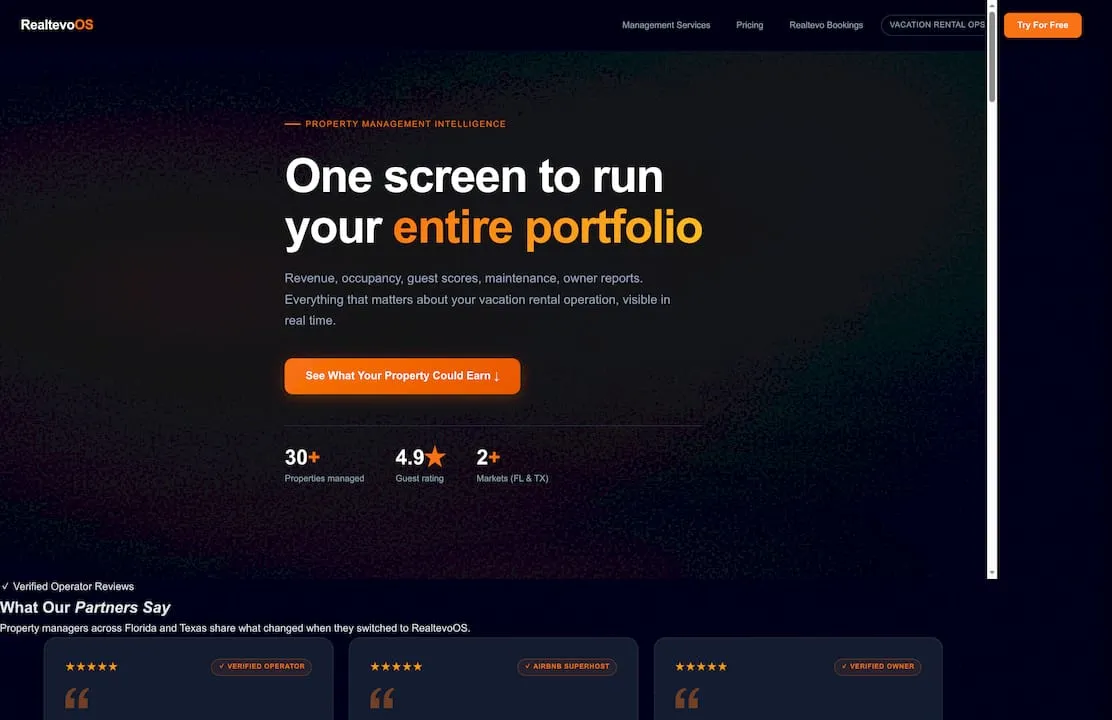
Realtevoos consolidates property management workflows across multiple units, using AI-driven automation to generate owner reports, track performance data from Airbnb and Vrbo, and reduce the manual labor that slows most management teams down. Property managers using Realtevoos report saving several hours each week on reporting alone. That recovered time goes directly into the strategic owner conversations that improve retention. For owners evaluating management teams, asking whether your manager uses a platform like Realtevoos is one of the fastest ways to assess their operational standards. You can also review operational reporting benchmarks to understand what best-in-class looks like.
FAQ
What is the role of automation in owner relations?
Automation in owner relations handles routine communication and financial reporting so property managers can focus on strategic, high-value interactions with owners. It reduces manual effort, increases reporting consistency, and directly improves owner satisfaction and retention.
How does automated reporting reduce owner inquiries?
Automated reports deliver the financial and occupancy data owners would otherwise request manually. Research shows consistent automated reporting deflects 68% of routine owner inquiries, freeing managers from repetitive status-update calls.
What are the risks of over-automating owner communications?
Over-automation of emotional or complex interactions, such as crisis calls or difficult financial conversations, signals to owners that efficiency matters more than the relationship. That perception accelerates owner churn and undermines the trust automation was meant to support.
How much does owner reporting automation cost?
Automated reporting infrastructure for portfolios of 100 or more units typically costs $3,000–$6,000 per year and delivers a 280%–312% return on investment within the first year, with a payback period of 4–7 months.
What should vacation rental owners ask their property managers about automation?
Ask how monthly statements are generated, whether the property management system integrates with accounting and CRM tools, and who owns the automation technology and your data. Those three questions reveal more about operational quality than any marketing claim will.