Types of Booking Channels for Vacation Rental Managers
Discover the types of booking channels for vacation rentals. Learn how each channel impacts your occupancy and revenue potential.

Types of Booking Channels for Vacation Rental Managers
What are the main types of booking channels for vacation rentals?
Booking channels for vacation rentals fall into two categories: direct and indirect. Direct channels are platforms you own and control, like your property website or phone reservations. Indirect channels are third-party platforms that distribute your listings to a broader audience, including online travel agencies (OTAs), global distribution systems (GDS), and metasearch engines.
Why does this classification matter? Because each category carries a different cost structure, guest relationship model, and revenue potential. Your channel mix directly shapes your occupancy rate and profit margin.
Here is a quick breakdown of the most common reservation channels by category:
- Direct channels: Property website with a booking engine, direct phone bookings, email reservations, social media booking links
- OTAs: Booking.com, Expedia, Agoda, Airbnb, Vrbo
- GDS: Amadeus, Sabre, Travelport, Worldspan
- Metasearch engines: Google Hotels, TripAdvisor, Trivago, Kayak
- Wholesale and B2B: Hotelbeds, tour operators, travel agents
According to industry data, the top revenue-generating channels for properties in the United States include Booking.com, Expedia Group, direct hotel websites, Agoda, and Airbnb. OTAs dominate volume, but direct bookings are climbing fast as property managers invest more in their own booking infrastructure.

Why direct booking channels are your most profitable option
Direct bookings are the highest-margin reservation type available to you. No third-party commission means every dollar the guest pays goes to your business, not a platform. That margin advantage compounds quickly across a portfolio of properties.
Your primary direct channel is your property website, paired with a booking engine that handles real-time availability and payment processing. Phone and email reservations also count as direct, though they require more manual handling. Social media channels, particularly Instagram and Facebook, increasingly drive traffic directly to booking pages.
The catch? Competing with OTAs on user experience requires real investment. A mobile-friendly booking engine, secure payment integration, and conversion rate tools are not optional if you want guests to complete a reservation on your site rather than bouncing back to Airbnb. Direct bookings also give you full ownership of guest data, which powers personalization and repeat stays.
Key investments that make direct channels work:
- A fast, mobile-optimized booking page with clear pricing
- Secure payment processing (Stripe, for example, is built for this)
- Automated confirmation and pre-arrival messaging
- SEO and paid search to drive traffic without relying on OTAs
- Loyalty incentives or exclusive rates for returning guests
Pro Tip: Audit your OTA listings periodically to confirm they are not undercutting your direct rates. Guests who find a lower price on Booking.com than on your website have no reason to book direct, and that commission loss adds up fast.
Indirect booking channels: OTAs, GDS, and metasearch engines explained
Indirect channels trade margin for reach. They put your property in front of travelers who have never heard of you, and that exposure has real value, especially when you are building occupancy in a new market or season.
Online travel agencies
OTAs dominate global booking volume, and for vacation rental managers, Airbnb and Vrbo are the most relevant platforms alongside the hotel-focused giants. Booking.com, Expedia, and Agoda are the three largest by revenue contribution in the US market. Regional OTAs like Traveloka and Tiket.com serve Southeast Asia, while GoMMT targets India and Sri Lanka. Each OTA charges a commission on completed bookings, typically a percentage of the reservation value.
Global distribution systems
GDS platforms like Amadeus, Sabre, and Travelport connect your inventory to travel agents, corporate travel managers, and OTAs in real time. For vacation rentals targeting business travelers or premium guests who use travel agents, GDS access is worth considering. Commission fees apply here as well, and setup typically requires a channel manager or property management system (PMS) with a GDS connection.
Metasearch engines
Metasearch engines like Google Hotels, TripAdvisor, and Trivago sit one level above OTAs. They aggregate rates from multiple sources and send travelers to book directly on your site or through an OTA. You pay on a cost-per-click or commission basis. The key advantage: when a guest books through a metasearch link to your website, you own the guest relationship, not the OTA.
| Channel type | Commission model | Reach | Guest relationship | Best for |
|---|---|---|---|---|
| Property website | None | Low (earned) | You own it | High-margin repeat guests |
| OTA (Airbnb, Vrbo, Booking.com) | Per-booking % | Very high | OTA owns it | Volume and new guest acquisition |
| GDS (Amadeus, Sabre) | Per-booking % | High (B2B) | Agent-mediated | Business and corporate travelers |
| Metasearch (Google Hotels, Trivago) | CPC or commission | High | You own it | Direct booking at scale |
How to build a channel mix that actually drives revenue
A single-channel strategy is a liability. Relying only on Airbnb caps your reach. Relying only on your website limits your volume until your SEO and brand are strong enough to carry the load. The most effective approach combines direct and indirect channels, calibrated to your property type and guest demographics.
Channel management technology makes this practical. A channel manager automates two-way inventory and rate updates across every platform you list on, eliminating the manual work and the risk of double-bookings. When a guest books on Vrbo, your availability on Booking.com and your direct site updates instantly. That automation is what makes multi-channel booking management viable without a full-time operations team.
Common challenges property managers face when running multiple channels:
- Rate parity violations: OTAs may penalize you for offering lower prices on your direct site without a clear rate strategy
- Inventory fragmentation: Without a channel manager, manual updates create gaps and errors
- Review management: Each platform has its own review system, and neglecting any one of them hurts conversion
- Data silos: Booking data scattered across platforms makes revenue analysis difficult
Criteria for choosing which channels to prioritize:
- Property type: Luxury properties often perform better on direct and GDS channels; budget-friendly rentals get more volume from OTAs
- Guest demographics: Business travelers respond to GDS; leisure travelers browse Airbnb and Vrbo
- Market maturity: New listings benefit from OTA visibility; established properties can shift spend toward direct
Pro Tip: Set your direct booking rate as your best available rate, then use OTAs as your discovery layer. Guests who find you on Booking.com and then visit your website to compare should always find a reason to book direct, whether that is a flexible cancellation policy, a welcome gift, or a slightly better price.
For a deeper look at occupancy rate optimization across channels, the Realtevoos blog breaks down the 2026 strategy in detail.
How Realtevoos and Jose Villeda approach booking channel optimization
Jose Villeda, the expert behind Realtevoos, built the platform specifically for vacation rental property managers who are tired of toggling between Airbnb dashboards, Vrbo inboxes, and spreadsheets. The core insight driving the platform: fragmented booking data is the single biggest drag on property manager productivity and revenue performance.
“The property managers who win in 2025 and beyond are not the ones on the most channels. They are the ones who can see all their channels in one place, act on the data in real time, and automate the repetitive work that used to eat their mornings. That is exactly what RealtevoOS is built to do.” — Jose Villeda, Realtevoos
RealtevoOS clients report measurable reductions in manual labor and higher guest satisfaction scores through automated pre-arrival and post-stay communications. The platform consolidates booking data from Airbnb, Vrbo, and other channels into a single AI-powered dashboard, so you can monitor occupancy, adjust pricing, and respond to guests without switching between apps.
The SiteMinder 2025 report confirms what Realtevoos has built its product around: OTAs still dominate volume, but direct bookings are rising as the strategic priority for property managers who want higher margins and stronger guest relationships. The managers gaining ground are the ones treating their channel mix as a dynamic system, not a static setup.
Realtevoos also addresses the scalability problem directly. Growing from five properties to twenty on manual processes is not realistic. AI-driven automation within the platform handles the inventory sync, pricing updates, and guest communications that would otherwise require additional staff. That is how AI benefits rental managers at a practical, day-to-day level.
Understanding how digital reservations work across platforms is foundational to this strategy. For a traveler-side perspective on how digital reservations function, Wild Foodz offers a clear breakdown of the booking process from the guest’s point of view, which is useful context for any property manager designing their channel strategy.
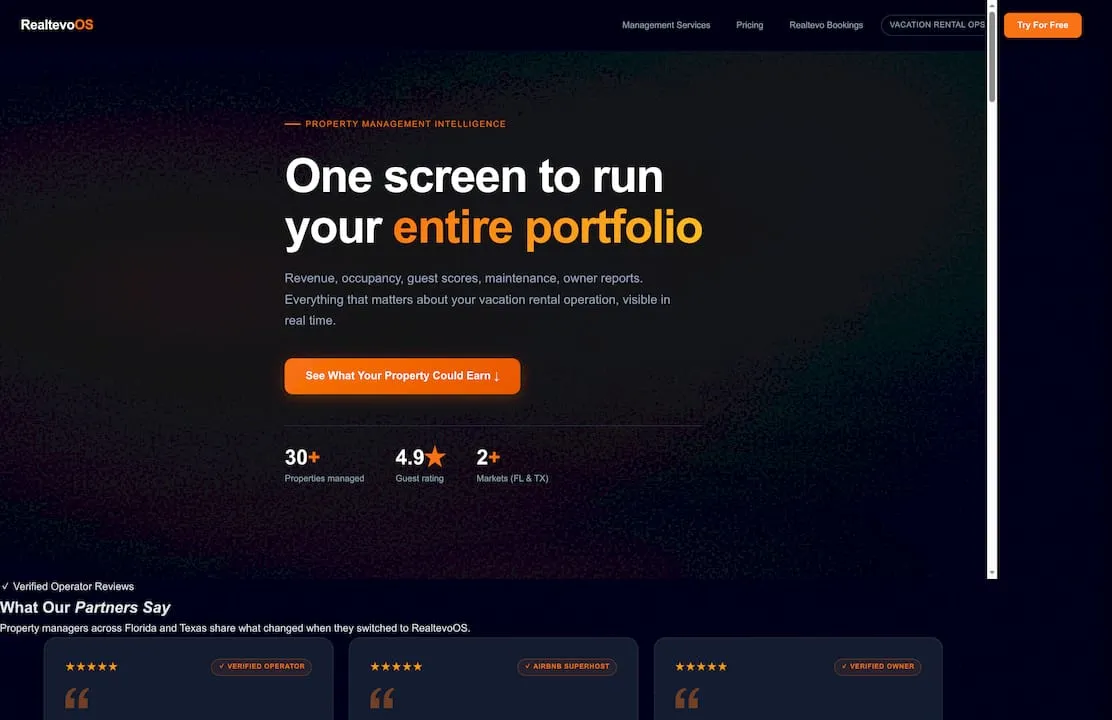
Your entire rental operation. One command center. Realtevoos consolidates your Airbnb, Vrbo, and direct booking data into a single AI-powered dashboard, automates guest communications, and gives you the real-time analytics to make faster, smarter decisions. See it in action and take back the hours you are spending on manual updates.
Key Takeaways
The most effective booking strategy for vacation rental managers combines direct channels for margin with OTAs for volume, managed through a channel manager that automates inventory and rate updates across every platform.
| Point | Details |
|---|---|
| Two core channel categories | Direct channels (your website, phone) and indirect channels (OTAs, GDS, metasearch) each serve a different purpose in your mix. |
| Direct bookings yield the highest margin | No third-party commission means more revenue per booking, but requires investment in a mobile-friendly booking engine and payment tools. |
| OTAs dominate US booking volume | SiteMinder 2025 data ranks Booking.com, Expedia, and Agoda as the top revenue channels in the United States. |
| Channel managers prevent double-bookings | Automating two-way inventory updates across platforms eliminates human error and keeps availability accurate in real time. |
| Realtevoos consolidates it all | RealtevoOS clients reduce manual labor and improve guest satisfaction by managing all booking channels from one AI-powered dashboard. |
Recommended
- Multi-Channel Booking Management for Vacation Rentals — Realtevo Blog
- Top 6 Vacation Rental Management Software for teams-app.operto.com alternatives 2026 — Realtevo Blog
- Vacation Rental Marketing List: Your 2026 Growth Guide — Realtevo Blog
- Vacation Rental Revenue Tips That Actually Work — Realtevo Blog