What Is Owner Relations Management? A 2026 Guide
Discover what is owner relations management and how it enhances communication between property management companies and owners in 2026.

What Is Owner Relations Management? A 2026 Guide
What is owner relations management, and why does it matter?
Owner relations management is the dedicated function that serves as the primary communication and reporting link between property management companies and property owners. Think of it as the control layer between your operational decisions and the people whose capital funds them. Career role descriptions define it as a communication and customer service discipline focused on maintaining open, professional lines of contact and responding promptly to owner inquiries.
The core responsibilities span four areas:
- Handling inquiries from owners and stakeholders with speed and accuracy
- Contract management covering negotiations, renewals, and terminations
- Financial reporting including accurate payment distributions and written accounting
- Relationship maintenance across the full ownership lifecycle
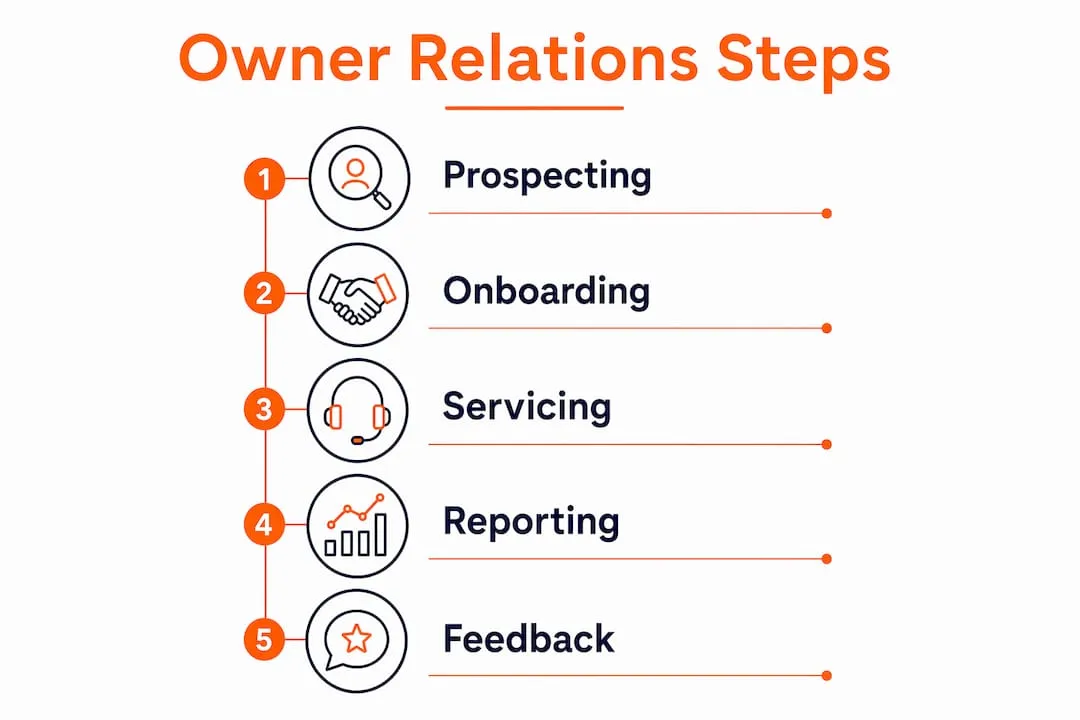
Owner relationship management is not a one-time handshake. It runs from the first prospecting conversation through ongoing servicing all the way to contract closure, requiring consistent professionalism at every stage.
Why strong owner relations management drives better property performance
Effective owner relations management builds the trust that keeps owners in your portfolio long-term. When owners receive accurate, timely reports and get their questions answered fast, disputes drop and confidence in your operation rises.
The concrete benefits include:
- Financial transparency: Accurate accounting and regular written reports remove ambiguity around distributions and expenses
- Fewer disputes: Documented communication creates a clear record when disagreements arise
- Operational alignment: Owners who understand your decisions are far more likely to approve capital requests and support your strategy
- Retention: Owners who feel informed and respected renew contracts; those who feel ignored leave
The NARPM Code of Ethics mandates that property managers communicate regularly with clients and provide written accounting promptly in any dispute. That is not a suggestion. It is a professional standard, and platforms that automate this process make compliance far easier to maintain at scale.
The importance of owner relations shows up most clearly in retention. When communication arrives exactly when expected, owners stop wondering what they are not being told, and their focus shifts from monitoring you to trusting you.
Key features your owner relations software should have
Purpose-built owner relations software does the heavy lifting that manual processes cannot sustain across a growing portfolio. The right platform covers six functional areas:
- Automated financial calculations: Revenue sharing, expense allocation, and distribution math handled without spreadsheets
- Branded owner portals: Real-time access to statements, documents, and property performance data
- Secure identity verification: Confirming you are communicating with the correct owner before releasing sensitive financial data
- Workflow automation: Case tracking, task assignment, and inquiry routing that keeps nothing stuck in an inbox
- PMS integration: Two-way data sync with your property management system so owner-facing reports always reflect live operational data
- Reporting dashboards: Metrics like time to first contact, time to resolution, and case volume by agent
| Feature | What it solves |
|---|---|
| Automated distributions | Eliminates manual calculation errors on owner payments |
| Owner portal | Gives owners access without requiring staff time |
| Identity verification | Reduces fraud risk on sensitive account changes |
| Workflow automation | Prevents inquiries from falling through the cracks |
| PMS integration | Keeps financial data consistent across systems |
| Performance dashboard | Lets managers track and improve response quality |
Platforms like MineralAnswers combine AI-powered case management, document collection, and secure identity validation in a single interface, cutting the time teams spend on routine case resolution.

How owner relations management builds transparency and trust
Transparency is not just about sending reports. It is about sending the right information, at the right time, in a format owners can actually use. NARPM’s professionalism standards require written reports and prompt written accounting in disputes, which means your communication process needs to be documented and repeatable, not improvised.
Effective owner engagement practices follow a tiered structure:
- Emergency tier: Legal notices, structural issues, and liability events communicated immediately
- Urgent tier: Significant maintenance, insurance claims, and important tenant notices within 24–48 hours
- Standard tier: Routine financial updates and market performance in scheduled monthly or quarterly reports
Digital portals remove the friction of one-off email chains by giving owners a single place to check statements, submit questions, and track responses. That self-service layer reduces inbound inquiry volume while actually improving owner satisfaction. For owner reporting best practices, the goal is making communication so systematic that missing a scheduled update becomes structurally impossible.
Pro Tip: Track time to first contact and time to resolution by support agent. When you segment these metrics by team member, you can identify coaching opportunities before a slow responder damages an owner relationship.

Why specialized owner relations software outperforms generic tools
Generic CRM tools were not built for multi-owner property portfolios. They lack the financial calculation logic, PMS connectors, and audit trail requirements that owner relations demands. Purpose-built platforms address the specific scenarios property managers face every day.
Key advantages of specialized software:
- Multi-owner architecture: Handles hundreds or thousands of individual owner accounts with distinct payment schedules and contract terms
- Prebuilt PMS integrations: Connects directly to your existing property management system without custom development
- Audit trails: Every communication, document, and transaction is logged, supporting both compliance and dispute resolution
- Branded owner experience: White-labeled portals that reflect your company’s identity, not a generic vendor interface
- Scalability: Adds new properties and owners without proportional increases in staff workload
The VRMA notes that when market growth slows, trust becomes a property manager’s greatest asset. Software that delivers consistent, data-backed communication is what makes that trust possible at scale. For managers expanding their portfolios, automation in owner relations is the difference between growth that works and growth that overwhelms.
Platforms serving large hospitality portfolios report that structured owner portals and automated workflows reduce the manual labor required per owner account, freeing teams to focus on relationship quality rather than administrative volume.
Owner relations in practice: the lifecycle and hospitality training
NARPM’s four-stage framework maps the full owner relationship lifecycle:
- Prospecting: First contact with a potential owner, educating them on your services and terms
- Securing: Signing the management agreement and onboarding the property
- Servicing: Ongoing communication, reporting, financial management, and issue resolution
- Closing out: Professional contract termination that protects both parties and preserves reputation
Each stage requires different skills and different tools. Prospecting demands persuasion and education. Servicing demands systems. Closing demands documentation and care.
Cornell’s Hotel Management and Owner Relations Certificate teaches hotel leaders how to view their property through an ownership lens, aligning operational decisions with asset management goals and return-on-investment expectations. The program covers market assessment, competitive benchmarking, capital planning, and how to communicate recommendations in ways that owners can approve. That framing applies equally to vacation rental managers: the property manager who speaks the owner’s financial language earns far more operational authority than one who does not.
For property management in Gulf Shores, AL and similar high-demand vacation markets, formalizing these lifecycle processes is what separates managers who retain owners through slow seasons from those who lose them.
What defines effective owner relations management: a summary
Owner relations management is a dedicated operational function, not a side task handled between maintenance calls. It requires trained personnel, structured processes, and software built for the job.
The core elements that define it:
- A primary communication interface between management companies and property owners
- Accounting accuracy covering distributions, expenses, and written dispute resolution
- Lifecycle management from prospecting through contract closure
- Technology infrastructure including portals, workflow automation, and PMS integration
- Performance metrics that let teams measure and improve response quality over time
Strong owner relations underpins long-term property success. Owners who trust their managers stay longer, approve more capital requests, and refer new business.
What successful owner relations management looks like in practice
The vacation rental industry offers clear examples of what works. Managers who establish a “communication contract” during onboarding, specifying exactly what owners will receive and when, consistently outperform those who communicate reactively. The NARPM Residential Resource documents how predictable communication reduces owner anxiety and builds the operational trust that grants managers greater autonomy.
A property manager running 80 units who switches from ad-hoc email updates to a structured monthly report with a branded portal typically sees a measurable drop in inbound owner inquiries. Owners stop asking because they already know. That shift frees staff time for higher-value work and reduces the risk of a missed communication triggering a contract termination.
How to evaluate owner relations management software solutions
Evaluating platforms means comparing capabilities across four categories rather than brand names:
| Category | What to assess |
|---|---|
| Financial automation | Accuracy of distribution calculations, expense handling, and audit trail depth |
| Owner communication | Portal quality, notification controls, and document accessibility |
| Workflow management | Case tracking, assignment logic, and escalation rules |
| Integration depth | Native PMS connectors and data sync reliability |
Entry-level tools often handle basic reporting but lack workflow automation and identity verification. Enterprise platforms add AI-powered case routing, branded portals, and deep PMS integration. For multi-owner hospitality operations, the gap between these tiers shows up in staff hours and owner satisfaction scores. Reviewing vacation rental management software options with these four categories as your filter cuts through marketing noise fast.
Data security and privacy in owner relations management
Owner relations platforms handle sensitive financial data, identity documents, and legal agreements. Security is not optional. The minimum standard for any platform you evaluate includes:
- Identity verification: Confirming owner identity before processing account changes or releasing documents
- Encrypted data storage: Financial records and personal documents stored with encryption at rest and in transit
- Role-based access controls: Limiting which team members can view or edit sensitive owner records
- Audit logs: A complete, tamper-evident record of every action taken on an owner account
- Compliance alignment: Adherence to applicable data privacy regulations covering personal financial information
Platforms that skip identity verification expose your operation to fraud risk. A bad actor who gains access to an owner’s account can redirect payments or extract confidential documents. Purpose-built owner relations software treats identity verification as a foundational feature, not an add-on.
See how Realtevoos handles owner relations at scale
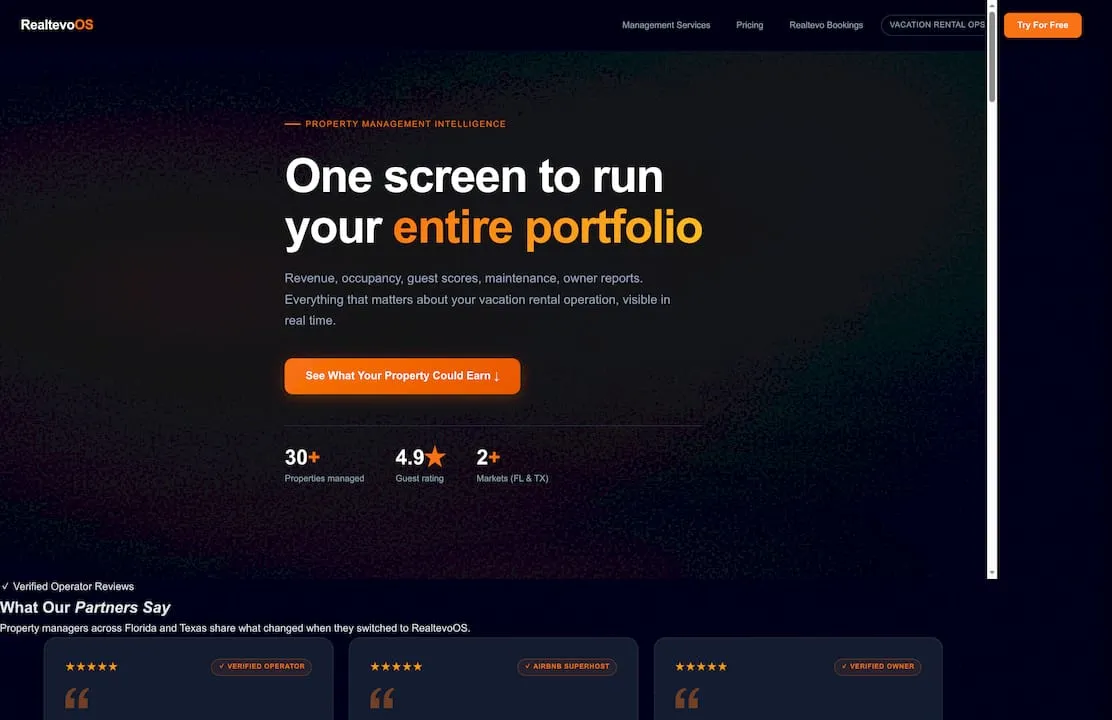
Realtevoos brings AI-powered automation to the full owner relations workflow. From real-time reporting dashboards to automated distribution calculations and owner-facing communication tools, the Realtevoos command center gives vacation rental managers the infrastructure to run owner relations professionally across any portfolio size. Stop managing owner communication manually. See what a purpose-built system actually looks like.
Key Takeaways
Owner relations management is the structured communication and accounting function that connects property managers with their owners across the full relationship lifecycle, from prospecting through contract closure.
| Point | Details |
|---|---|
| Core definition | Owner relations management is the primary communication and reporting interface between management companies and property owners. |
| Four-stage lifecycle | NARPM defines prospecting, securing, servicing, and closing out as the four stages every owner relationship moves through. |
| Software capabilities | Purpose-built platforms automate distributions, power owner portals, verify identities, and integrate with PMS systems. |
| Communication standards | NARPM’s ethics code requires regular written reports and prompt written accounting in any owner dispute. |
| Security requirements | Identity verification, encrypted storage, role-based access, and audit logs are the baseline for any owner relations platform. |