Why Integrate Data from Airbnb and Vrbo: 2026 Guide
Discover why integrate data from Airbnb and Vrbo is essential. Prevent double bookings, streamline operations, and boost revenue today!

Why Integrate Data from Airbnb and Vrbo: 2026 Guide
Why integrating Airbnb and Vrbo data is your operational foundation
Combining your Airbnb and Vrbo data is not a nice-to-have upgrade. It is the single most effective way to prevent double bookings, unify your operations, and make pricing decisions that actually move revenue. Property managers who run both platforms without a shared data layer are essentially flying blind, updating calendars manually, guessing at rates, and hoping no two guests book the same dates.
Here is what integrated data does for your operation, immediately:
- Prevents double bookings by synchronizing availability across both platforms the moment a reservation confirms
- Centralizes rate and content control so pricing changes push to Airbnb and Vrbo simultaneously, with no manual re-entry
- Reduces manual workload by automating guest messaging, calendar blocks, and cleaning schedule triggers
- Maximizes occupancy through cross-platform analytics that reveal which channel fills first and when to adjust rates
- Improves guest experience by keeping availability accurate and response times fast across every channel
The operational case is clear. The question is how you do it.
How to manually sync Airbnb and Vrbo calendars
Manual calendar sync uses iCal, a universal calendar format supported by both Airbnb and Vrbo. Every major OTA lets you export a calendar URL and import it into another platform. The setup takes about ten minutes per property.
Step-by-step iCal sync between Airbnb and Vrbo:
- Export from Airbnb: Go to your Airbnb listing, open the calendar, find “Availability Settings,” and copy the iCal export link.
- Import into Vrbo: In your Vrbo dashboard, navigate to “Calendar,” select “Import Calendar,” and paste the Airbnb URL.
- Repeat in reverse: Export your Vrbo iCal link and import it into Airbnb so blocks flow both ways.
- Verify the sync: Manually block a test date on one platform and confirm it appears on the other within a few hours.
- Monitor regularly: Check both calendars weekly. iCal feeds can break silently with no notification sent to you.
Where manual sync falls short:
- iCal polls for updates on a delay of up to 12 hours, leaving a wide window for overlapping reservations
- It transmits availability only. Rate changes, minimum stay rules, and content updates do not travel through iCal
- Connecting three platforms requires six separate feeds. Six platforms require thirty. The system becomes unmanageable fast
- When a feed corrupts, calendars fall out of sync silently until a double booking reveals the failure
Manual sync works for a single property on two platforms with low booking volume. Beyond that, the risk compounds faster than the time savings justify.

How automated sync tools eliminate the double-booking window
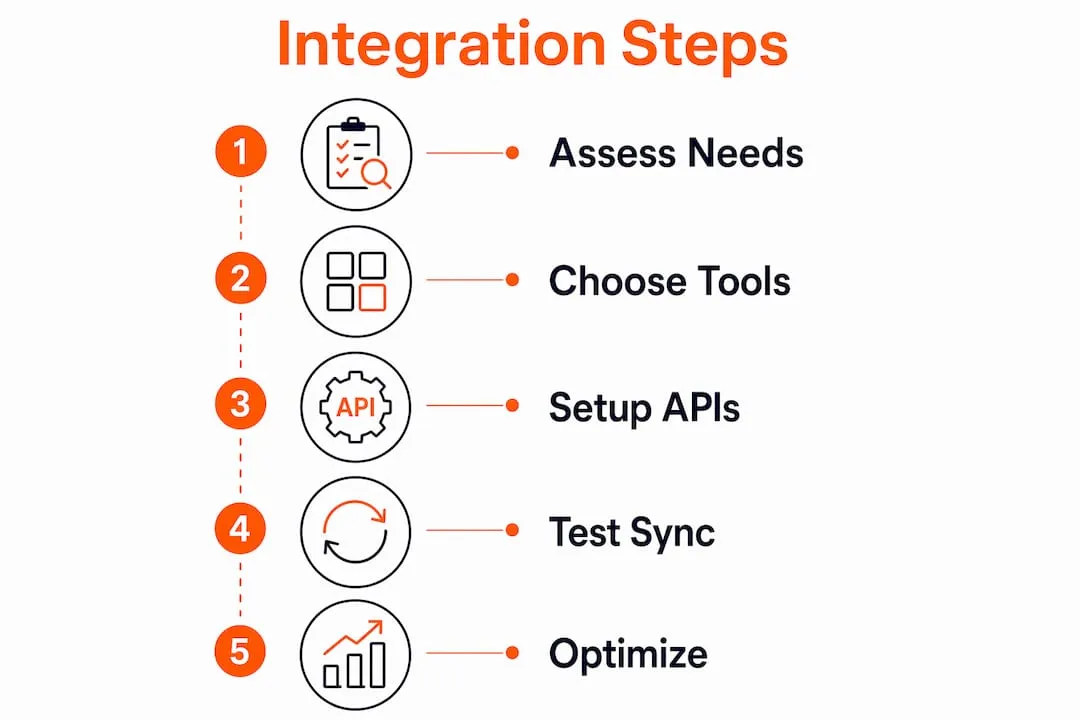
Automated sync via API connections is the infrastructure that multi-platform management actually requires. Unlike iCal, API integrations are event-driven. The moment a guest books on Airbnb, the API fires an instant update to Vrbo and every other connected channel. No polling delay. No silent failures.
What a certified channel manager syncs via API:
- Availability: Blocked dates propagate in seconds across all connected platforms
- Rates: Seasonal pricing, length-of-stay discounts, and promotional rates push automatically
- Content: Descriptions, photos, and house rules update from one dashboard
- Reservations: Booking details flow directly into your property management system (PMS)
- Guest messaging: Inquiries from Airbnb and Vrbo route to a single unified inbox
- Cancellations: Cancelled dates re-open immediately across all channels
Pro Tip: When evaluating channel managers, confirm the integration is bidirectional for rates and content, not just availability. One-way or availability-only sync still leaves pricing gaps that require manual correction.
Airbnb, Vrbo, and Booking.com certify API connections through approved technology partners. You access these certified integrations through a channel manager that holds preferred partner status with each OTA. AI-assisted management tools improve operational efficiency by 20–30%, according to RevenueMemo industry data. That gap between manual and automated operations widens as your portfolio grows.

Channel manager APIs also connect your PMS to accounting platforms, dynamic pricing tools, and analytics dashboards, turning a patchwork of disconnected software into one unified operating system.
Common syncing problems and how to fix them
Even with the right tools in place, integration issues surface. Knowing what breaks and why puts you ahead of the problem.
Double bookings from iCal delays The 12-hour update window in iCal sync is the most common cause of overlapping reservations. The fix is straightforward: replace iCal with a certified API connection through a channel manager. Real-time sync closes the window entirely.
Silent feed corruption iCal feeds break without any alert. Your calendars fall out of sync, and you only discover it when a guest arrives for a date that was already booked. Set a weekly calendar audit as a non-negotiable task, or switch to API sync where certified connections are actively monitored.
Rate and content mismatches iCal carries availability only. If you update your nightly rate on Airbnb but forget Vrbo, you are running two different pricing strategies without knowing it. A channel manager with full API sync pushes rate changes to both platforms simultaneously.
Overbooking from multiple feed management errors Managing six or more iCal feeds across three platforms creates circular reference errors and feed conflicts. The operational complexity scales faster than any team can track manually. A single channel manager connection replaces all of those feeds.
Best practices for ongoing maintenance:
- Audit calendar accuracy across all platforms every week, not just after a booking
- Use a channel manager that sends alerts when a sync connection drops or fails
- Confirm your API integration syncs rates, content, and reservations, not just dates
- Test the sync after any platform update or policy change from Airbnb or Vrbo
- Keep your PMS as the single source of truth for all reservation data
Why listing on both Airbnb and Vrbo pays off with integrated data
The revenue case for multi-platform listing is well established. Properties listed across Airbnb, Vrbo, and other OTAs reach a broader audience, fill calendar gaps that single-platform listings miss, and generate pricing intelligence that single-channel operators simply cannot access.
The concrete benefits of combining Airbnb and Vrbo data:
- Expanded reach: Airbnb and Vrbo attract different traveler demographics. Vrbo skews toward families and longer stays; Airbnb captures a wider range of trip types. Listing on both captures demand that either platform alone misses.
- Cross-platform pricing intelligence: When you track booking velocity across both platforms simultaneously, you see which channel fills first during peak periods. That data sharpens your rate decisions in ways no single-platform operator can replicate.
- Risk diversification: Relying on one OTA exposes your revenue to algorithm changes, policy updates, or account suspension. Distributing across platforms converts that concentration risk into a manageable situation.
- Higher occupancy: PriceLabs 2025 data shows up to 30% occupancy gains from multi-platform listings. Hometime properties saw an 11% occupancy boost and 9% revenue uplift in peak season through effective synchronization.
- Centralized reputation management: A unified inbox and review dashboard lets you monitor guest feedback across both platforms without logging into separate accounts.
Pro Tip: Explore property management marketing ideas that align with your multi-platform strategy. Platform-specific promotions on Vrbo during family travel seasons, for example, can fill gaps that Airbnb traffic alone would not cover.
The revenue uplift from multi-platform listing is not simply additive. It compounds through better occupancy, more accurate pricing, and improved ranking performance on each platform.
How Realtevoos turns Airbnb and Vrbo data into a real competitive edge
Integrating data from Airbnb and Vrbo manually, or even through a basic channel manager, gets you to baseline. Realtevoos takes that foundation and builds an AI-powered command center on top of it.
The platform consolidates every OTA data stream into one dashboard. Availability, rates, reservations, guest messages, and performance analytics from Airbnb and Vrbo all flow into a single operational view. Property managers report saving several hours each week by eliminating the manual reconciliation that fragmented systems require.
What Realtevoos delivers beyond standard channel management:
- AI-driven dynamic pricing: The platform analyzes booking velocity, occupancy trends, and cross-platform demand signals to recommend rate adjustments in real time
- Automated guest communications: Messages trigger automatically based on booking stage, reducing response time and improving guest satisfaction scores
- Portfolio-level analytics: Occupancy by property, revenue by channel, and review performance by platform all visible from one dashboard
- Scalability without added headcount: As your portfolio grows, Realtevoos automates the workflows that would otherwise require additional staff
The data integration guide on the Realtevoos blog covers the full technical architecture behind connecting OTA data streams. For property managers ready to move beyond manual processes, the Realtevoos management deck shows exactly how the platform handles multi-channel operations at scale.

Ready to stop managing Airbnb and Vrbo separately? Realtevoos brings your entire operation into one AI-powered command center. See it in action and start your free trial today.
Key Takeaways
Integrating Airbnb and Vrbo data through certified API connections is the operational foundation that prevents double bookings, unifies pricing, and compounds revenue across both platforms.
| Point | Details |
|---|---|
| iCal sync has a 12-hour delay | That gap creates real double-booking risk; API sync closes it instantly. |
| API sync covers more than availability | Rates, content, reservations, and messages all sync bidirectionally through certified channel managers. |
| Multi-platform listing boosts occupancy | PriceLabs 2025 data shows up to 30% occupancy gains from listings across multiple OTAs. |
| Silent feed failures are the hidden danger | iCal feeds break without alerts; weekly audits or API monitoring are the only reliable safeguards. |
| AI platforms multiply the integration benefit | Realtevoos consolidates OTA data into one dashboard, automating pricing, messaging, and portfolio reporting. |