Why Use Automated Maintenance Tracking in 2026
Discover why use automated maintenance tracking in 2026. Cut downtime, boost productivity, and prevent costly failures for rental properties.

Why Use Automated Maintenance Tracking in 2026
Automated maintenance tracking is the practice of using digital systems to schedule, monitor, and record maintenance tasks automatically, replacing manual processes with data-driven workflows that reduce downtime and extend asset life. For vacation rental property managers, the stakes are especially high. A broken HVAC unit during peak season costs far more than the repair itself. Understanding why use automated maintenance tracking means recognizing that the real value is not just fixing things faster. It is preventing failures before they disrupt a guest stay, inflate costs, or create compliance exposure across your portfolio.
Why use automated maintenance tracking to cut downtime and boost productivity
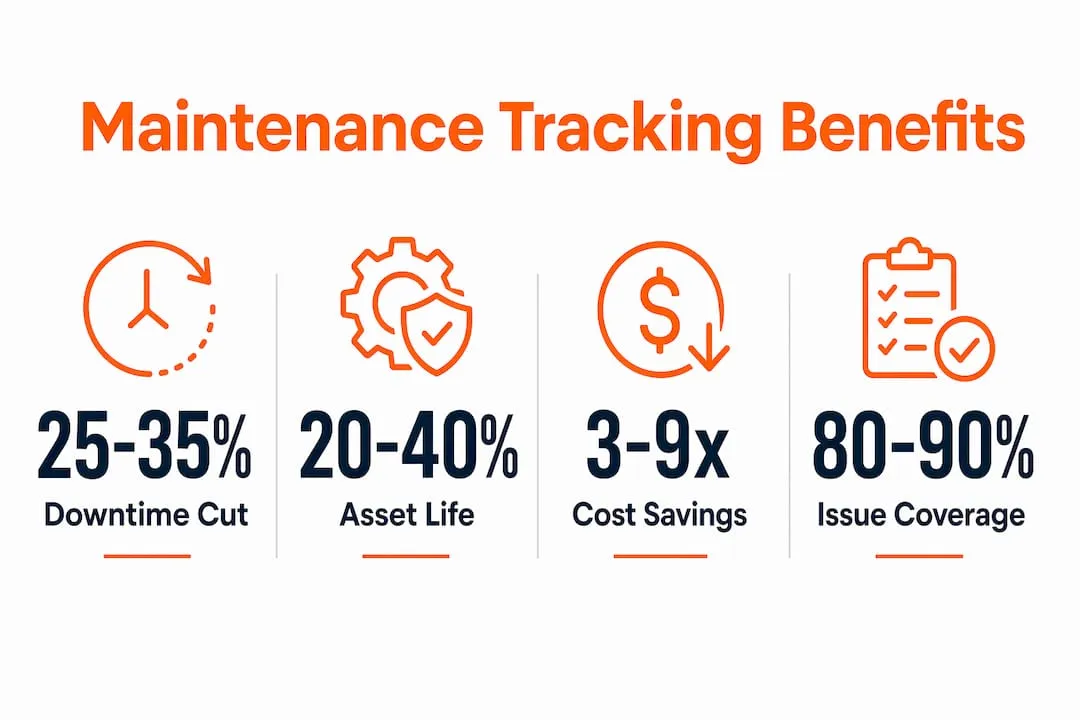
Facilities using Computerized Maintenance Management System (CMMS) platforms typically experience a 25–35% reduction in unplanned downtime and a 20–30% increase in maintenance team productivity. That gap between reactive and proactive maintenance is where most property managers lose money without realizing it.
Manual and spreadsheet-based tracking creates a specific, measurable problem. Technicians lose 30–40% of their time to administrative overhead when tracking is done manually. That is time spent searching for records, re-entering data, and chasing down work order status rather than completing repairs.
Automated tracking solves this with three core mechanisms:
- Work order automation: Tasks are created, assigned, and escalated automatically based on schedules or triggered alerts, with no manual initiation required.
- Real-time monitoring: Property managers see task status across all units from a single dashboard, eliminating the need for status calls or physical check-ins.
- Preventive maintenance alerts: The system sends reminders for HVAC filter changes, appliance inspections, and seasonal checks before failures occur.
A CMMS is an active, rule-based system that automates escalations based on conditions, unlike passive spreadsheets that wait for a human to act. That distinction matters enormously when you manage 20 or more units across multiple locations.
Pro Tip: Start by automating your three highest-frequency recurring tasks first, such as HVAC filter changes, smoke detector checks, and pool maintenance. Automating these alone will demonstrate measurable time savings within the first 30 days.
Reactive maintenance costs 3 to 9 times more than planned maintenance. That multiplier makes the case for automation faster than any other metric.
How maintenance tracking extends asset life and defers big expenses
Completing a maintenance task and tracking condition data are two different things. Most property managers do the first. Far fewer do the second. That gap is where premature asset failure lives.
Structured maintenance tracking extends asset life by 20–40%, and the financial impact is concrete. Extending the life of a $500,000 asset by 25% defers $125,000 in capital expenditure. For a vacation rental portfolio with multiple HVAC systems, water heaters, and appliances, that number compounds quickly.
The mechanism behind this is condition data. When a technician logs not just “completed” but also temperature readings, part wear levels, and failure symptoms, the system builds a trend line. That trend line tells you whether an HVAC unit is degrading faster than expected or whether a repair pattern signals an underlying issue. Lack of tracking leads to repeated repairs that cumulatively shorten asset life, because no one connects the dots between individual service calls.
Pro Tip: For each major asset in your portfolio, create a condition log template that captures at least three data points per visit: operating temperature or pressure, parts replaced, and any anomalies observed. This turns routine visits into a predictive data set within six months.
Data discipline driven by automation enables precise cost-per-asset tracking, which is the foundation of objective repair versus replace decisions. Without it, you are guessing. With it, you are making a business case backed by your own historical data.
This matters most for vacation rentals because guests interact directly with appliances, HVAC systems, and plumbing every stay. A property management maintenance checklist built around condition tracking, not just task completion, is what separates properties that hold their asset value from those that see accelerating repair costs year over year.
Why automating routine tasks matters for compliance and risk management
Compliance is the benefit of automated maintenance tracking that property managers most often underestimate until they need it. Automated maintenance systems provide immutable digital audit trails that log every inspection and repair event with a timestamp. Manual logs cannot guarantee that level of integrity.
The risks of non-compliance are direct and costly:
- Insurance claim denials: Insurers increasingly require documented proof of regular maintenance. A missing inspection record can void a claim.
- Regulatory penalties: Safety inspections for smoke detectors, carbon monoxide alarms, and electrical systems carry legal requirements in most jurisdictions.
- Warranty invalidation: Many appliance warranties require documented service intervals. Without automated logs, those records are often incomplete or missing entirely.
“Manual tracking exposes property owners to compliance and insurance risks that automation can mitigate through a tamper-evident record. The shift from paper logs to automated systems is not just an efficiency upgrade. It is a risk management decision with direct financial consequences.”
Automation reduces human error in inspection scheduling by removing the dependency on individual memory or calendar reminders. When you manage 15 properties, a missed annual fire safety inspection is not a hypothetical risk. It is a near certainty without a system that triggers the task automatically.
For property managers overseeing multiple assets, the audit trail also simplifies insurance renewals. Carriers ask for maintenance records. Automated systems produce them on demand.
How to implement automated maintenance tracking for vacation rentals
Adopting automation does not require a full technology overhaul. The most effective approach is to start with a CMMS platform designed for hospitality properties, then build out from there.
- Map your current maintenance workload. List every recurring task across your portfolio, including frequency, responsible party, and asset involved. This becomes your automation baseline.
- Configure preventive maintenance schedules. Enter each recurring task into the CMMS with trigger rules based on time intervals or usage thresholds. The system handles reminders and work order creation from that point forward.
- Assign work orders automatically. Set rules that route tasks to specific technicians based on property location, skill set, or availability. This eliminates the coordination overhead that consumes manager time.
- Enable mobile access for field technicians. CMMS platforms with mobile access reduce technician repair time by about 25% by providing instant access to asset history and standard operating procedures on-site.
- Track spare parts inventory alongside tasks. Link parts consumption to specific work orders so you know what you have, what you need, and what each asset costs to maintain over time.
- Review and scale. After 90 days, audit which task categories still require manual intervention and automate the next layer.
Preventive maintenance automation addresses 80–90% of recurring maintenance issues cost-effectively, compared to advanced predictive sensor-based systems. Predictive systems often require a $15,000–$50,000 upfront investment that most smaller portfolios cannot justify. For the majority of vacation rental managers, preventive automation delivers the strongest return at the lowest cost of entry.
Pro Tip: Before selecting a CMMS platform, verify that it integrates with your existing property management software. Integration eliminates duplicate data entry and ensures that guest turnover schedules and maintenance windows stay synchronized.
Maintaining rental properties without losing bookings depends on this synchronization. When maintenance windows are visible in the same system as booking calendars, scheduling conflicts disappear.
Automation also creates a single source of truth that shifts teams from costly reactive fixes toward stable, budgeted proactive planning. That shift is the operational goal. Everything else is a mechanism to get there.
Key Takeaways
Automated maintenance tracking delivers its highest value when it replaces reactive, manual processes with condition-based, data-driven workflows that protect assets, reduce costs, and create defensible compliance records.
| Point | Details |
|---|---|
| Downtime reduction | CMMS platforms cut unplanned downtime by 25–35%, directly protecting guest satisfaction and revenue. |
| Asset life extension | Tracking condition data extends asset life by 20–40%, deferring significant capital expenditure. |
| Compliance protection | Automated audit trails create tamper-evident records that satisfy insurance and regulatory requirements. |
| Technician efficiency | Mobile-enabled CMMS reduces repair time by about 25% by delivering asset history on-site. |
| Cost control | Reactive maintenance costs 3 to 9 times more than planned maintenance, making automation a financial priority. |
From reactive firefighting to proactive control: my take
I have watched property managers adopt automation and immediately focus on the wrong metric. They measure how fast work orders close. That is useful, but it misses the point. The real shift happens when you start making decisions based on trend data rather than the last thing that broke.
The managers who get the most out of automated tracking are the ones who treat it as a data discipline, not just a digital checklist. They log condition readings. They track cost per asset. They use failure pattern data to make the repair versus replace call before a unit fails mid-booking. That is a fundamentally different operating posture, and it takes about six months of consistent data entry to get there.
The most common resistance I see is the belief that automation is for large portfolios. That is wrong. A manager running eight properties has more to gain proportionally than an enterprise operator with a dedicated maintenance team. The time savings and compliance protection matter more when you are doing everything yourself.
Compliance is the piece most managers treat as optional until it is not. An insurance claim denied because of a missing inspection record is a painful and entirely avoidable lesson. Automation makes compliance a byproduct of normal operations rather than a separate administrative burden.
The AI-powered tools available to vacation rental managers in 2026 make the barrier to entry lower than it has ever been. The question is not whether to automate. It is how quickly you can get your data organized enough to let the system do its job.
— Jose Villeda
Realtevoos and automated maintenance tracking for your portfolio
Property managers who want to move from manual coordination to automated oversight have a direct path with Realtevoos. The platform consolidates maintenance scheduling, work order management, and asset tracking across multiple properties in a single dashboard.

Realtevoos uses AI-driven automation to trigger preventive maintenance tasks, route work orders to the right technician, and surface real-time alerts before small issues become expensive repairs. Property managers report saving several hours each week by eliminating manual follow-up and status tracking. The platform integrates with Airbnb and Vrbo booking data, so maintenance windows stay synchronized with your calendar automatically. Explore the Realtevoos management deck to see how the platform handles maintenance tracking across your full portfolio.
FAQ
What is automated maintenance tracking?
Automated maintenance tracking is the use of digital systems to schedule, assign, and record maintenance tasks without manual initiation. CMMS platforms are the most common tool for implementing this in property management.
How does automated tracking reduce maintenance costs?
Reactive maintenance costs 3 to 9 times more than planned maintenance. Automation prevents this by triggering preventive tasks before failures occur, cutting both repair frequency and emergency service fees.
Is automated maintenance tracking worth it for small portfolios?
Preventive maintenance automation addresses 80–90% of recurring issues cost-effectively, making it practical even for managers running fewer than 10 properties. The compliance and time-saving benefits apply regardless of portfolio size.
How does automation help with compliance and insurance?
Automated systems log every inspection and repair event with a timestamp, creating an immutable audit trail. This record satisfies insurance documentation requirements and regulatory inspection standards that manual logs often fail to meet.
What is the difference between preventive and predictive maintenance automation?
Preventive automation schedules tasks based on time intervals or usage thresholds. Predictive automation uses sensor data to anticipate failures. Predictive systems require a $15,000–$50,000 upfront investment, making preventive automation the practical starting point for most vacation rental portfolios.